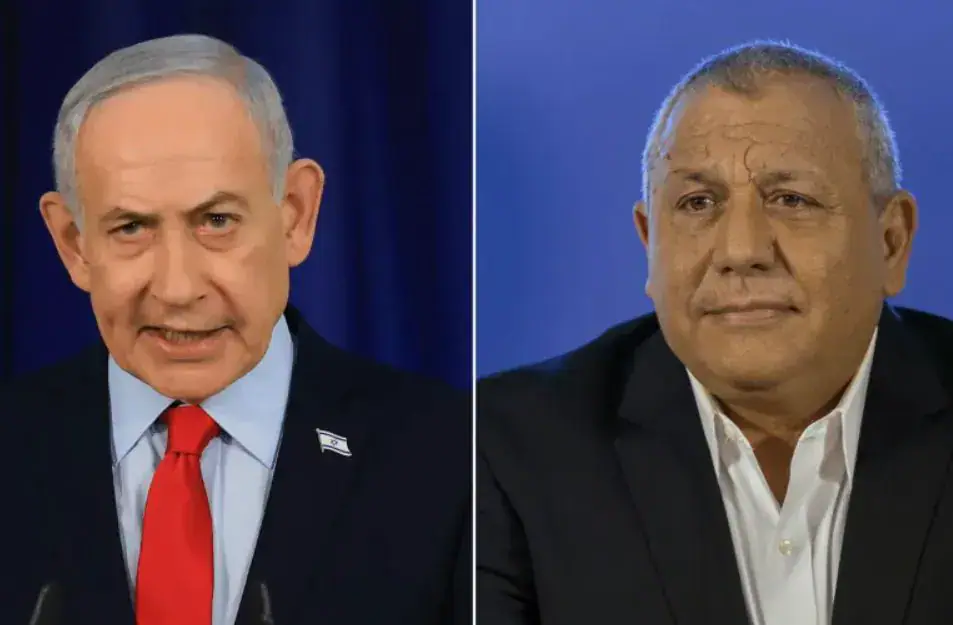
The recent Israeli elections have sparked debate over who will form the next government, with Gadi Aizenkot and Benjamin Netanyahu emerging as key figures. Aizenkot, a former chief of staff, has been in talks to form a government, prioritizing Jewish parties over Arab ones. This approach has raised concerns among Arab parties, who fear Aizenkot's policies may not differ significantly from Netanyahu's. Despite this, some Arab parties have expressed openness to working with Aizenkot.
Aizenkot's background has come under scrutiny, with critics highlighting his military career and involvement in various operations. He began his military service at 18, serving in Lebanon and later becoming a commander in the West Bank. Aizenkot's role in the Israeli military has been marked by controversy, with allegations of human rights abuses and involvement in violent operations. His tenure as head of the Goliath Brigade, responsible for operations in Gaza, has been particularly contentious.
Aizenkot's potential partnership with Arab parties has sparked debate, with some questioning whether his policies align with their interests. While Aizenkot has expressed willingness to work with Arab parties, his conditions for cooperation have raised concerns. These conditions include recognition of Israel as a Jewish and democratic state, commitment to the values of the Israeli Declaration of Independence, and support for the disarmament of Hamas.
Critics argue that Aizenkot's conditions may compromise Arab interests, prioritizing Israeli identity over Palestinian rights. Aizenkot's stance on Hamas and his commitment to the Israeli military's actions in Gaza have also raised concerns. Despite this, some Arab parties see Aizenkot as a potential alternative to Netanyahu, citing his differences with the current prime minister.
Aizenkot's background and policies have been shaped by his Jewish heritage and Israeli upbringing. Born to a Moroccan Jewish family, Aizenkot's roots have been cited as a potential factor in his approach to politics. However, critics argue that his commitment to Zionism and Israeli identity may limit his ability to work effectively with Arab parties.
The implications of Aizenkot's potential government are far-reaching, with concerns about the impact on Palestinian rights and Israeli-Arab relations. While some see Aizenkot as a more moderate alternative to Netanyahu, others fear that his policies may perpetuate existing tensions. As Israeli politics continue to evolve, the role of Aizenkot and other key figures will remain closely watched.
Ultimately, the decision to support Aizenkot or Netanyahu will depend on the priorities of Arab parties and their constituents. While Aizenkot may offer a different approach, his commitment to Israeli identity and military action has raised concerns. As the Israeli government takes shape, the consequences of this decision will be closely monitored by Palestinians, Israelis, and international observers alike.
Key points
- Aizenkot's conditions for cooperation with Arab parties have raised concerns about potential compromises on Palestinian rights.