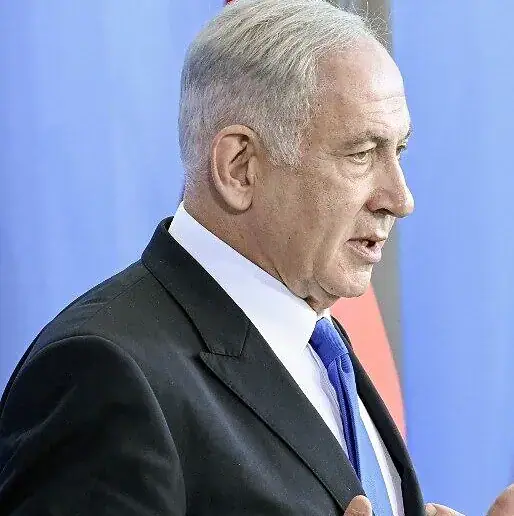
The Israeli opposition bloc led by Gadi Eisenkot convened on Tuesday to define a strategy for removing Prime Minister Benjamin Netanyahu from office. The meeting took place a week after the elections resulted in an inconclusive outcome. The opposition leaders gathered at Herzliya, a technological hub north of Tel Aviv, where Eisenkot resides. The bloc's objective is to form a government and end Netanyahu's tenure.
Yair Lapid, the former centrist Prime Minister who led the opposition in the outgoing parliament, stated that Netanyahu was attempting to invalidate the elections. Lapid emphasized the need to form a government to oust Netanyahu and his allies, citing the harm they have caused to Israel and its people. Netanyahu and his allies have accused the Arab parties of major fraud and malversation, following their historic gains in the elections.
The Arab parties won 19 seats out of 120 in the parliament, driven by public discontent with the government's right-wing rhetoric towards Arab citizens. Neither the opposition nor Netanyahu's camp secured a majority. Eisenkot's heterogeneous opposition bloc secured 48 seats, while Netanyahu's camp obtained 53 seats, including 27 for his Likud party. The Arab parties could potentially enable Eisenkot to gain a majority.
However, the opposition is divided on whether to form an alliance with the Arab parties, who did not participate in the Herzliya talks. Despite their differences, all party leaders in Eisenkot's bloc pledged to support him in forming the next government. Opinion polls before the elections showed that Jewish supporters of the Israeli opposition are divided on including Arab parties in the government.
The Israeli right-wing strongly opposes any such alliance. The divisions within the opposition and the role of Arab parties in the government formation process remain contentious issues. The outcome of the meeting and the opposition's strategy will likely determine the next steps in Israeli politics.
Gadi Eisenkot's bloc comprises a diverse range of parties, which could complicate the government formation process. The opposition leaders must navigate their differences and find a unified approach to oust Netanyahu. The situation remains uncertain, with multiple possible scenarios unfolding in the coming days.
The Israeli parliament will likely play a crucial role in determining the country's next government. The opposition's strategy and potential alliances will be closely watched by both domestic and international observers. The ultimate goal of the opposition is to form a government that can effectively address Israel's challenges and concerns.
Key points
- The Israeli opposition bloc led by Gadi Eisenkot is divided on whether to form an alliance with Arab parties to gain a majority.
- Yair Lapid emphasized the need to form a government to oust Netanyahu and his allies, citing the harm they have caused to Israel and its people.
- The opposition's strategy and potential alliances will determine the next steps in Israeli politics.