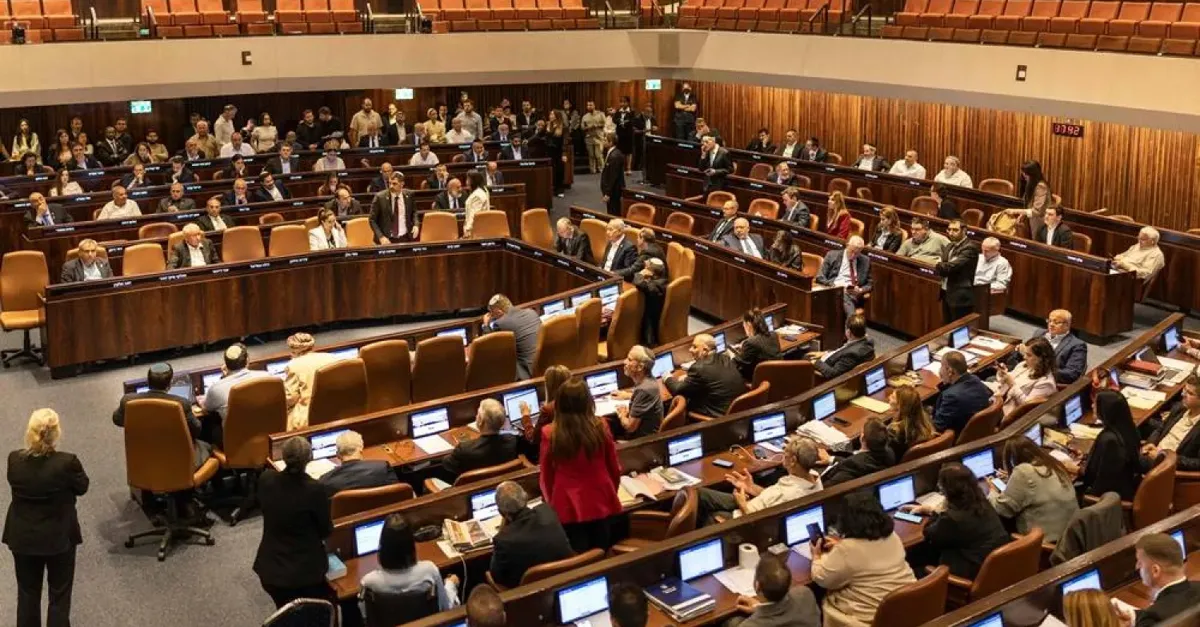
A recent poll conducted by the Israeli newspaper "Maariv" has revealed that the gap between the ruling coalition led by Prime Minister Benjamin Netanyahu and the opposition bloc has continued to narrow. The poll comes as Israel prepares for legislative elections on October 27, which will determine the country's future direction. The elections are seen as critical, following a period of instability that included five Knesset elections between 2019 and 2022.
The poll showed that Netanyahu's coalition has gained two seats, bringing its total to 51, while the opposition bloc, led by former Prime Minister Yair Lapid, has 53 seats. The Economic and Social Motions party, also known as the Reservists party, gained four seats, while Arab parties secured 12 seats. The poll also indicated that several parties that failed to cross the electoral threshold are expected to lose support, with none of them receiving more than 1% of the votes.
The poll also examined the suitability of various candidates for the position of Prime Minister. Netanyahu narrowed the gap with his main rival, Gadi Eisenkot, with a 47% to 41% lead. Former Prime Minister Naftali Bennett secured 45%, while Avigdor Lieberman, leader of the Yisrael Beiteinu party, received 39%. These findings suggest that the election is far from certain, with multiple candidates still in contention.
The poll also revealed that a significant majority of Israelis are concerned about the possibility of another attack similar to the one that occurred on October 7, 2023. Some 43% of respondents expressed moderate concern, while 24% were extremely worried. Only 26% of those polled said they were not concerned, while 7% were undecided. This anxiety is likely to influence voting decisions in the upcoming elections.
In a separate development, Israel's Central Election Committee banned the Arab Joint List and the United Arab List from participating in the elections, citing objections from right-wing parties. The affected parties have appealed the decision to the Supreme Court, which has previously overturned similar rulings in previous elections. The Arab community in Israel represents a significant voting bloc, with many members supporting the Joint List.
The elections take place against a backdrop of international isolation for Israel, following widespread criticism of its actions in Gaza since October 7, 2023. According to reports, 74,040 Palestinians have been killed and 175,168 injured in Gaza alone. The United Nations General Assembly has also condemned Israel's actions, with 12 European and Western countries joining forces to criticize the Netanyahu government.
The elections will determine the future of Israel, with Netanyahu's coalition seeking to maintain power and the opposition aiming to oust him. The outcome will have significant implications for the country's relationships with its Arab citizens, its international standing, and its policies towards the Palestinian territories.
Key points
- The gap between Netanyahu's coalition and the opposition has narrowed, according to a recent poll.
- A majority of Israelis are concerned about the possibility of another attack similar to the one on October 7, 2023.
- The elections take place against a backdrop of international criticism of Israel's actions in Gaza.