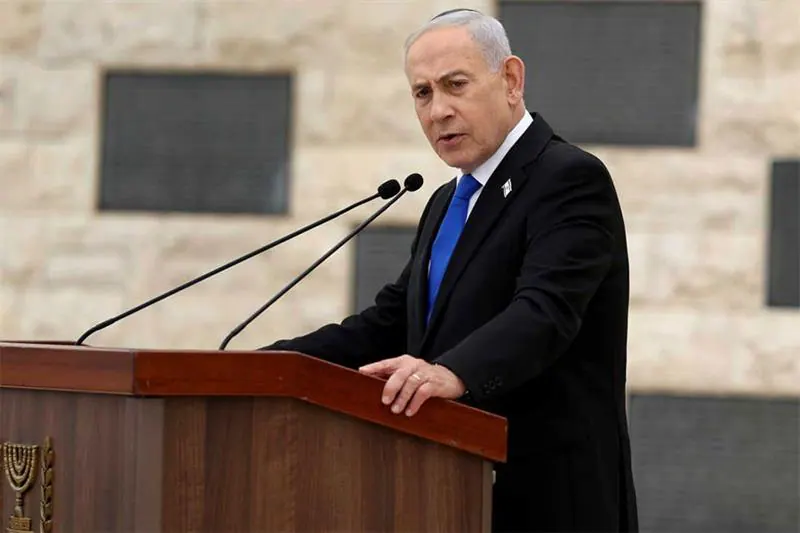
Israel's Central Elections Committee has voted to disqualify the United Arab List, a party representing Palestinians in Israel, from participating in the upcoming elections. The committee also voted to disqualify two candidates, Ofer Cassif and Sami Abu Shehadeh, citing concerns over their loyalty to the Jewish and democratic state. The decisions are not final and will have to be approved by the Supreme Court.
The United Arab List, which joined a short-lived coalition that removed Prime Minister Benjamin Netanyahu from power in 2021, could play a kingmaking role in the upcoming elections. The party recently recruited a Jewish candidate, Yoav Segalovitz, who was credited with improving safety in Arab-Israeli areas during the 2021-22 government. Arab Israelis, descendants of Palestinians who stayed after the State of Israel's creation in 1948, make up about 20 per cent of the population.
The Central Elections Committee's decision to disqualify Abu Shehadeh was based on two grounds: denying the existence of the State of Israel as a Jewish and democratic state, and supporting the armed struggle of an enemy state or terrorist organisation against the State of Israel. The request to disqualify Abu Shehadeh was submitted by far-right National Security Minister Itamar Ben Gvir, who criticised his response to October 7, 2023.
Adalah, a legal group that represents Israel's Arab minority and represents Cassif and Abu Shehadeh, said there was "no legal basis" for the decisions to disqualify them. The group plans to appeal the decision to the Supreme Court, which has overturned most disqualifications in the past. In 2019, the Supreme Court barred far-right candidate Michael Ben-Ari from running, overturning the Central Elections Committee's decision to approve his candidacy.
The general elections will be held on October 27, with polls showing Netanyahu, Israel's longest-serving prime minister, in a tight race to stay in power. The elections are seen as crucial for Netanyahu's future, and the disqualification of the United Arab List and two candidates could have significant implications for the outcome.
The Central Elections Committee is made up of lawmakers with seats attributed based on the share of the general electoral vote each party holds. The committee's decisions are often influenced by the ruling coalition, which has been critical of Arab parties and candidates in the past. The disqualification of Abu Shehadeh and Cassif has been seen as a move to limit the representation of Arab parties in the Knesset.
Sami Abu Shehadeh, who leads the left-wing Palestinian Balad party, vowed not to back down despite the disqualification. "This development will not scare us," he said. "Racists are afraid of equality, and Ben Gvir and Netanyahu are afraid of the Arab vote in this electoral battle." The decision has sparked concerns over the representation of Arab citizens in Israel and the impact on the country's democratic process.
Key points
- The Israeli electoral committee's decision to disqualify the United Arab List and two candidates has sparked concerns over the representation of Arab citizens in Israel.
- The Supreme Court will have to approve the disqualifications, which have been criticised by Adalah, a legal group representing the affected parties.
- The general elections will be held on October 27, with polls showing Netanyahu in a tight race to stay in power.