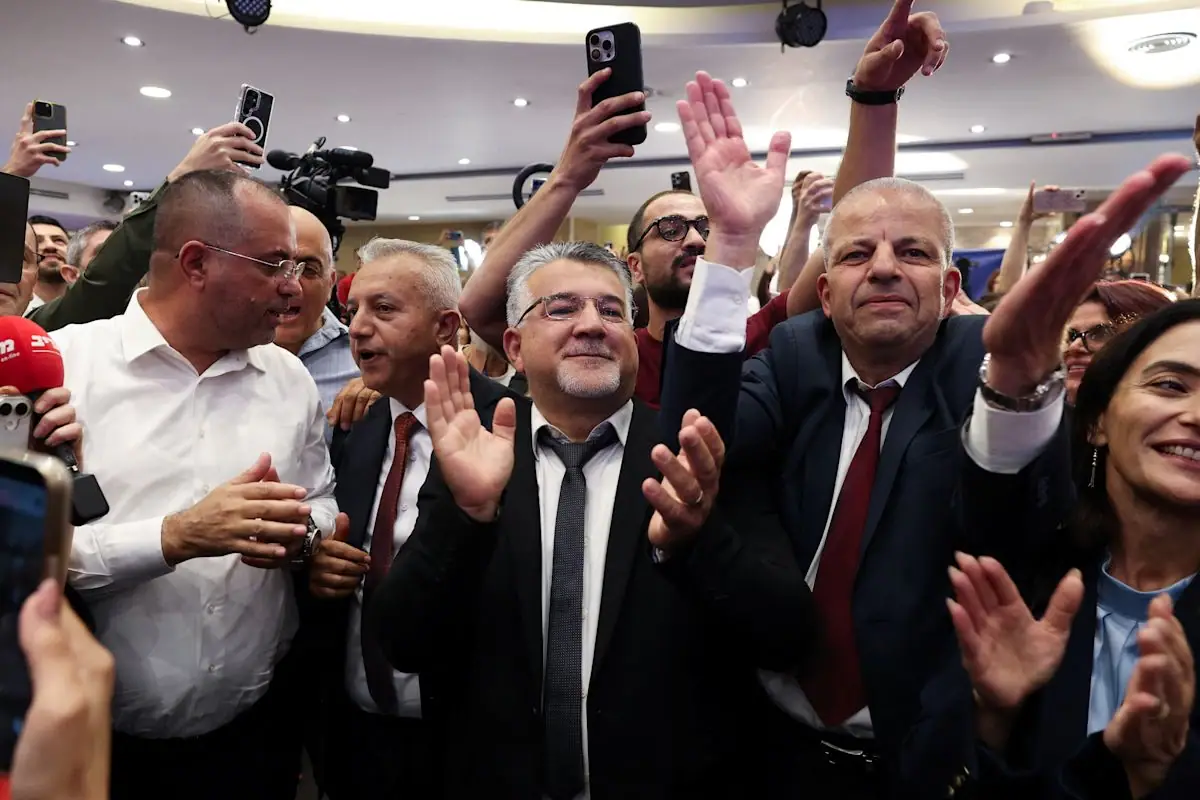
The Israeli Arab parties, specifically the Joint List and the United Arab List (Ra'am), are expected to gain between 16 and 18 seats in the Knesset, according to post-election polls. This significant increase in representation could make them a crucial factor in the formation of the next government. With no clear majority for either the Likud party led by Benjamin Netanyahu or the opposition alliance led by Gadi Eisenkot, the Arab parties may hold the key to determining the next government's identity.
The Joint List is a coalition of liberal parties, while Ra'am is an Islamist party. More than 80% of Israeli Arab voters support one of these two lists, while around 15% vote for Jewish parties. The increased representation of Arab parties could give them significant political weight in negotiations, although there are disagreements about whether they would be part of the government or provide external support.
Netanyahu has categorically rejected relying on Arab parties to form a government, while Eisenkot has not ruled out the possibility of a minority government with external support from Arab parties, provided they accept certain conditions, including recognition of Israel as a Jewish and democratic state. Ra'am has accepted this condition, but the Joint List's participation is more complicated due to its diverse composition.
Eisenkot initially avoided taking a clear stance on cooperation with Arab parties but eventually aligned with Netanyahu's position under public pressure during the election campaign. This leaves open the possibility of a minority government supported by Arab parties from outside the coalition. However, this option faces opposition within Eisenkot's camp, with some, like Avigdor Lieberman, rejecting any cooperation with Arab parties.
Some voices within the opposition, such as Yair Golan, head of the Democratic party, support cooperation with Israeli Arab citizens. Golan believes that ignoring their voices would be surrendering to Netanyahu and abandoning Israel. The 2021 experience of a government coalition including Ra'am may serve as a precedent for the current situation.
The Israeli Arab parties differ from Jewish parties on issues related to the Israeli state and the Palestinian question. Yoav Segalovich, a former deputy minister of internal security who joined Ra'am, may play a role in bridging the gap between Arab parties and Israeli camps. He emphasizes the importance of considering the election results and the potential for an Israeli Arab party to be part of the government.
Despite these developments, some analysts, like Elizabeth Tsurkov, express skepticism about the feasibility of forming a government with Arab party support, citing the need for the opposition to overcome its own internal biases. The final outcome will depend on the negotiations and alliances formed in the coming days.
Key points
- The Israeli Arab parties may gain 16-18 seats in the Knesset, giving them significant influence in government formation.
- Netanyahu rejects cooperation with Arab parties, while Eisenkot leaves the door open for external support.
- The 2021 experience of a government coalition including Ra'am may serve as a precedent for the current situation.