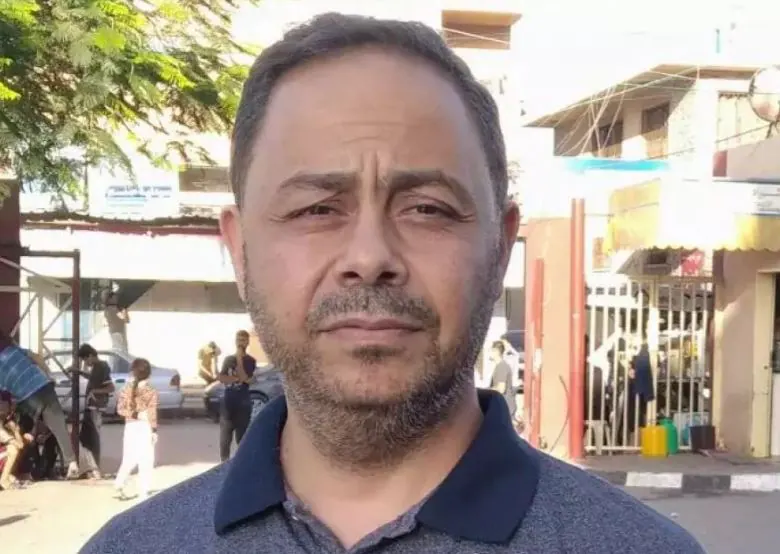
The Israeli occupation continues to violate the ceasefire agreement in the Gaza Strip through airstrikes, assassinations, and military operations. Despite efforts by mediators to prevent a return to large-scale escalation, the situation remains fragile. The Palestinian writer and political analyst, Wissam Afifah, believes that the scene is heading towards redefining the truce. This redefinition would transform the agreement from an end to the war to a framework for managing the conflict at a low level.
Israel wants a truce without restrictions on assassinations, bombardments, and incursions. Afifah warns that continued violations without clear deterrent mechanisms will gradually weaken the meaning of the ceasefire. This situation makes each new crime more likely to become a fait accompli. He criticizes the limited tools of mediators and the US administration in compelling Israel to implement the agreement. The number of Palestinian martyrs in Gaza since the start of the truce is estimated to be over 1300.
The truce agreement has not collapsed, but it is not effectively implemented either. The problem is not a single violation that can be contained but the repetition and expansion of military operations. The files of withdrawal, reconstruction, and permanent settlement remain stuck. The Israeli occupation's actions raise the probability of retaliatory responses that would escalate the situation. The real danger is not a declared decision to cancel the truce but its gradual collapse under the weight of accumulated violations.
The movement of guarantor countries seems limited. Their priority has shifted to preventing a return to a wide war, not engaging in a political confrontation with Israel to stop violations and breaches. They appear unable and lacking in effective tools. These tools include political and diplomatic pressure, linking cooperation and aid to agreement implementation, exercising direct US pressure on Israel, and activating clear oversight mechanisms for violations.
The mediators have moved from guaranteeing the agreement to merely containing its crises. They often act on the basis of containing the wide escalation and preventing the whole scene from exploding. Over time, the criterion of success becomes preventing the collapse of the truce, even in its formal sense, without ensuring its implementation on the ground. This is a dangerous equation imposed by Israel and accepted by those who mediated and guaranteed the agreement.
The Palestinian resistance and factions have faced significant pressure. The reconstruction of Gaza remains distant, with Israel conditioning progress on the disarmament of Hamas. Despite Hamas's agreement to collect and neutralize heavy weapons, Israel refuses and delays. The political path and agreement promoted by the US as an achievement have not yet become a clear binding mechanism for Israel.
The Israeli internal political calculations, particularly with the elections approaching, affect the situation. However, it is difficult to reduce all military operations to the electoral factor alone. There are also declared military and security considerations, as well as external, regional, and conflict factors in other areas. Israel seeks to impose a ceasefire equation with freedom of military action.
Key points
- Israel's actions in Gaza undermine the ceasefire agreement.
- The international community's role in enforcing the agreement is limited.
- The situation in Gaza remains fragile and prone to escalation.