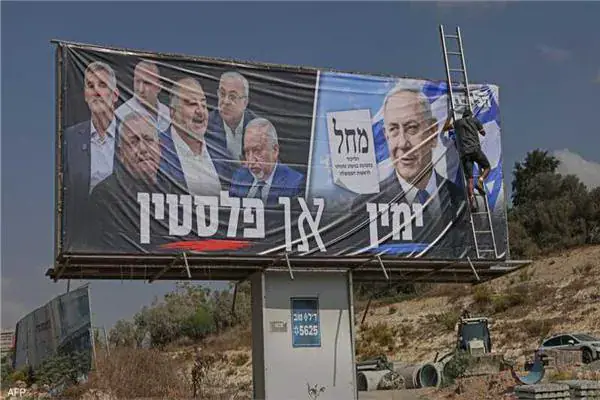
Israel's Central Election Committee announced the final results of the parliamentary elections early on Friday, confirming the previous political landscape. The results showed that Prime Minister Benjamin Netanyahu's bloc secured 53 seats in the Knesset, while his main rival, former Chief of Staff Gadi Eisenkot, obtained 48 seats. The Arab parties collectively won 19 seats. These numbers did not change the overall balance of power.
The final results did not alter the existing balance between Netanyahu's and Eisenkot's blocs, with neither achieving a clear majority of 61 seats out of 120. The Arab parties maintained a significant presence, potentially influencing government formation talks. According to the current numbers, Netanyahu's bloc and Eisenkot's bloc are still far from forming a government without securing support from other parties.
The Central Election Committee will present the final results to Israeli President Isaac Herzog on November 4, after verifying any potential errors or inquiries. Once this process is complete, the committee will officially submit the results. This step is crucial in confirming the election outcome and paving the way for the formation of a new government.
On November 10, the members of the Knesset are scheduled to take their oath of office. This ceremony marks the beginning of their term as lawmakers. The new Knesset will comprise 120 members, representing various political parties. The distribution of seats will likely influence the government's policies and decisions.
The recent elections in Israel were closely watched, both domestically and internationally. The results reflect the diverse political landscape of the country, with multiple parties vying for representation. The election outcome may have implications for Israel's future policies, particularly regarding regional and international relations.
According to previous reports, a recent poll showed a tie between Netanyahu's Likud party and Eisenkot's bloc, with the latter gaining an edge in terms of public support for the premiership. These findings suggest that the electorate is divided, and forming a government will require negotiations and potential alliances.
The final results of the Israeli elections have set the stage for the next phase of government formation. Israeli President Isaac Herzog will play a key role in facilitating talks between parties and potentially nominating a prime minister. The process is expected to unfold in the coming weeks, culminating in the establishment of a new government.
Key points
- Netanyahu's bloc secured 53 seats, while Eisenkot's bloc obtained 48 seats.
- The Arab parties collectively won 19 seats, potentially influencing government formation talks.
- The final results will be presented to President Herzog on November 4.