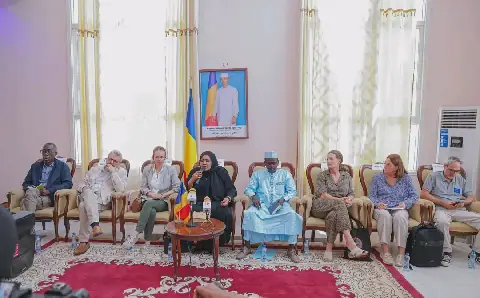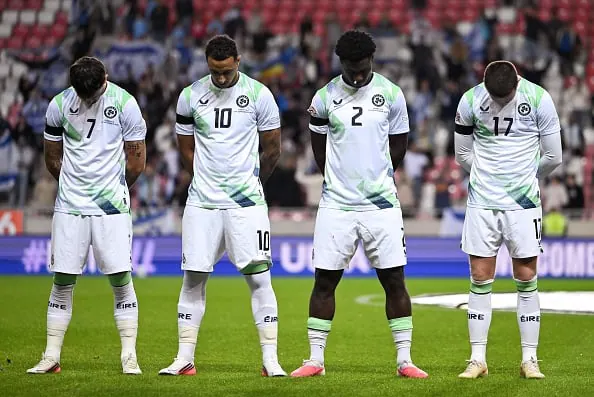
An Israeli minister has made contentious comments comparing Irish people to Germans in 1939, sparking widespread criticism. The minister's remarks were made in response to Ireland's stance on Israel, with the Irish team facing pressure to boycott matches against Israel. The comments have been widely reported and condemned. The incident highlights tensions between Israel and Ireland over the former's actions in Gaza.
The Israeli minister's comparison has been seen as inflammatory and hurtful, evoking memories of the Nazi era. In 1939, Germans gave the Nazi salute, a gesture associated with the regime's atrocities. The minister's words have been criticized by many, who argue that they trivialize the Holocaust and its impact on the Jewish community. The Irish team has faced pressure to boycott matches against Israel, with some calling for a stronger stance against the country's actions in Gaza.
Ireland has been a vocal critic of Israel's actions in Gaza, with the country's government calling for an end to violence. The Irish team's matches against Israel have been the subject of controversy, with some players and officials facing backlash for their stance. The incident highlights the complexities of international sports and politics, where national teams and athletes often find themselves at the center of broader conflicts.
The Israeli minister's comments have sparked a diplomatic row between Israel and Ireland, with both countries exchanging criticism. The incident has also raised questions about the role of politics in sports, with some arguing that athletes and teams should be able to compete without being drawn into broader conflicts. Others argue that sports can be a powerful tool for making political statements and promoting social change.
The controversy has sparked a wider debate about Israel's actions in Gaza and the international community's response. Many have criticized Israel's actions, arguing that they amount to human rights abuses. Others have defended Israel's right to self-defense, arguing that the country faces a legitimate threat from Hamas and other militant groups.
The incident has also raised questions about the role of social media in shaping public opinion and influencing politics. The Israeli minister's comments were widely reported on social media, with many users expressing outrage and condemnation. The incident highlights the challenges of navigating complex conflicts in the digital age, where information and opinions can spread rapidly.
The controversy is likely to continue, with both Israel and Ireland facing pressure to respond to the incident. The incident highlights the complexities of international relations and the challenges of navigating conflicts in the digital age. It also raises questions about the role of sports and politics, and the impact of social media on public opinion.
Key points
- Israeli minister compares Irish to 1939 Germans, sparking controversy
- Incident highlights tensions between Israel and Ireland over Gaza
- Controversy raises questions about role of politics in sports and impact of social media on public opinion