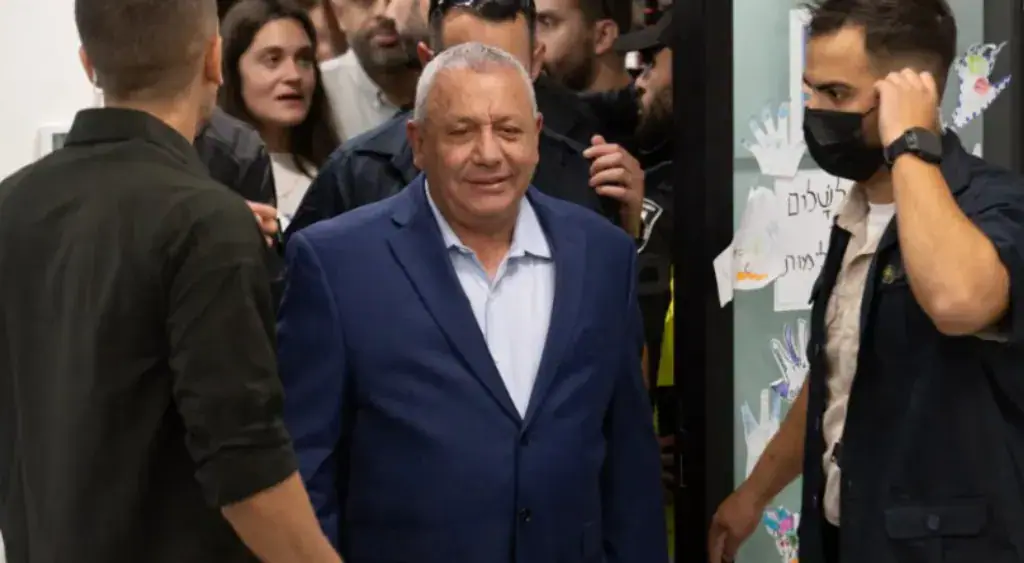
Israeli President Isaac Herzog has invited Gadi Eisenkot, leader of the opposition, to form a government. Eisenkot has promised to "do everything" to form an emergency national government. This development comes after the October 27 elections, where the Likud party of Prime Minister Benjamin Netanyahu won the most seats but failed to secure a majority.
Gadi Eisenkot's party, Yashar!, has become a significant force in Israeli politics, with Eisenkot emerging as a key challenger to Netanyahu. Despite being seen as inexperienced in politics, Eisenkot's reputation as a former general has made him a credible alternative to Netanyahu. His party's rise is attributed to growing discontent with Netanyahu's leadership and allegations of corruption.
Eisenkot faces significant challenges in forming a stable government, as his coalition does not have a majority. He has received support from Arab parties, but Netanyahu has warned that a coalition with these parties would lead to the collapse of the State of Israel. Eisenkot has 42 days to present a proposal for an executive, and if he fails, Herzog may invite Netanyahu to seek a solution.
Gadi Eisenkot has outlined a clear vision for his foreign policy, focusing on a hardline stance against Hamas. He has promised to remove Hamas from power in the Gaza Strip within 18 months. Eisenkot also advocates for a strong approach towards Hezbollah, a Shia group allied with Iran. His stance on these issues is seen as a departure from Netanyahu's policies.
Eisenkot's relationship with the United States is expected to be a key aspect of his government. He has criticized Netanyahu for creating a rift between Israel and the US, and proposes a more collaborative approach with Washington and Arab countries that have signed the Abraham Accords. This approach is seen as an opportunity for a more comprehensive regional initiative.
On the Israeli-Palestinian conflict, Eisenkot has maintained ambiguity, stating that he does not want to govern the approximately three million Palestinians in the West Bank and Gaza. However, he rejects the idea of a "state without a state" and the presence of foreign forces in the territory. His 10-point program advocates for a law on mandatory military service that would apply to Arab Israelis and ultra-Orthodox Jews.
The outcome of Eisenkot's efforts to form a government remains uncertain. If he succeeds, his government may face significant challenges in implementing its policies. If he fails, Israel may face new elections, which could lead to further instability. The international community is watching closely, as the situation in Israel and the Palestinian territories has significant implications for regional stability.
Key points
- Gadi Eisenkot has been tasked with forming an emergency national government in Israel.
- Eisenkot faces significant challenges in forming a stable government due to the lack of a majority coalition.
- Eisenkot's vision for foreign policy focuses on a hardline stance against Hamas and Hezbollah.
Reporting sources
- Israel: Eisenkot promete "fazer tudo" para formar "governo de urgência nacional" · Expresso das Ilhas