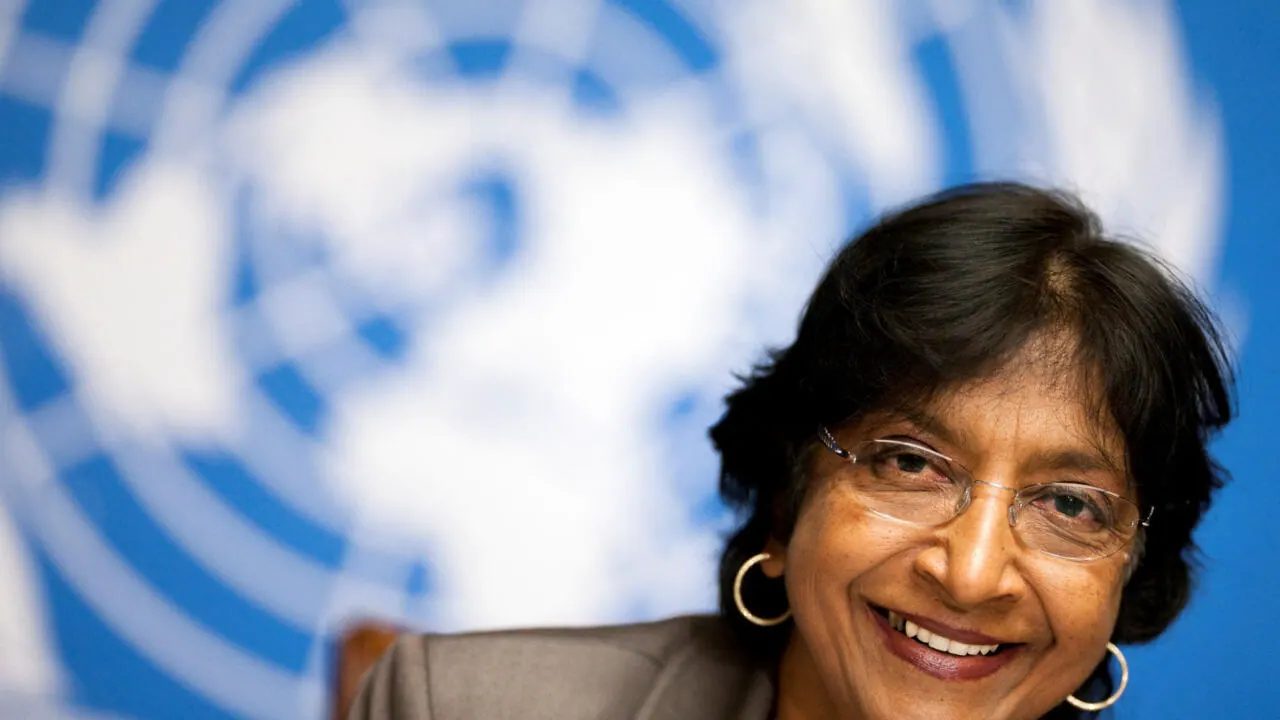
Navi Pillay, an 85-year-old South African-born jurist and former UN human rights chief, has been awarded the Nobel Peace Prize for her decades of work promoting international law. Pillay's career has spanned from defending the rights of Nelson Mandela to leading a panel that investigated crimes in Rwanda, Israel, and the occupied Palestinian territories. Her win signals a high-profile rebuke to US President Donald Trump and Israeli Prime Minister Benjamin Netanyahu, who have both rejected the findings of the UN commission she led on Gaza.
The Norwegian Nobel Committee chair, Jorgen Watne Frydnes, announced Pillay's win in Oslo, Norway, as part of the peace prize's 125th anniversary. The committee sought to strengthen international law at a time of conflict, and Watne Frydnes said Pillay's award was a message to those seeking to undermine "the international rules-based system and the institutions". Pillay received the news while attending a forum in Nuremberg, Germany, where the trials of Nazi war criminals helped lay the foundations of international law.
Pillay chaired the Commission of Inquiry on the Occupied Palestinian Territory and Israel, which was created by the UN-backed Human Rights Council. The commission concluded that Israel was responsible for genocide in Gaza with a specific intent to destroy Palestinians in Gaza. Israel has refused to cooperate with the commission since it was established in 2021 and has strenuously denied the accusations. Pillay has repeatedly rebuffed critics who accused her of anti-Semitism or turning a blind eye to the Hamas attacks in Israel.
The Israeli foreign ministry responded to Pillay's win, stating that "if there were an award for lies, hatred, and blood libels, Navi Pillay wouldn’t just be a contender. She’d be a frontrunner". The ministry added that the award "isn’t a recognition of justice. It’s the grotesque weaponization of an award to legitimize anti-Israel hatred and prejudice". In contrast, world leaders have praised Pillay's work, with UN Secretary-General Antonio Guterres saying her win honoured those who fight to defend international law and human rights.
Guterres described Pillay as a "champion of international law and human rights, and a steadfast, independent voice of justice amidst some of the most historic international legal cases of our time". UN High Commissioner for Human Rights Volker Türk hailed a "particularly poignant" award "at a time when human rights are under attack on so many fronts, including from those who wield enormous power". Türk added that it was an award to all those who dedicate their lives to the defence of human rights, often at great risk to their security.
EU chief Ursula von der Leyen congratulated Pillay for confronting "some of humanity's darkest chapters". Von der Leyen wrote that Pillay "has looked the brutality of injustice in the eye and never looked away. She is the defender of the persecuted, the vulnerable, the voiceless and the excluded". South African President Cyril Ramaphosa also celebrated Pillay's contributions to strengthening peace, upholding human dignity, and bringing hope.
A senior Hamas official, Bassem Naim, called the Nobel award for Pillay a message of hope for Palestinians, especially in Gaza, that "humanity still resists the forces of evil targeting international justice". Pillay's win has been met with widespread praise, with many seeing her as a beacon of hope for those seeking to promote international law and human rights.
Key points
- Navi Pillay won the Nobel Peace Prize for her efforts to promote international law.
- Israel has responded critically to Pillay's win, accusing her of anti-Israel hatred and prejudice.
- World leaders have praised Pillay's work, seeing her as a champion of international law and human rights.