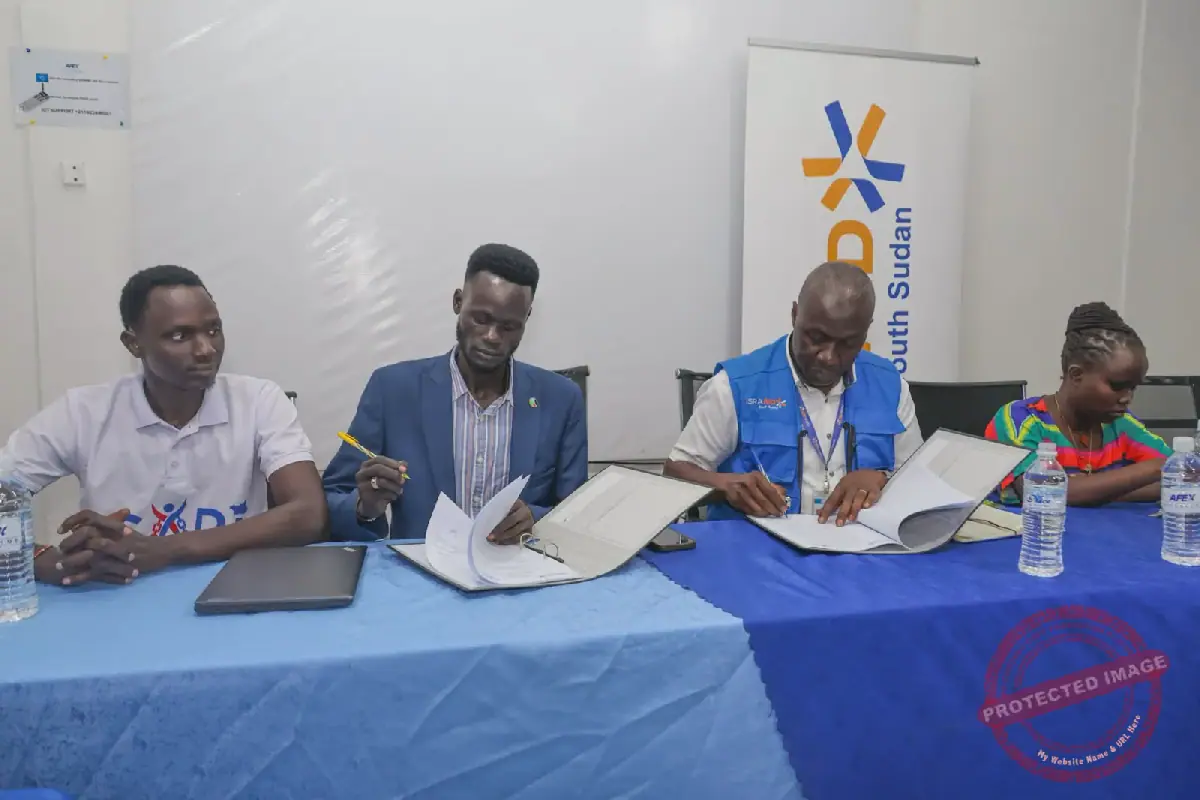
IsraAID South Sudan has signed a Memorandum of Understanding with the Community Actions and Resilience Initiative, a national non-governmental organisation, to transfer the management of its protection project in Juba's Internally Displaced Persons Camps I and III. The project uses a digitised protection case-reporting system, enabling community members to report protection concerns confidentially. This handover reflects IsraAID's commitment to localisation and strengthening local institutions.
The Community Actions and Resilience Initiative was founded by former IsraAID staff, who recognised the need for a local organisation to take over the project. IsraAID will provide technical guidance, oversight, and capacity-building support to ensure continuity and effective delivery of protection services. The organisation has set aside approximately 280 million South Sudan pounds to support the initial three-month implementation period.
The protection project aims to provide community-centred protection services in Juba's IDP camps. The handover does not mean IsraAID is withdrawing from the project, but rather creating an opportunity for local humanitarian personnel to take ownership of its implementation. IsraAID will remain as consultants, supporting the new organisation whenever needed.
The Community Actions and Resilience Initiative currently has 22 experienced staff members and plans to expand its operations to other states and administrative areas as its institutional capacity and resources grow. The organisation's mission goes beyond the two IDP camps to supporting crisis-affected communities across South Sudan.
The partnership between IsraAID and the Community Actions and Resilience Initiative is expected to strengthen local leadership, build institutional capacity, and support the continued delivery of community-centred protection services. The new organisation will prioritise the participation and involvement of communities in identifying protection needs and designing interventions.
The Community Actions and Resilience Initiative will focus on supporting crisis-affected communities, particularly women and girls affected by gender-based violence and other protection risks. The organisation acknowledges that resource mobilisation remains a major challenge but intends to work with humanitarian partners, government institutions, and community structures to sustain and expand its operations.
The transition demonstrates how humanitarian partnerships can support locally led responses while ensuring that essential services continue to reach vulnerable communities. Both organisations say the handover is a significant step towards localisation and sustainability in humanitarian interventions.
Key points
- IsraAID transfers Juba IDP camp protection project to local NGO CARi, ensuring continuity and local ownership of protection services.
- The partnership aims to strengthen local leadership, build institutional capacity, and support community-centred protection services.
- The handover reflects IsraAID's commitment to localisation and sustainability in humanitarian interventions.