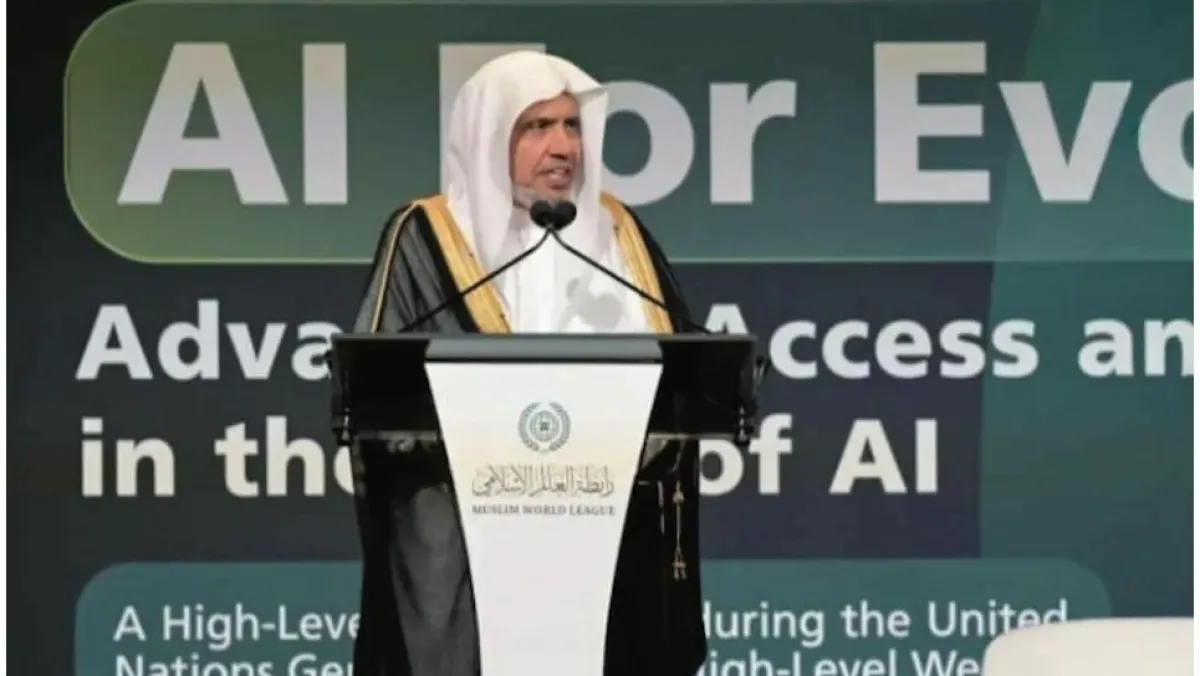
The Islamic World League, in collaboration with the United Nations, has hosted an event titled "Artificial Intelligence for All: Faith, Human Dignity, and Artificial Intelligence" in New York. The event, which took place during the 81st session of the UN General Assembly, brought together high-level officials, religious leaders, and experts in artificial intelligence. The initiative aims to promote a nuanced discussion on the ethics of artificial intelligence, highlighting the importance of diversity and inclusivity in addressing these issues.
The event was attended by prominent figures, including the Secretary-General of the Islamic World League, Sheikh Dr. Muhammad bin Abdul Karim Al-Issa, and the High Commissioner of the United Nations Alliance of Civilizations, Miguel Moratinos. Other participants included the Secretary-General of the Organization of Islamic Cooperation, Ismail Al-Sheikh Ahmed, and the Secretary-General of the UN Conference on Trade and Development, Rebeca Greenspan. The gathering provided a platform for stakeholders to share perspectives on the intersection of faith, human dignity, and artificial intelligence.
The initiative focuses on the need for a diverse and inclusive approach to addressing the ethics of artificial intelligence. This includes considering the religious and cultural dimensions of AI development and deployment. The event highlighted the importance of promoting a shared understanding of AI ethics, with a view to preventing the misuse of technology for hate speech, violence, and social conflict.
The conference recommended that the UN Alliance of Civilizations be tasked with developing a code of ethics for artificial intelligence. This would involve the establishment of a committee, led by the Alliance, comprising representatives from diverse religious, intellectual, and educational backgrounds, as well as experts from technology companies. The goal is to create a universal framework that reflects a "civilizational alliance" on AI ethics.
The High Commissioner of the UN Alliance of Civilizations, Miguel Moratinos, expressed his organization's readiness to take on this task. In a related development, the Secretary-General of the Islamic World League announced plans to establish an AI laboratory, in partnership with technology companies, to develop programs that can be used by religious, educational, and humanitarian institutions.
The Islamic World League also intends to digitize Islamic sources and books, making them available to AI companies while respecting intellectual property rights. Additionally, the League plans to establish a unit dedicated to monitoring and correcting translation errors in Islamic texts and related sciences. This initiative aims to address the spread of misinformation and misconceptions resulting from inaccurate translations.
The intersection of faith, human dignity, and artificial intelligence has become a pressing concern, with many stakeholders recognizing the need for a more nuanced discussion on AI ethics. The Islamic World League's initiative is seen as a significant step towards promoting a more inclusive and diverse approach to AI development and deployment.
Key points
- The Islamic World League has launched an initiative on artificial intelligence, focusing on the intersection of faith, human dignity, and technology.
- The initiative aims to promote a nuanced discussion on AI ethics, highlighting the importance of diversity and inclusivity in addressing these issues.
- The UN Alliance of Civilizations will play a key role in developing a code of ethics for artificial intelligence.