Islamic State's branch in Somalia has experienced a significant decline in its financial capacity following military operations by Puntland and support from the US. According to a report by the Africa Center for Strategic Studies, the group's financial networks were disrupted, impacting its ability to collect and transfer funds. Previously, Islamic State in Somalia generated substantial income from extortion, illegal taxes, and financial services.
The group's financial capabilities were substantial, with US authorities estimating that it raised about $2.5 million in 2021 and nearly $2 million during the first six months of 2022. A key component of its financial network was Al-Karrar, an Islamic State-linked financial hub that managed funds and facilitated support for affiliates in Africa and beyond. The hub played a crucial role in transferring money between Islamic State's Somalia branch and other elements of the group's global network.
A significant blow to the group's financial structure came in 2025 with the arrest of Abdiweli Mohamed Yusuf, identified by the US as the head of Islamic State-Somalia's financial operations. Yusuf was responsible for managing part of the group's revenue and facilitating the movement of money, fighters, and supplies. His arrest likely disrupted the group's financial operations and limited its ability to sustain activities.
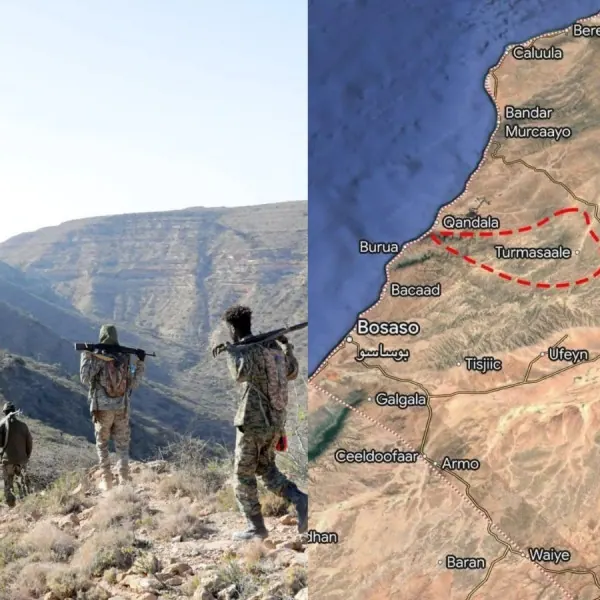
Puntland's military campaign against Islamic State, which began in late 2024, has also disrupted networks involved in extortion and illegal taxation. The Africa Center for Strategic Studies reported that the operations significantly weakened the group's ability to generate revenue and sustain activities inside Somalia. The campaign targeted the group's fighters, leadership, and infrastructure in the mountainous areas of Bari region.
Despite the financial decline, the Africa Center for Strategic Studies warned that Islamic State's ability to operate has not been eliminated. The group retains limited sources of income that could allow it to maintain smaller-scale operations and preserve some links with its wider international network. Analysts note that disruption of revenue streams does not necessarily translate into the complete collapse of an armed group.
The financial decline could constrain the group's ability to recruit fighters, purchase weapons and supplies, pay operatives, and maintain logistical networks. However, the group may still access local sources of funding and external networks. Continued pressure on the group's financial infrastructure could further restrict its operational capacity, but the remaining funding channels mean the threat has not disappeared.
The findings underline the importance of targeting financial networks alongside military operations, as Islamic State's ability to collect and move money remains a key factor in determining its capacity to survive and adapt. The Africa Center for Strategic Studies emphasizes that sustained efforts are needed to restrict the group's financial capabilities and limit its ability to operate in Somalia.
Key points
- Islamic State's Somalia branch faces significant financial decline after Puntland and US operations disrupt key networks.
- The group's financial capabilities were substantial, with estimated revenues of $2.5 million in 2021 and $2 million in the first six months of 2022.
- Continued pressure on the group's financial infrastructure could further restrict its operational capacity.