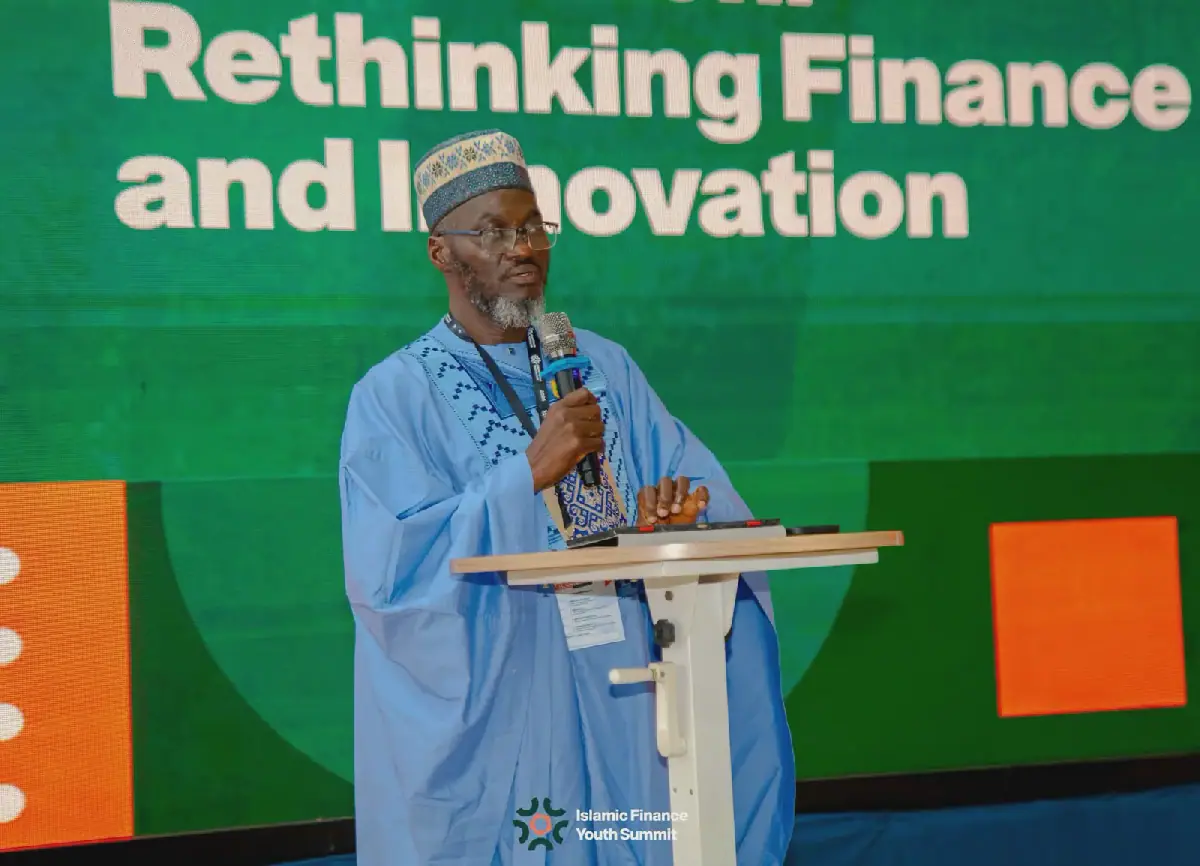
Professor Abdur-Razaq Alaro, a renowned Islamic law scholar, has urged young Muslims and practitioners in the Islamic finance industry to prioritize wealth redistribution, job creation, and support for the poor. He made this call at the maiden Islamic Finance Youth Summit, organized by NEXTIF, held at the Ilorin Innovation Hub in Kwara State on November 5, 2026. The summit's theme, "Ethical Generation: Rethinking Finance and Innovation," aimed to explore the intersection of Islamic finance, technology, and youth entrepreneurship.
Professor Alaro emphasized that financial products should not be considered successful solely based on Sharia approval. Instead, their impact on society, particularly on the poor and vulnerable, must also be examined. He cited reports showing that less than 10% of the global population controls over 80% of the world's wealth, and in Nigeria, less than 10% of the population owns more than 90% of the country's wealth and resources. This, he argued, highlights the need for Islamic finance to address issues of inequality and social justice.
The professor drew attention to the consequences of an unjust financial system, citing the bailout of Nigerian banks between 2009 and 2010, which involved approximately N5.5 trillion, compared to the country's 2010 budget of around N4.6 trillion. He argued that Islamic finance should provide an alternative by promoting equitable wealth distribution, responsible investment, and opportunities for people often excluded from formal financial systems.
Professor Alaro urged practitioners to place the higher objectives of Sharia, known as Maqasid al-Sharia, at the center of financial decision-making. These objectives include the protection of religion, life, intellect, family, and property. He emphasized that fairness must remain a central consideration in economic dealings, citing Qur'an 16:90, which commands justice, excellence, and generosity.
The Islamic financial transactions expert stressed the need for Islamic finance to support productive sectors, such as small and medium-sized enterprises, affordable housing, education, healthcare, agriculture, and other sectors that contribute to economic development. He called for greater access to financing for farmers, women, young graduates, and entrepreneurs with viable ideas but lacking capital.
Professor Alaro encouraged young Muslims to leverage technology to develop ethical financial solutions that address real economic challenges. He identified opportunities in fintech, digital bookkeeping, blockchain, smart contracts, crowdfunding, and platforms that connect small businesses with Sharia-compliant financing. He also highlighted the potential of Islamic social finance instruments, such as Zakat, Waqf, Sadaqah, and Qard al-Hasan.
The professor emphasized the importance of collaboration between Sharia scholars and Islamic finance operators, stressing that both sides must understand the demands and realities of the industry. He urged scholars to develop a practical understanding of business and financial operations, while practitioners should deepen their knowledge of Islamic jurisprudence. This collaboration, he believes, is crucial for developing practical solutions to contemporary financial challenges without compromising the principles of Sharia.
Key points
- Professor Abdur-Razaq Alaro calls for Islamic finance to prioritize wealth redistribution, job creation, and support for the poor.
- The professor emphasizes the need for Islamic finance to address issues of inequality and social justice.
- Collaboration between Sharia scholars and Islamic finance operators is crucial for developing practical solutions to contemporary financial challenges.
Reporting sources
- Islamic finance must tackle inequality, deliver social justice – Alaro · Muslim News Nigeria