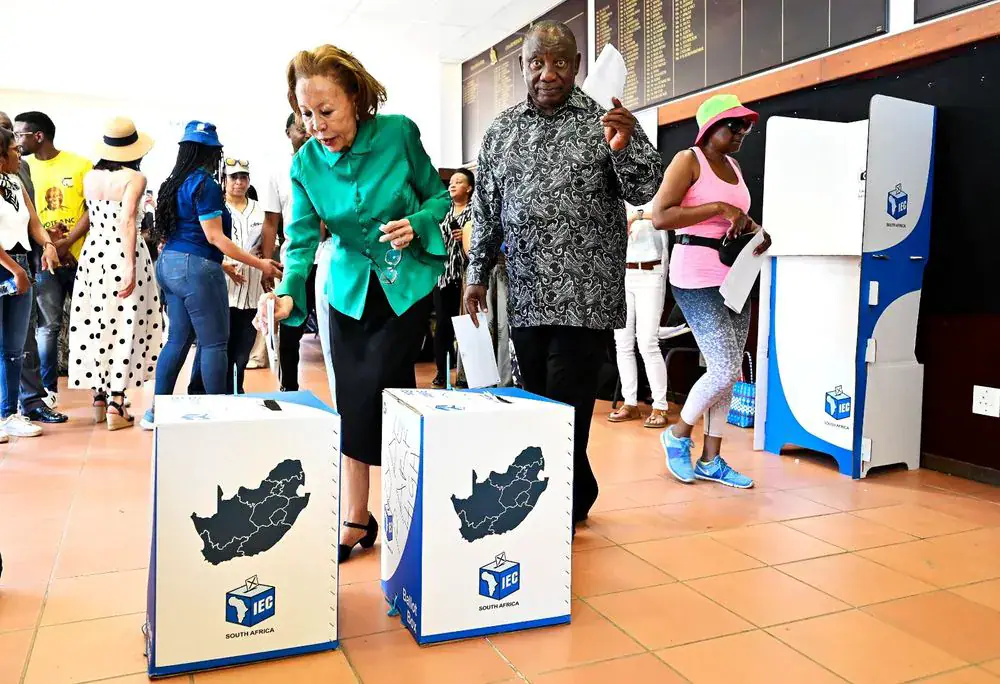
The 2026 Local Government Election in South Africa is set to be a watershed moment in the country's history, with several factors distinguishing it from previous elections since 1996. For the first time, the ANC went into the election as part of a ten-member multiparty coalition government, following a bruising 2024 general election that saw the party record its lowest performance since 1994. A Constitutional Court ruling allowed the ANC to register its 181 candidates, benefiting 32 other parties, but setting a questionable precedent for future elections.
A record 29.2 million voters registered for the election, with the number of registered youths being the highest ever. This demographic shift could impact traditional voting patterns, with the EFF's youth vote base seemingly waning. The country's eight metros recorded high voter numbers, with Johannesburg having over 2.4 million voters, eThekwini over 2 million, and Ekurhuleni and Tshwane each having over 1.7 million. The EFF has traditionally benefited from the youth vote, but its support base appears to be dwindling.
Over 500 political parties and nearly 137,000 candidates contested the election across 257 municipalities, making it likely that more hung municipalities will be produced compared to the 66 recorded in 2021. New alliances have increased this number to between 70 and 81, and it is expected to grow among the country's eight metros. In Buffalo City Metro, the ANC is likely to win, while in Cape Town City, the DA is likely to emerge victorious. However, in the other six metros, no party is guaranteed an outright majority.
Coalition politics will dominate the election, with several factors determining which parties will form coalitions. While leftist parties may seem like natural allies, their policy orientations may not necessarily translate to coalition agreements. The ANC's close ties with the DA, for instance, may be averse to parties like the EFF and SACP. The SACP has decided to contest the election independently due to concerns about the ANC's unilateral decision to forge relations with the DA.
The ANC and IFP's decision to usurp power from the MKP in KZN after the 2024 general election has also impacted coalition dynamics. The parties ganged up with the DA, which had made it clear that it would work with the ANC to prevent a "Doomsday Coalition" with the EFF and MKP. In KZN, it would make sense for the ANC, IFP, and MKP to form a coalition, but the IFP's existing relationship with the DA and the DA's role in securing the premier position in KZN complicate this possibility.
ActionSA, led by Herman Mashaba, is a significant player in the election, with Mashaba remaining open to forming coalitions with other parties, including the DA. The party's growth could be a deciding factor in hung metros and district and local municipalities. The number of new parties contesting the election for the first time is high, with most not aligning with the ANC. However, in politics, alliances can shift rapidly.
The 2026 Local Government Election has several dynamics that make it stand out, including the growth of new parties and shifting alliances. As the country navigates these complexities, one thing is clear: coalition politics will play a significant role in determining the outcome. The election's outcome will depend on the complex interplay of party interests, voter preferences, and coalition agreements.
Key points
- Coalition politics will dominate the 2026 Local Government Election in South Africa.
- No party is likely to win an outright majority in most metros.
- The election's outcome will depend on complex party alliances and voter preferences.