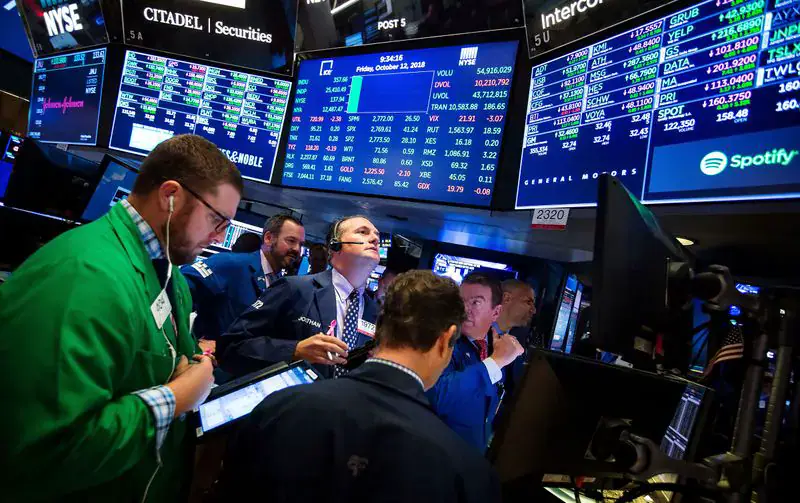
Technology stocks experienced significant shakeouts last week, sparking concerns about the sustainability of the artificial intelligence (AI) boom. The Nasdaq plunged 5.5%, closing at its lows for the day, reminiscent of past market turmoil. This decline has led investors to wonder if the AI bubble is finally bursting. Although markets rebounded moderately on Friday and early this week, the question lingers. The AI complex was severely impacted, with Japan's Nikkei entering a bear market, down over 20% from its June highs.
The catalyst for the recent market turmoil appears to be the US midterm elections, which delivered a significant blow to the AI industry. The Democratic blue wave that swept through the US resulted in a public rejection of the enormous infrastructure projects underpinning the AI boom. Initially, investors seemed relieved, but this sentiment lasted only 24 hours. The subsequent sell-off was severe, with the Nasdaq now in correction territory. In contrast, South African equities, specifically the JSE, ended last week higher, diverging from the carnage in US and Asian markets.
Experts have long recognised the hallmarks of an unsustainable party in the AI investment boom. These include extraordinary valuations, enormous borrowing requirements, and imaginative financing structures. A troubling disconnect exists between imagined future revenues and actual cash flow. The Bank for International Settlements recently calculated that almost 29% of AI companies' investments go into other AI businesses, while over half of the investment flowing into AI firms comes from other AI firms. This creates a challenging environment to distinguish between genuine final demand and make-believe demand financed by the industry's own capital.
The US midterm elections may have provided the catalyst for the AI bubble to burst. Voters rejected 40 of 41 local ballot measures concerning data-centre development, delivering a resounding rebuke to Big Tech. This rejection could rapidly undermine revenue forecasts and the ability to service debt for an industry increasingly dependent on borrowed money. The AI trade resembles a shark; it must keep swimming to stay alive. If the Democrats continue to gain momentum, it could spell trouble for the AI industry.
Research house TS Lombard warned in October that a serious unwinding of the AI boom could knock at least 30% off US equities and generate as much as $200-billion in credit losses. These estimates seem plausible, given the current market conditions. The rise in US Treasury bond prices suggests that investors are beginning to seek protection, with yields down almost 40bps from their highs in October. This could be a sign that something significant is on the horizon.
Additional threats to the AI industry have emerged, including a controversy surrounding Nvidia Chief Executive Jensen Huang. Huang has been accused of having an extramarital relationship with a woman purported to be a Chinese spy. This revelation has significant implications for Nvidia and the AI industry as a whole. Furthermore, upcoming inflation and employment data will determine whether the Federal Reserve has any room to avoid further market turmoil.
As the market navigates these challenges, investors will be closely watching for any further triggers that could lead to another market meltdown. The AI bubble has been a topic of discussion for months, and it seems that the party may finally be coming to an end. While it is impossible to predict with certainty what the future holds, one thing is clear: the AI industry is facing significant headwinds, and investors must be cautious.
Key points
- The AI bubble may be bursting due to rising infrastructure costs and industry financing exposure.
- The US midterm elections delivered a significant blow to the AI industry, with voters rejecting enormous infrastructure projects.
- Experts warn that a serious unwinding of the AI boom could knock at least 30% off US equities and generate $200-billion in credit losses.