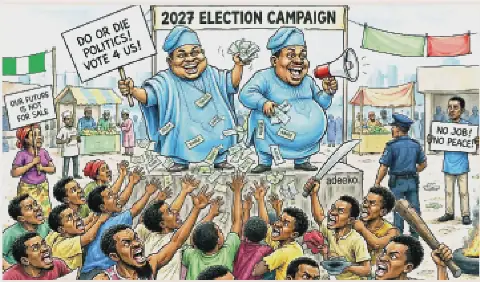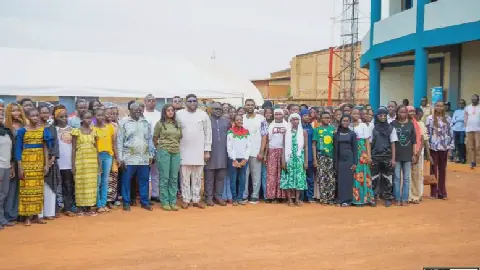
A pressing question is being posed to every Northerner, irrespective of their political affiliation, ethnicity, religion, or state: are they adequately preparing for the Nigeria that is already taking shape? This query goes beyond the usual blame game surrounding poverty, insecurity, failing schools, and crumbling infrastructure. It touches on a deeper concern that Nigeria is undergoing significant changes, and the Arewa region appears alarmingly unprepared. These changes are no longer theoretical, with electricity becoming increasingly decentralised and state police moving closer to becoming a reality.
The establishment of regional development commissions for each geopolitical zone is another significant development, with Abuja recognising that Nigeria's regions have distinct challenges requiring tailored solutions. The question now is whether Arewa is thinking strategically or merely reacting to each new crisis. The North-East Development Commission, established in 2017, has gained valuable experience in areas such as education, healthcare, and support for displaced persons. In contrast, the North-West has been embroiled in disputes over leadership, offices, and allowances, hindering its effectiveness.
The North-Central Development Commission has outlined its priorities, including agriculture, industrialisation, education, health, water, electricity, and regional development. Its leadership aims to transition the region from fragmented state-level efforts to a coordinated regional economy, focusing on agriculture, minerals, infrastructure, and digital connectivity. This kind of strategic thinking is what the wider North needs to adopt. The region's potential is substantial, with enormous agricultural, mineral, water, industrial, and logistical assets.
The North-Central region's leadership is exploring ways to develop its agricultural strength, connect with processing centres and markets, and responsibly harness its mineral and water resources. The region's potential to become a major economic bridge between the North and South is significant. However, the answers to these questions will determine whether the North-Central region merely remains Nigeria's geographical middle or emerges as a major economic hub.
The Electricity Act 2023 has opened the way for states to regulate their own electricity markets and participate more directly in generation and distribution. By July 2026, 16 states had completed the transition, including Kogi, Niger, Plateau, and Nasarawa. However, many Northern states lack a clear electricity plan, and it remains unclear how they will identify industrial clusters requiring dedicated power or engage with investors on solar, gas, hydro, and mini-grids.
Nigeria's shift towards a federal and state policing structure necessitates a significant conversation in the North. The region needs to consider what policing should look like in states such as Zamfara, Kaduna, or Kano, and how state and federal police will cooperate. The North has valuable experience with community-security arrangements, particularly in areas affected by banditry and insurgency. However, this experience does not necessarily translate to preparedness, and the region's institutional readiness for state policing remains weak.
The North's agricultural sector is another area of concern, with the region being agriculturally important but increasingly food-insecure. A comprehensive agricultural economy built on security, irrigation, improved seeds, extension services, storage, processing, rural roads, electricity, credit, insurance, and livestock development is needed. The region's human crisis is equally pressing, with insecurity, poor human capital, and weak infrastructure undermining its advantages.
Key points
- The Arewa region needs a strategic plan to address the changing landscape of Nigeria.
- The North-Central Development Commission's priorities include agriculture, industrialisation, and regional development.
- The region's shift towards a federal and state policing structure requires significant conversation and planning.