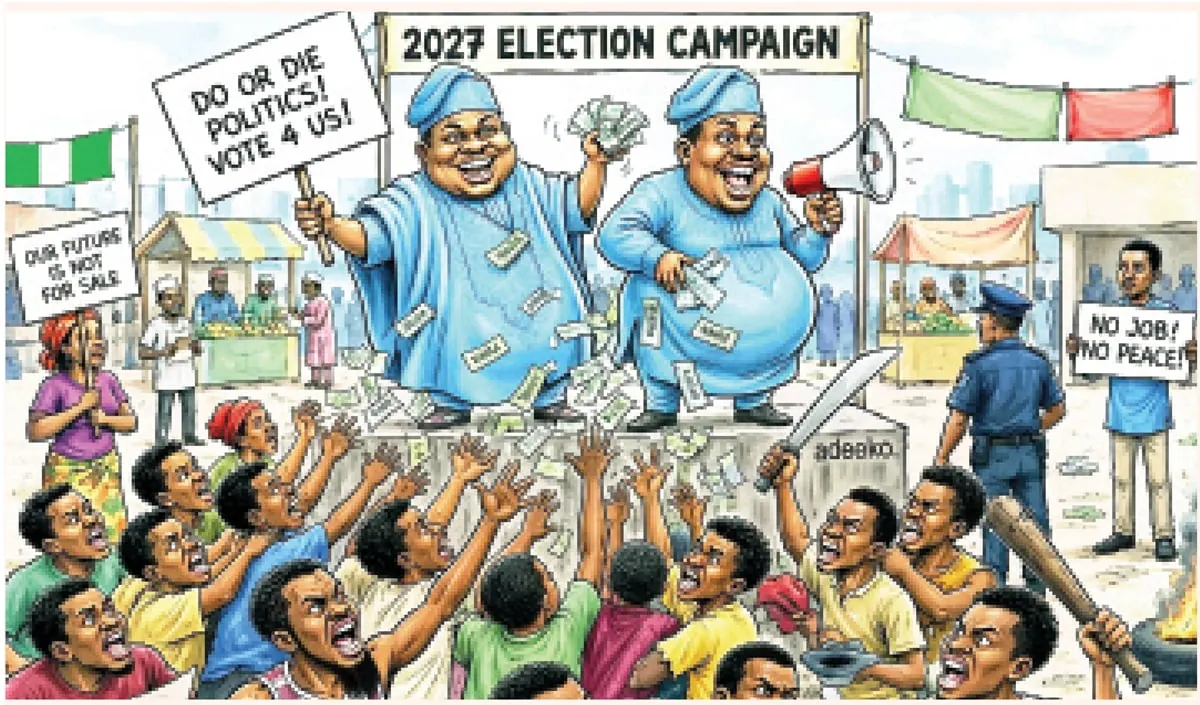
Ahead of the 2027 general election, governors, commissioners, and party officials across Nigeria are employing tactics that threaten and intimidate opposition figures and voters. These actions have sparked fears of violence worse than what preceded the Osun governorship poll. According to election observers, the rhetoric and actions of some politicians have prompted concerns that provisions of the Electoral Act 2026 are being violated. The Act prohibits the use of abusive language, threats, and coercion during political campaigns.
The Electoral Act 2026, which governs the ongoing 2027 election process, outlines specific rules for political campaigns. Section 96(2) of the Act prohibits the use of abusive, intemperate, slanderous, or base language designed to provoke violent reactions or emotions. Additionally, Section 97(1) prohibits parties, candidates, or persons from directly or indirectly threatening any person with the use of force or violence during political campaigns. Despite these provisions, politicians have continued to use hostile language and actions, prompting concerns from electoral observers.
In Benue State, the presidential candidate of the Nigeria Democratic Congress (NDC), Peter Obi, was blocked from entering the state capital by a group of people on September 8. Obi accused an unnamed special assistant to Benue State Governor Hyacinth Alia of orchestrating the blockade and hiring "armed thugs". The state government, however, claimed that Obi had failed to officially inform them about his visit, and therefore, they could not guarantee his safety. The state police command contradicted the government's claim, stating that they had been notified of Obi's visit.
The blockade of Obi's convoy in Benue State is not an isolated incident. In other states, politicians have used threats and coercion to intimidate opposition figures and voters. A governor has threatened to sack elected local government chairmen if they do not ensure that their party wins in their LG areas. Another governor has been accused of paying a group to block a presidential candidate from entering his state. These actions have prompted concerns from electoral observers that the 2027 election cycle may be marked by greater violence than previous elections.
Electoral observers have expressed concerns about the trend of suppressing opposition participation in the 2027 elections. The Executive Director of Kimpact Development Initiative, Bulola Idowu, said that his organisation fears these hostile actions may trigger greater violence than that which preceded the August 15 governorship election in Osun State. Similarly, the Chairman of BallotEyes and Truth Guard Election Working Group, Olasupo Abideen, said that the recent incidents must be discouraged by all concerned stakeholders.
The use of threats and coercion by politicians is not only a violation of the Electoral Act but also undermines the democratic process. According to Senior Media Associate at Enough is Enough (EiE) Nigeria, Akindeji Aromaye, the use of public authority to shape who can participate, where they can campaign, and how other public officials and citizens are expected to behave politically is a concern. EiE Nigeria, along with other organisations, observed the Osun governorship election and is now worried about the trend of suppressing opposition participation in the 2027 elections.
The incidents of violence and intimidation have sparked concerns about the risk of a violent 2027 election cycle. The consequences of such actions could be severe, including the loss of lives and property. It is essential that politicians adhere to the Electoral Act and respect the rights of opposition figures and voters. The government must also take concrete steps to prevent and address incidents of violence and intimidation, ensuring a peaceful, free, and fair election process.
Key points
- Governors and party officials are using threats and coercion to intimidate opposition figures and voters ahead of the 2027 general election.
- The Electoral Act 2026 prohibits the use of abusive language, threats, and coercion during political campaigns, but politicians have continued to violate these provisions.
- Electoral observers fear that the 2027 election cycle may be marked by greater violence than previous elections due to the hostile actions of politicians.