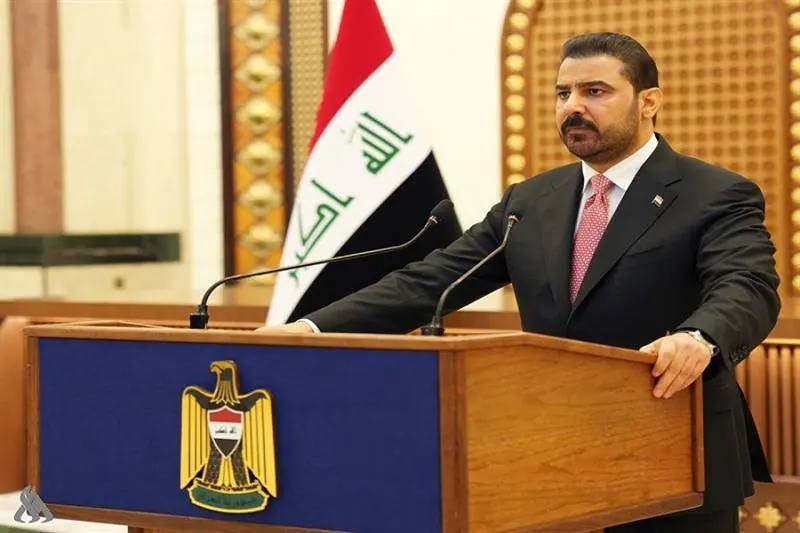
Iraqi Prime Minister Ali al-Zaidi announced on Thursday, October 1, that June 30, 2027, will be the new deadline for armed factions to turn over their weapons to the state. This comes after the US-led coalition's mission in Iraq officially ended on September 30. Al-Zaidi stated that October 1 marks the beginning of a clear roadmap and agreed timelines to address the issue of weapons outside state control.
The Iraqi government believes that the withdrawal of coalition forces will deprive armed factions, many of which are backed by Iran, of the excuse they have used to retain their arsenal. However, many fear that the pullout might boost the factions instead, drawing the country deeper into the Middle East war. Al-Zaidi emphasized that the decision of war and peace should be left to the constitutional authorities, banning all military action to the contrary.
Al-Zaidi had originally set September 30 as the deadline for factions to disarm, but later withdrew it as talks to "regulate" weapons continued. While some factions have already handed over their weapons to the state, others have refused to disarm. The Iraqi Prime Minister's move is seen as an effort to assert state control over the various armed groups operating in the country.
Iranian-backed factions have put forward conditions that include not only the withdrawal of foreign troops but also an end to American political and economic interference. Kataeb Hezbollah, a pro-Iran group, stated that they are "not bound by any timeline or agreement" to surrender their weapons to the state. The group also threatened Al-Zaidi's government, warning that a government that doesn't work for the good of its people will be brought down by all possible means.
The US-led coalition officially ended its mission in Iraq on September 30, more than a decade after it deployed to the country to help fight the Islamic State (IS) group. The withdrawal of US forces from Iraq was welcomed by Iran's Revolutionary Guards as a "historic victory." The Guards called for American troops to leave the Middle East, congratulating the Iraqi people and the united front of the Islamic Resistance on this development.
The pro-Iran groups had long demanded the withdrawal of US troops, targeting them with drones and missiles, and triggering US retaliatory strikes that killed several faction commanders over the years. During the Middle East war, Tehran and allied factions intensified their attacks in Iraq, targeting US-led troops in the Kurdistan region. The situation remains complex, with various factions vying for power and influence in the country.
The Iraqi government's efforts to assert control over armed factions and regulate weapons are seen as crucial in maintaining stability in the country. The June 30 deadline for factions to disarm and turn over their weapons to the state will be a key test of Al-Zaidi's government's resolve and the willingness of various factions to comply. The international community will be watching closely as Iraq navigates this critical period in its history.
Key points
- Iraqi Prime Minister Ali al-Zaidi sets June 30 deadline for armed factions to turn over their weapons to the state.
- The US-led coalition officially ended its mission in Iraq on September 30.
- Iran's Revolutionary Guards welcomed the withdrawal of US forces from Iraq as a "historic victory."