Iranian students returned to school on Wednesday, September 23, 2026, after a prolonged closure due to the war that began in late February. The conflict in the Middle East has been ongoing, and the resumption of classes marks a significant step towards normalcy. The war was triggered by American and Israeli airstrikes, which had a devastating impact on the education sector.
The return to school was marked by a somber mood, particularly in the southern city of Minab, where an elementary school was bombed on the first day of the conflict, resulting in the deaths of 120 children. The incident left a lasting impact on the community, and the region is still recovering from the trauma. Despite the challenges, students and teachers alike were determined to resume their academic activities.
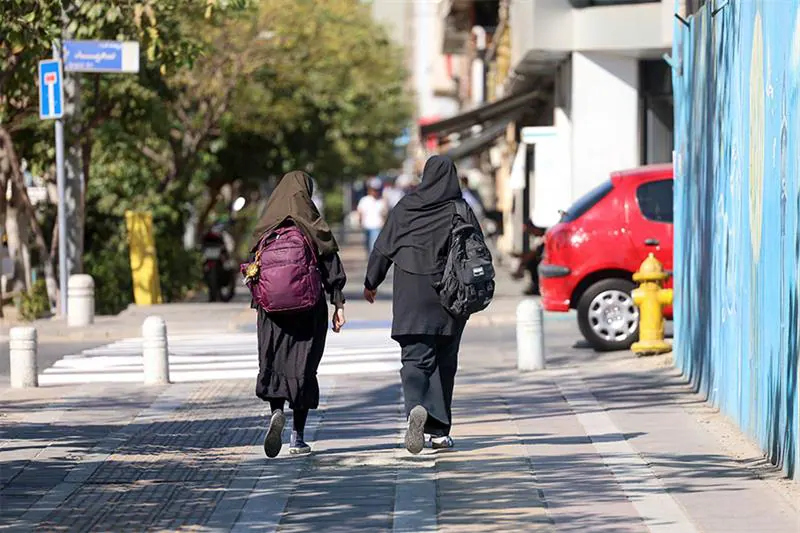
In the western Tehran neighborhood of Jannat Abad, parents accompanied their children to school, ensuring they were properly attired in the mandatory uniform and headscarves. Police officers were deployed to manage traffic and distribute flowers to students on their first day back. The scene was one of cautious optimism, as families sought to put the recent turmoil behind them.
According to official reports, over 16.5 million students will be attending school this year, with more than a million new entrants in the first year. The Iranian government had traditionally marked the beginning of the school year with a ceremonial event, where the president would ring the school bell. This year, however, the ceremony was held on Monday, September 21, to allow President Massoud Pezeshkian to attend the United Nations General Assembly in New York.
The ceremonial ringing of the school bell was performed by Vice President Hossein Afshin in Minab on Wednesday, marking the official start of the academic year. The event was a symbolic gesture, aimed at emphasizing the importance of education and the government's commitment to providing a safe and stable learning environment.
The Iranian education sector has faced significant challenges in recent years, with the war and subsequent economic sanctions taking a toll on the country's infrastructure and resources. Despite these obstacles, the government has prioritized education, recognizing its crucial role in shaping the country's future. As students settle back into their routine, there is a sense of hope and determination to rebuild and move forward.
As the academic year begins, the international community is watching with interest, as Iran's President Pezeshkian prepares to address the United Nations General Assembly on Wednesday. The President is expected to emphasize Iran's resilience in the face of adversity and its commitment to regional stability.
Key points
- Over 16.5 million students are set to attend school in Iran this year.
- The war in the Middle East has had a profound impact on the education sector in Iran.
- The Iranian government has prioritized education, recognizing its crucial role in shaping the country's future.