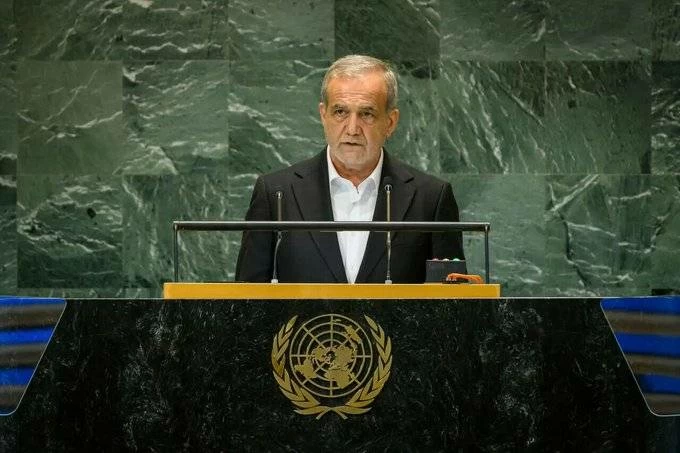
Iranian President Masoud Pezeshkian stated that his government has made new arrangements to manage exceptional circumstances. He mentioned that the enemy's plan in recent months was to cut off the country's vital lifelines to pressure the Iranian people. Pezeshkian noted that despite increased economic pressures, the government and the people have worked together to prevent the enemy from achieving its goals in the economic war.
Pezeshkian's comments come amid a challenging economic situation in Iran, with the country's currency, the rial, experiencing a sharp decline against the US dollar. The rial has reached a record low of around 2.7 million rials per dollar, representing a significant drop of over 150,000 rials compared to the previous Friday. This decline has resulted in the rial losing over 80% of its value since the beginning of 2026.
The Iranian economy is facing significant pressures due to sanctions, reduced trade, and limited foreign exchange inflows. To address this issue, the Central Bank of Iran has attempted to intervene by injecting up to $2 billion into the market to support the rial and slow down its decline. However, this effort is being hindered by Iran's difficulties in obtaining foreign currency, which is largely due to decreased oil revenues and reduced trade activity.
In a related development, President Pezeshkian accepted the resignation of Oil Minister Mohsen Paknejad on Sunday. He appointed Hamid Pourd, a local company official, as the caretaker minister, according to a statement from the presidential office. This change in leadership occurs as Iran continues to navigate its economic challenges.
The Iranian government's efforts to manage the economic situation are being closely watched, both domestically and internationally. The country's economic woes have been exacerbated by a combination of factors, including sanctions, reduced trade, and decreased oil revenues. As a result, the government is under pressure to implement effective measures to stabilize the economy and improve the living standards of its citizens.
Despite these challenges, Pezeshkian's government remains committed to finding solutions to the country's economic problems. The president's recent statements suggest that the government is working to address the economic pressures facing the country and to prevent the enemy from achieving its goals in the economic war.
The situation in Iran remains fluid, with the country's economy continuing to face significant challenges. The government's ability to manage these challenges and implement effective solutions will be crucial in determining the country's future economic prospects.
Key points
- The Iranian government has taken new measures to manage exceptional circumstances and foiled the enemy's goals in the economic war.
- The country's currency, the rial, has experienced a sharp decline against the US dollar, losing over 80% of its value since the beginning of 2026.
- The government has accepted the resignation of Oil Minister Mohsen Paknejad and appointed a caretaker minister to oversee the ministry.