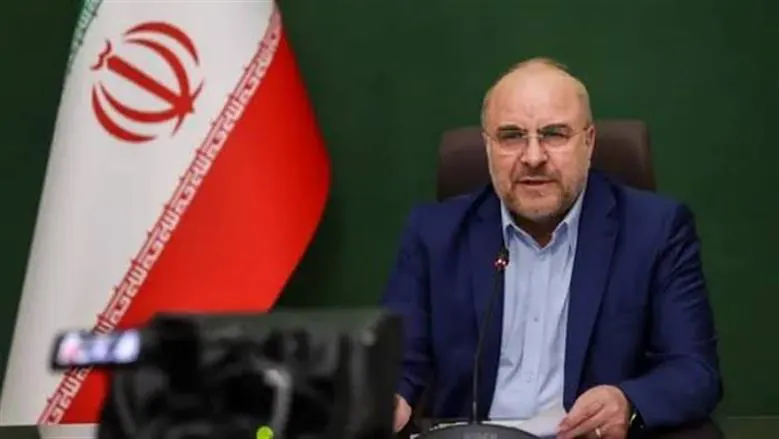
Iranian Parliament Speaker Mohammad Bagher Ghalibaf stated that the opening of the Strait of Hormuz is contingent upon the implementation of seven conditions set by Iran. He urged Washington to recognize that the era of wasting time and imposing unilateral demands has come to an end. Ghalibaf's comments were reported by the Cairo News Channel on October 4, 2026, amid heightened tensions between Iran and the United States.
Ghalibaf emphasized that Iran is pursuing a dual approach, combining military action with diplomatic efforts. He highlighted that the success of negotiations depends on the readiness for war, underscoring Iran's commitment to maintaining its military preparedness in tandem with diplomatic engagement. This stance reflects Iran's long-standing position on its military capabilities and diplomatic negotiations.
The Iranian Parliament Speaker's comments come as part of a broader narrative of resistance to US pressure. Ghalibaf previously noted that the US's strategy of economic pressure would ultimately backfire. He also reaffirmed Iran's sovereignty over the Strait of Hormuz, a critical waterway for global oil shipments, and stressed that Tehran would not permit US interference in the region.
Ghalibaf's statements on the Strait of Hormuz and negotiations with the US were echoed by other Iranian officials. The country's top negotiator had earlier indicated that talks with Washington were conditional on Iran's red lines. These comments suggest a coordinated approach by Iran to manage its relationships with the US while maintaining its strategic interests.
The tensions between Iran and the US have been ongoing, with the US imposing significant economic sanctions on Iran. The Iranian economy has faced considerable challenges, with US President Trump stating that the Iranian economy had completely collapsed due to American sanctions. These developments have contributed to a complex and strained relationship between the two nations.
In a related development, Iran reportedly transmitted its demands to the US through a Qatari intermediary. This move indicates Iran's efforts to engage with the US through diplomatic channels while reiterating its conditions for negotiations. The dynamics between Iran and the US continue to influence regional and global politics.
The situation remains fluid, with Iran's military preparedness and diplomatic efforts ongoing. Ghalibaf's interactions with other regional leaders, such as his Lebanese counterpart, underscore Iran's commitment to regional cooperation based on the principle of non-interference in internal affairs. The international community watches closely as Iran navigates its relationships with the US and other global players.
Key points
- Iran's Parliament Speaker Mohammad Bagher Ghalibaf links the opening of the Strait of Hormuz to the implementation of seven Iranian conditions.
- Ghalibaf emphasizes Iran's dual approach of military readiness and diplomatic engagement.
- The tensions between Iran and the US are influenced by economic sanctions and regional strategic interests.