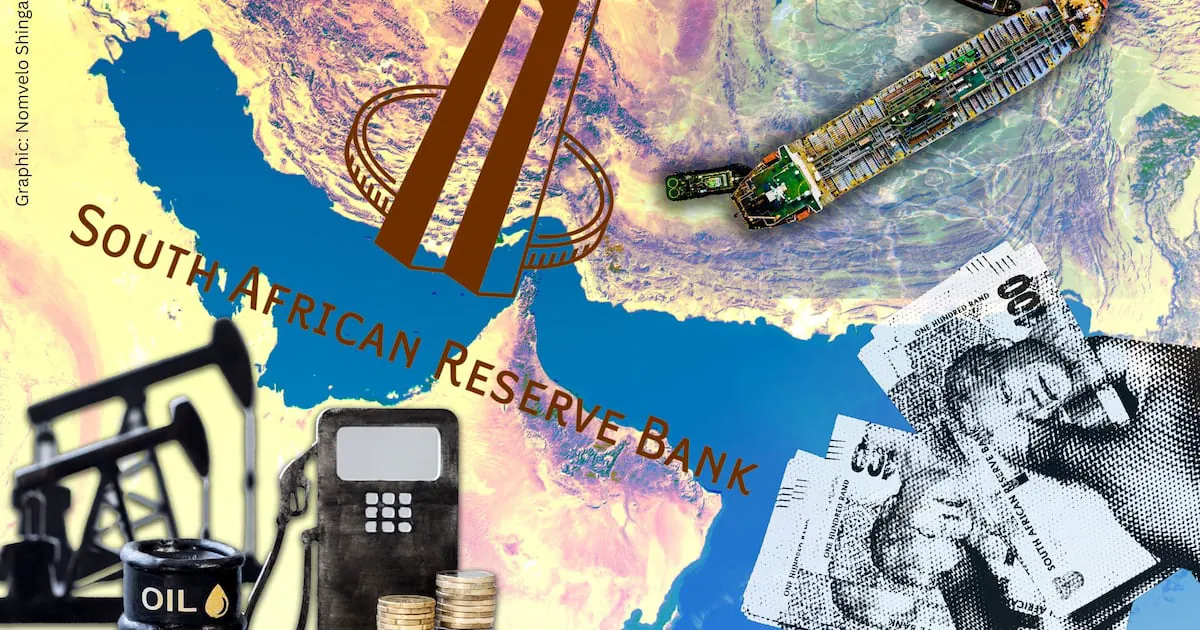
The South African Reserve Bank has noted that the prolonged conflict in the Middle East has intensified global inflationary pressures, with the war-related surge in fuel and fertiliser prices filtering through to the domestic economy. This has added upward pressure to producer and consumer prices during the first half of 2026. The bank's September quarterly bulletin highlighted that global food price inflation has tilted to the upside, with risks stemming from adverse weather conditions and geopolitical disruptions.
According to the Reserve Bank, fuel prices in 37 Organisation for Economic Cooperation and Development countries reverted from deflation of 0.4% in January to 15.8% inflation in May. Inflation accelerated across 26 of the states before slowing to 11.6% in July amid volatility in global crude oil markets. The bank noted that the stronger rand exchange rate partly mitigated the pass-through of higher international crude oil prices to the South African economy.
The war-related surge in fuel and fertiliser prices has had a significant impact on domestic consumer fuel price inflation, which reverted sharply from minus 10.1% in February to 34.3% in June. This was the highest rate since September 2022, before moderating to 20% in August. The Reserve Bank previously warned that an extended conflict and the El Niño weather phenomenon pose upside risks to food inflation.
Despite the challenges, South Africa has so far seen muted food inflation stemming from the Middle East war, largely due to its recent strong summer crop season. However, the Reserve Bank remains cautious about the potential risks. The bank's governor, Lesetja Kganyago, noted that the domestic economy appeared to have taken a heavier knock from the price shock from the war compared with other countries.
Kganyago attributed the country's vulnerability to a weak underlying growth trend, stating that it does not take much to get the economy below zero. He emphasised the need for a reform agenda, but acknowledged that progress is gradual and there are strong headwinds. The governor's comments were made during a speech at a forum on Africa and geopolitics hosted by the Mapungubwe Institute for Strategic Reflection.
The South African economy contracted by 0.2% in the second quarter of 2026 due to weaker output in the trade, catering and accommodation sectors, as well as manufacturing and mining industries. The Reserve Bank's quarterly bulletin provides a comprehensive analysis of the domestic and global economic trends, highlighting the challenges facing the South African economy.
Key points
- The prolonged conflict in the Middle East has intensified global inflationary pressures, affecting the South African economy.
- The war-related surge in fuel and fertiliser prices has added upward pressure to producer and consumer prices in South Africa.
- The country's weak underlying growth trend makes it vulnerable to external shocks, such as the price shock from the war.