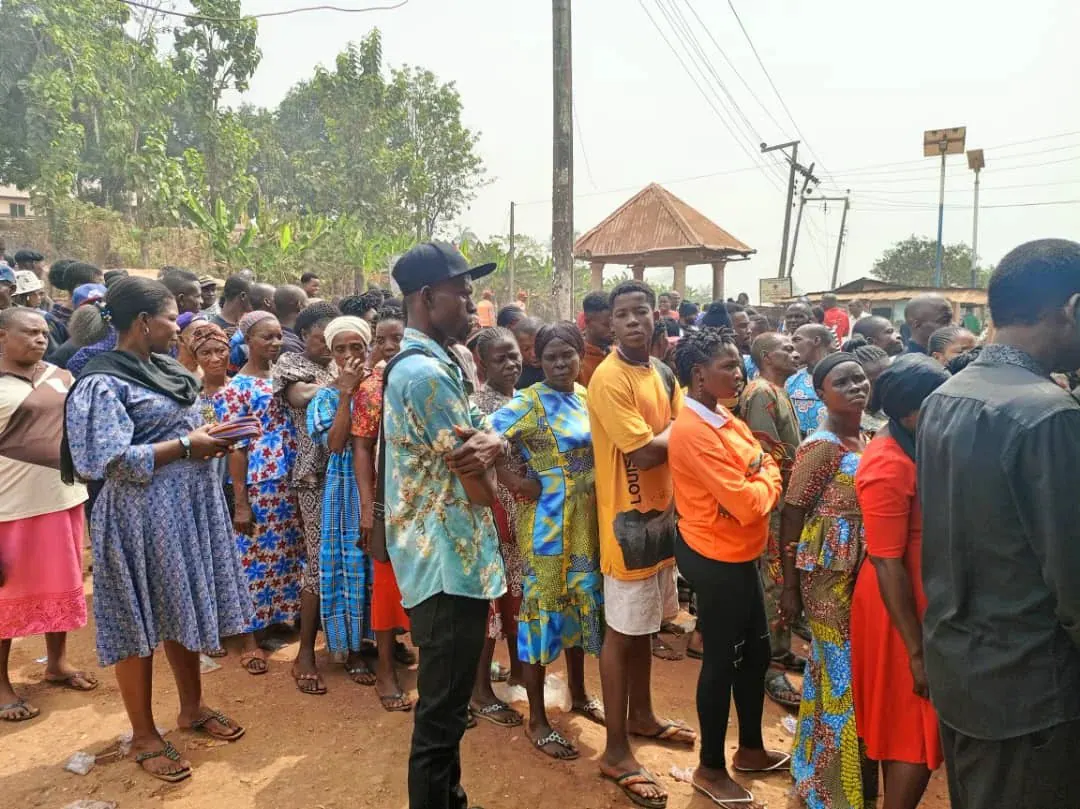
Nigeria's electoral process has long been viewed as a 'black box' with many Nigerians believing that votes do not always count. The introduction of INEC's Result Viewing Portal (IReV) in August 2020 was a significant step towards transparency, allowing citizens to access polling-unit result sheets online. IReV added a publicly accessible digital record of polling-unit result sheets, making results easier to inspect independently and audit. However, despite this progress, distortions and manipulations often occurred at various stages of the collation process.
The 2023 General Election highlighted the limitations of IReV, with controversies arising over claims that INEC results announced in some parts of Rivers State did not tally with those recorded and announced at some polling units. A review of polling-unit result sheets uploaded to IReV in Obio/Akpor Local Government Area of Rivers State found a stark discrepancy between the figures declared by INEC and the results recorded on many of the polling-unit forms. This exercise demonstrated the challenge that IReV presents to ordinary citizens and election observers in manually extracting and comparing figures from thousands of photographed result sheets.
Civic technology companies, such as Dataphyte and Mundx Analytics, are now using technology to process, analyse, and present IReV results at scale and in near real time, while retaining links to the original polling-unit forms for independent verification. These technologies provide an additional safeguard against electoral manipulation, particularly allegations of result alterations. By using AI to read and structure the information on polling-unit result sheets, civic tech firms can identify abnormalities and flag potential issues.
Martin Uwakwe, founder of Mundx Analytics, explained that his company built a technology layer on top of IReV, which identifies polling units, uses AI to read and structure the information on the form, runs validation checks, flags abnormalities, and aggregates the results. This technology makes it possible to compile, analyse, and publish results in near real time, an opportunity previously restricted to INEC. Mundx Analytics monitored, covered, and disseminated about 97.7 per cent of the Osun governorship election.
The use of civic technology has the potential to transform how election results are accessed, understood, and tracked while collation is still ongoing with the electoral body. Although IReV has improved transparency and made election results more accessible, the challenge is that these results are uploaded mainly as photographs of handwritten forms rather than as structured data. Civic tech firms are addressing this challenge by making sense of thousands of result sheets in real time.
The introduction of AI and civic tech in Nigeria's election result tracking landscape has the potential to increase transparency and credibility. However, it is essential to note that these technologies still rely on what INEC uploads, and there is an opportunity to cross-check individual polling units' results. The use of civic technology can help to identify and flag potential issues, but it is crucial to ensure that the underlying data is accurate and reliable.
As Nigeria continues to evolve its electoral process, the role of technology will likely become increasingly important. The use of AI and civic tech can help to build trust in the electoral process and increase voter participation. By providing an additional layer of transparency and accountability, these technologies can help to ensure that election results are accurate and reliable.
Key points
- The introduction of INEC's Result Viewing Portal (IReV) in August 2020 improved transparency in Nigeria's electoral process.
- Civic technology companies are using AI to process, analyse, and present IReV results at scale and in near real time.
- The use of civic technology has the potential to transform how election results are accessed, understood, and tracked while collation is still ongoing with the electoral body.