Iran's Foreign Ministry has condemned Washington's efforts to disrupt Iran's trade and air transport through the enforcement of US sanctions, and urged Baghdad to remove the restrictions. The Ministry stated that the movement of millions of Iranian and Iraqi citizens required an independent and responsible approach to disagreements between the two governments. This comes after flights between Najaf and Iran partially resumed on Monday.
The resumption of flights between Najaf and Iran was credited to the efforts of Prime Minister Ali al-Zaidi. However, Iraq's ambassador to Iran, Yasser Abdulzahra al-Hajjaj, stated that Baghdad had not decided to suspend Iranian flights. Despite this, foreign ground-handling companies have refused to provide services for fear of US sanctions, limiting the resumption of flights.
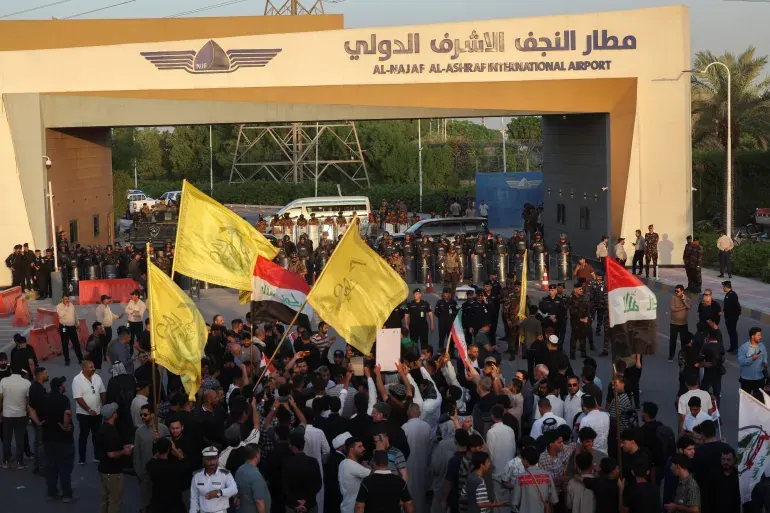
Flights remain suspended at Baghdad, Erbil, and Sulaimaniyah airports, forcing passengers onto land journeys of at least 12 hours and disrupting pilgrim traffic between Shia-majority areas. The suspensions have prompted protests across Iraq, including outside Najaf airport and in Nasiriya, Karbala, and Amarah. These protests highlight the impact of the flight restrictions on the movement of people between the two countries.
The US ban, which took effect on September 23, targets any company doing business with Iranian airlines and has sharply cut Iran's international air links. According to aviation monitor FlightRadar24, flights to and from Tehran's Imam Khomeini international airport have fallen 42 percent. Routes to Georgia, Oman, and Azerbaijan have been halted entirely, and flights to Dubai have been suspended since September 23.
Despite the significant impact of the US ban, flights to China have held steady, while the busiest route, to Turkiye, has fallen by only 19 percent. Individual airlines have shifted service on and off this route. Iraq's government had sought a US exemption on humanitarian grounds related to medical treatment, education, religious visits, and the interests of civilians.
The US sanctions have had far-reaching consequences for air travel between Iran and Iraq. The restrictions have not only affected the movement of people but also disrupted trade and economic activities between the two countries. Iran's call for Iraq to lift the remaining flight restrictions is a bid to restore normal air travel and ease the humanitarian impact of the sanctions.
The situation remains complex, with ongoing diplomatic efforts to address the humanitarian concerns related to the US sanctions. The impact of the sanctions on air travel and trade between Iran and Iraq continues to be felt, with millions of citizens affected by the restrictions. Key efforts to resolve the issue are ongoing.
Key points
- Iran has urged Iraq to lift remaining flight restrictions caused by US sanctions.
- The US ban has sharply cut Iran's international air links, with flights to and from Tehran's Imam Khomeini international airport falling 42 percent.
- Iraq's government had sought a US exemption on humanitarian grounds related to medical treatment, education, religious visits, and the interests of civilians.