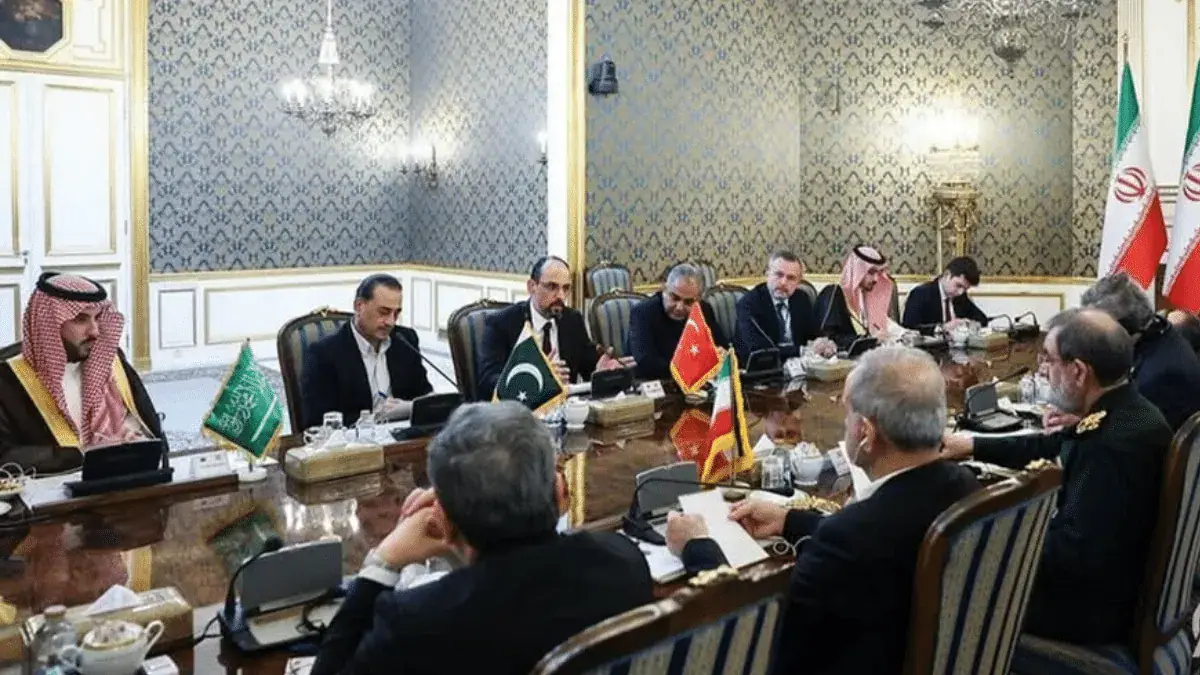
On October 26, high-level officials from Iran, Turkey, Saudi Arabia, and Pakistan gathered in Tehran at the initiative of Islamabad. The meeting aimed to explore ways to prevent the escalation of conflict in the Middle East. Each country has distinct concerns, but they share a common goal of regional stability. Pakistan seeks to secure its energy supplies, while Iran aims to ease the pressure of US sanctions. Saudi Arabia wants to protect itself from Houthi attacks, and Turkey seeks to prevent a regional crisis that could harm its interests.
The meeting resulted in a joint communiqué that emphasized the continuation of dialogue and enhanced regional cooperation. However, no concrete agreements were reached. According to diplomatic sources, the Pakistani military chief proposed the Tehran meeting and acted as an intermediary for Riyadh, which seeks an end to Houthi attacks. Islamabad's motivations include protecting its energy supplies, trade, and security, as well as strengthening ties with Riyadh and maintaining communication with Tehran.
Iran is under significant pressure due to US sanctions, which have led to a blockade of its ports and restrictions on oil exports. The country has long advocated for regional security to be ensured solely by regional countries. The presence of Turkish, Saudi, and Pakistani officials in Tehran provides Iran with diplomatic channels despite its isolation. However, no strategic rapprochement is expected between these countries, as fundamental disagreements persist on issues like nuclear policy, Palestine, and the regional balance of power.
Saudi Arabia's participation in the meeting, led by Defense Minister Khaled bin Salman, underscores the importance of the initiative. Riyadh seeks to protect its territory, energy infrastructure, and export routes without engaging in a new confrontation with Iran. The kingdom supports mediation efforts by Qatar and Pakistan but also views the meeting as a warning to Iran. Turkey, despite its wariness of Iranian ambitions, aims to prevent escalation and preserve its relations with regional capitals.
The meeting is also significant in the context of the Makkah Pact, a defense agreement signed in August 2026 by Turkey, Saudi Arabia, and Pakistan. The pact aims to enhance military cooperation and collective response. However, the three signatories perceive threats differently, and their priorities diverge. Islamabad is close to Iran, while Ankara is wary of Tehran's ambitions, and Riyadh views Iran as a strategic adversary.
The effectiveness of the Tehran meeting will depend on concrete outcomes, particularly progress in Washington-Tehran contacts through Qatari mediation, an end to Houthi attacks on Saudi Arabia, and the securitization of navigation in the Strait of Hormuz. The talks have provided a platform for discussion, but tangible results are yet to be seen. The participating countries will likely continue to engage in diplomatic efforts to address their concerns and prevent regional instability.
The Tehran meeting reflects the complex dynamics of the Middle East, where countries with divergent interests seek to find common ground to address shared security concerns. As the region continues to grapple with challenges, diplomatic initiatives like the Tehran meeting will be crucial in preventing escalation and promoting cooperation. The outcome of these efforts will have significant implications for regional stability and global security.
Key points
- The Tehran meeting brought together top diplomats from Iran, Turkey, Saudi Arabia, and Pakistan to discuss regional security and cooperation.
- The participating countries share a common goal of preventing regional instability, but their concerns and priorities diverge.
- The effectiveness of the meeting will depend on concrete outcomes, particularly progress in Washington-Tehran contacts and an end to Houthi attacks on Saudi Arabia.