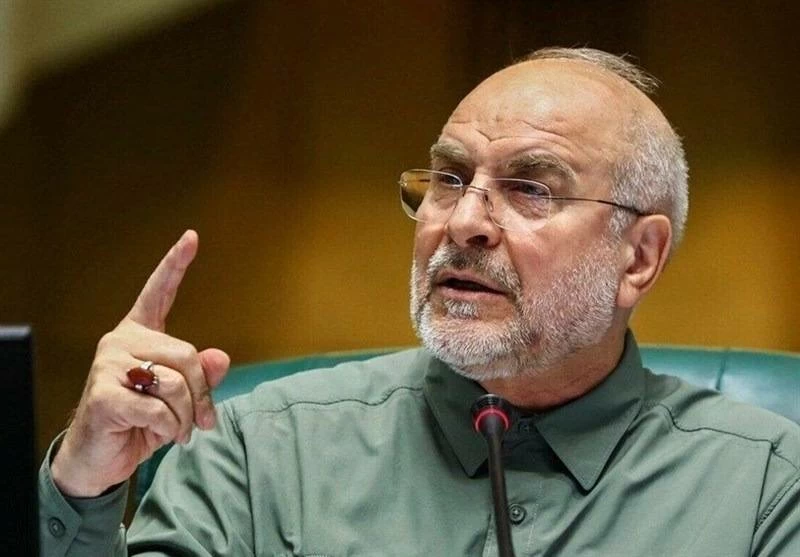
Iranian Parliament Speaker Mohammad Bagher Ghalibaf stated on Sunday that Iran will not reopen the Strait of Hormuz until its demands are met and US commitments are fulfilled. According to the Fars news agency, Ghalibaf emphasized that Iran must be prepared to fight and negotiate simultaneously. He noted that Tehran will use military force to deter its enemies and diplomacy to consolidate its gains on the battlefield when the time is right.
Ghalibaf's comments come after a statement by Mohsen Rezaei, head of Iran's National Security Council, who said on Saturday that Iran has informed mediators of its conditions for re-engaging in negotiations to end the war with the US. Rezaei did not specify the conditions but mentioned that consultations are ongoing with Qatari and Pakistani mediators. The Iranian government has been at odds with the US since the US withdrew from a nuclear agreement in 2018.
Rezaei criticized US President Donald Trump's policies towards Iran, saying that Trump's estimates and calculations regarding Iran were incorrect and that the war was instigated by Israeli Prime Minister Benjamin Netanyahu. Rezaei emphasized that it is in Washington's interest to accept Tehran's conditions to exit the war. He also stressed that Iran is prepared for a decisive war, citing its knowledge of US military weaknesses.
According to Rezaei, Iran's conditions for negotiations include ending the war on all fronts, releasing frozen Iranian funds, and lifting the naval blockade. The Iranian government has long sought to have its frozen assets released, which have been held up due to US sanctions. Rezaei's comments suggest that Iran is seeking a comprehensive resolution to the conflict.
The Strait of Hormuz, a vital waterway for global oil exports, has been a point of contention between Iran and the US. In recent years, Iran has threatened to close the strait in response to US sanctions and military presence in the region. The US has maintained a significant military presence in the region, citing concerns about Iran's ballistic missile program and support for militant groups.
The tensions between Iran and the US have escalated in recent months, with both sides engaging in a war of words and symbolic actions. The US has imposed significant sanctions on Iran, which have had a major impact on the Iranian economy. Iran has responded with a series of military exercises and threats to close the Strait of Hormuz.
The situation remains volatile, with both sides appearing to be dug in and unwilling to compromise. The international community has expressed concern about the potential for conflict, with many countries calling for restraint and diplomatic efforts to resolve the crisis. Key points: Iran will keep the Strait of Hormuz closed until its demands are met; Iran's conditions for negotiations include ending the war and releasing frozen funds; The US and Iran are engaged in a tense standoff with no clear resolution in sight.