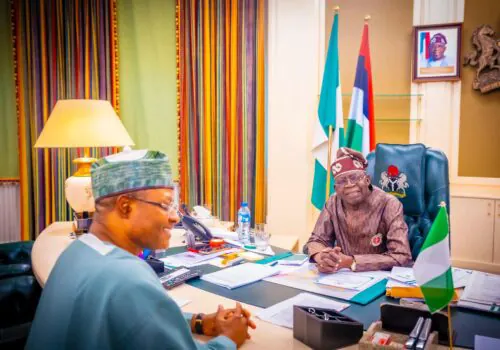
President Bola Ahmed Tinubu has commended the Kaduna state government's free Compressed Natural Gas (CNG) mass transit scheme, describing it as a people-focused intervention that provides tangible relief to ordinary citizens. The scheme, which has recorded approximately 3.2 million passenger trips and saved commuters over ₦3.5 billion in its first year, demonstrates the transition to cheaper domestic energy. Tinubu noted that such interventions are required from subnational governments to reduce transportation costs and ease pressure on households.
The presidential commendation came as the Federal Government and 36 states accelerate the National Affordable CNG Transit Programme to achieve measurable reductions in transportation costs. On August 27, President Tinubu met with governors, resolving to ensure Nigerians experience substantial relief in daily commuting expenses from October 1. An implementation committee was constituted under the Nigeria Governors' Forum, led by Kwara State Governor AbdulRahman AbdulRazaq, to identify priority transportation corridors and establish an operational framework.
The urgency of the initiative has been heightened by disruptions in global energy supplies, exerting fresh pressures on petrol and diesel prices and driving transportation costs upwards. The Federal Government noted that Nigeria cannot insulate itself from international energy market upheavals, but the country's abundant gas resources offer a credible pathway towards reducing vulnerability. President Tinubu has reiterated that a return to the costly petrol subsidy regime would expose the Nigerian economy to fluctuations in international oil prices.
The Federal Government intends to support states that have embraced CNG transportation and help them expand interventions capable of delivering immediate and measurable benefits to citizens. Kaduna state government pioneered a scheme built around a fleet of 100 CNG-powered buses, which has been one of the government's most consequential responses to fuel subsidy removal. Governor Uba Sani expressed Kaduna state's appreciation for the recognition and reaffirmed his administration's determination to sustain policies that protect vulnerable households.
Governor Uba Sani stated that Kaduna State continues to set national benchmarks in critical areas, including tackling out-of-school children and expanding vocational training and skills development. The Kaduna free CNG mass transit scheme reflects the Governor Uba Sani administration's philosophy that public policy must be judged by its discernible effect on citizens' everyday lives. The scheme has become one of Kaduna's most impactful interventions in cushioning the effects of fuel subsidy removal.
The implementation committee has been working with the presidential initiative on CNH and electric vehicles, state governments, and other critical stakeholders to identify priority transportation corridors and establish an operational framework. President Tinubu made a special mention of Kaduna state's intervention, noting that it is more of what is needed at the subnational level. The president's commendation recognizes Kaduna state's efforts to provide free CNG mass transit rides to its citizens.
Key stakeholders, including the Nigeria Governors' Forum and state governments, are working together to ensure the success of the National Affordable CNG Transit Programme. The program aims to provide relief to citizens and reduce transportation costs. With Kaduna state's scheme serving as a model, other states are expected to replicate similar initiatives to achieve measurable reductions in transportation costs and ease pressure on households.
Key points
- President Tinubu commends Kaduna state's free CNG mass transit scheme as a people-focused intervention.
- The scheme has recorded 3.2 million passenger trips and saved commuters over ₦3.5 billion in its first year.
- President Tinubu urges governors to emulate Kaduna state's initiative to reduce transportation costs and ease pressure on households.