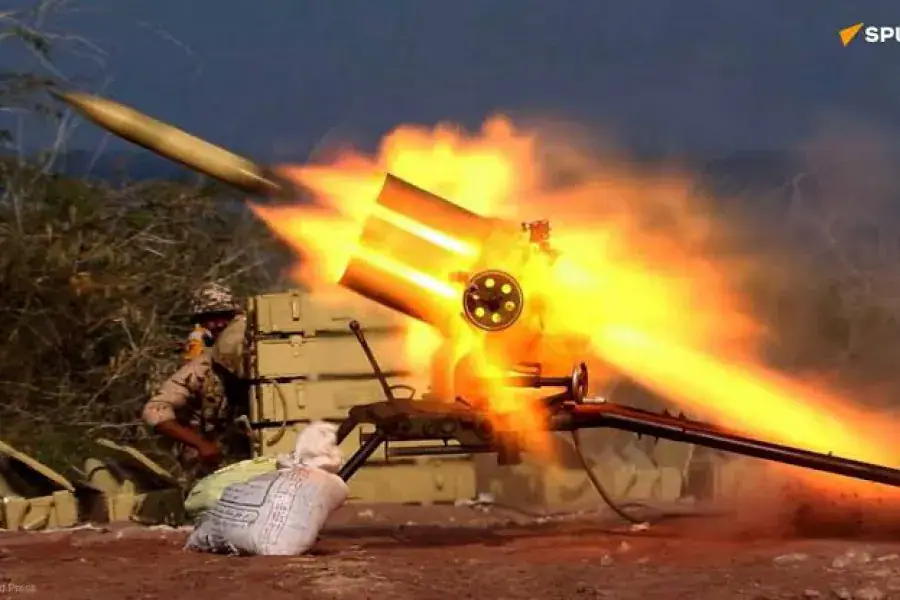
Iran has issued a stern warning that it will launch a destructive retaliation against enemy infrastructure if its key installations are attacked. The warning was delivered by Mostafa Izadi, deputy commander of Iran's Revolutionary Guard Corps, on Tuesday. Izadi stated that Tehran will not hesitate to defend itself against any hostile action. He emphasized that any attack on Iran's defense installations, infrastructure, or nuclear facilities will trigger a response targeting relevant enemy infrastructure.
Izadi's comments were broadcast on Iranian state television, Al-Alam. He highlighted Iran's ballistic capabilities, stating that the country's military can identify, track, and strike enemy ships over long distances. This assertion suggests that Tehran is prepared to project its military power beyond its immediate borders in the event of an attack. Izadi's warning appears to underscore Iran's commitment to deterrence as tensions persist over its nuclear program, military capabilities, and regional security.
The deputy commander of the Revolutionary Guard Corps also cautioned that Iran's response to an attack will not be limited to the location of the initial strike. He warned that the country's leaders have made it clear that continued hostile actions against Iran could lead to an expansion of the conflict beyond the Middle East. This statement suggests that Tehran is prepared to take a robust stance in response to perceived threats.
Iran has previously threatened retaliation against military and strategic targets in response to attacks on its territory. However, Izadi's comments appear to represent a hardening of this stance, with the military warning that any strike against key national installations could have far-reaching consequences. The countries that Iran has designated as enemies have not publicly responded to Izadi's warning.
Izadi did not specify potential targets or provide details on the scope or timing of a possible retaliatory strike. His comments come amid heightened tensions and concerns about a broader regional conflict. The warning is likely to be viewed as a demonstration of Iran's resolve to defend its sovereignty and territorial integrity.
The incident highlights the ongoing concerns about Iran's nuclear program and military capabilities. Tehran has consistently asserted that its defense capabilities are intended to protect national sovereignty. The country's leaders have reiterated this stance in the face of continued international scrutiny and pressure.
The international community will be watching developments closely, as Iran's warning has significant implications for regional security. Tehran's stance is likely to be viewed as a challenge to its adversaries, who will need to carefully consider their response to the warning.
Key points
- Iran warns of destructive retaliation against enemy infrastructure if its key installations are attacked
- Tehran emphasizes its ballistic capabilities and willingness to project military power beyond its borders
- The warning is likely to escalate tensions in the region, with significant implications for international security
Reporting sources
- L'Iran menace de riposter de manière... · Maliweb.net