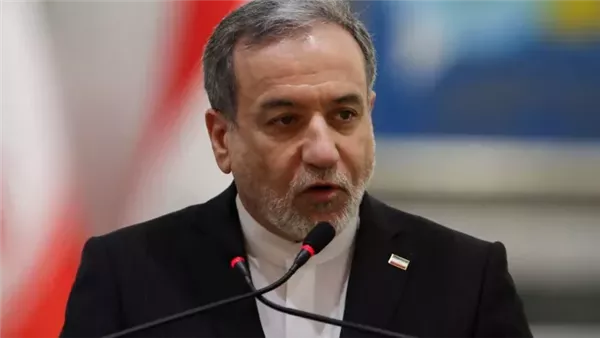
Iranian Foreign Minister Abbas Araghchi reaffirmed on Sunday that Tehran will not compromise on its seven conditions for reopening the Strait of Hormuz. Speaking at a press conference, Araghchi stated that Iran has not received any substantial offers from mediators so far. He noted that contradictory statements from US President Donald Trump have added to the uncertainty. Araghchi emphasized that Iran is waiting for a decisive response from mediators before making its next move.
The seven conditions set by Iran include an end to the war in all fronts, including Lebanon, and the lifting of the naval blockade imposed on Iran. Additionally, Iran demands the release of its frozen assets, removal of US economic sanctions, and no threats or insults from the US. Iran also seeks a reduction in the US military presence in the region and an investigation into US military bases in the Gulf, which it views as a constant threat.
According to the Iranian news agency Fars, Iranian armed forces targeted 19 ships that allegedly violated maritime rules by passing through unauthorized routes in the Strait of Hormuz over the past two days. The operations took place on Friday and Saturday evenings, with 12 ships targeted on Friday and 7 on Saturday. Fars reported that the Iranian Revolutionary Guard Corps launched several cruise missiles and kamikaze drones from southern Iran towards commercial vessels south of the Strait of Hormuz.
The recent developments in the Strait of Hormuz come after US President Donald Trump rejected an Iranian proposal regarding the strategic waterway. Araghchi's statements indicate that Iran remains committed to its stance, and any progress will depend on the US response to its conditions. The situation in the Strait of Hormuz remains tense, with Iran continuing to assert its influence in the region.
The Strait of Hormuz is a critical passage for global oil exports, and any disruption to shipping traffic could have significant economic implications. Iran's actions in the region have raised concerns among international leaders, who are urging restraint and diplomatic efforts to resolve the crisis. Araghchi's comments suggest that Iran is prepared to engage in dialogue but will not compromise on its core demands.
The Iranian Foreign Minister's statements were made amid heightened tensions between Iran and the US. The two countries have been engaged in a war of words, with the US imposing economic sanctions on Iran and Iran responding with military actions in the region. The situation remains volatile, with many observers warning of the potential for further escalation.
As the situation in the Strait of Hormuz continues to unfold, international leaders are closely monitoring developments. The Iranian government's stance on the seven conditions for reopening the Strait of Hormuz suggests that a resolution to the crisis may be difficult to achieve in the short term. The coming days and weeks will likely be crucial in determining the trajectory of the conflict.
Key points
- Iran's seven conditions for reopening the Strait of Hormuz include an end to the war in all fronts and the lifting of US economic sanctions.