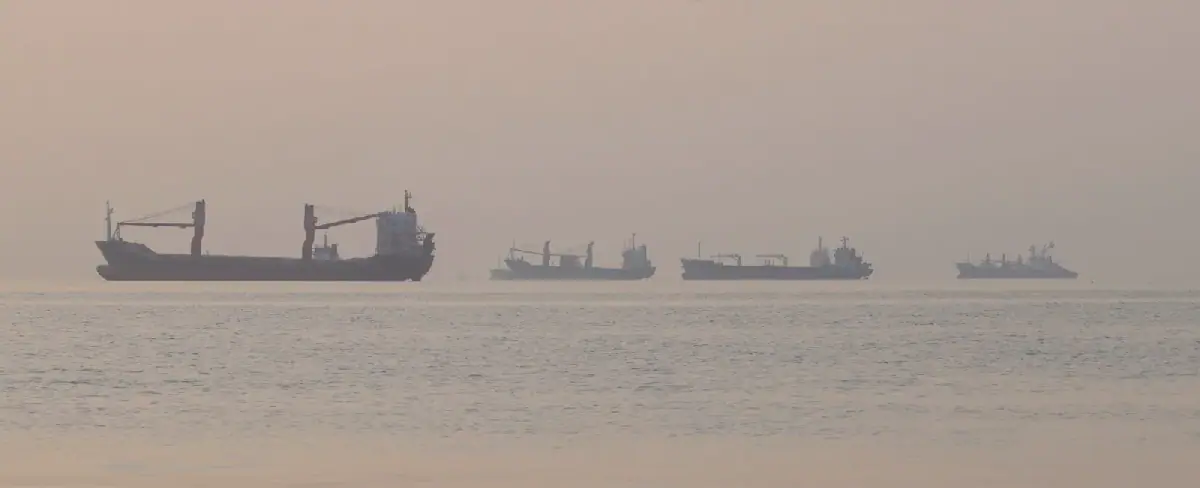
Iran has laid out four conditions for reopening the Strait of Hormuz, a crucial passage for oil exports, with a spokesperson stating that the waterway could be reopened within 48 hours if the conditions are met. The conditions include a ceasefire across all regional fronts, the release of Iranian assets frozen abroad, the lifting of sanctions on oil exports, and the end of the US naval blockade on Iranian ports.
The announcement comes after a meeting between Iranian Foreign Minister Abbas Araghtchi and US officials, in which Araghtchi requested that Washington recognize a maritime route defined with Oman and reduce the recent military buildup in the region. The Iranian minister's comments were made ahead of a significant reaction from the markets, with the price of Brent crude falling 4.43% to $108.40 per barrel on Monday.
The Strait of Hormuz is a vital passage for oil exports, with the majority of the Gulf's oil exports passing through it. For Morocco, which imports almost all of its hydrocarbons, the evolution of the oil price has a direct impact on its energy bill, which rose by 32.6% at the end of August. The country's compensation bill for butane gas is estimated at 19.4 billion dirhams, based on an assumed Brent price of $75.
The recent tensions in the region have led to a significant increase in oil prices, with the price of Brent crude rising above $111 per barrel on October 22. The situation has also led to a warning from US President Donald Trump, who threatened Iran with a "strong" response during a rally in Iowa on Sunday.
According to reports, Trump also discussed possible intensification of operations with Israeli Prime Minister Benjamin Netanyahu, while still favoring negotiations. The conflict in the region has seen a resurgence of hostilities over the summer, after a truce was agreed in April and a June agreement failed to hold.
Iran has warned that any new military operation would be met with an immediate and comprehensive response. The two sides have been engaging in indirect talks through mediators, with Iran proposing a gradual reopening of the Strait of Hormuz over seven days in September, which was rejected by Washington.
The situation remains tense, with Morocco feeling the impact of the rising oil price, as seen in the increase in the price of diesel at the pump, which rose by 80 cents to 1 dirham per liter on Sunday. The country's energy landscape is closely tied to developments in the region, with any further escalation likely to have significant consequences for the kingdom.
Key points
- Iran's conditions for reopening the Strait of Hormuz include a ceasefire across all regional fronts and the lifting of sanctions on oil exports.
- The Strait of Hormuz is a vital passage for oil exports, with the majority of the Gulf's oil exports passing through it.
- Morocco's energy bill has risen by 32.6% at the end of August, largely due to the increase in oil prices.