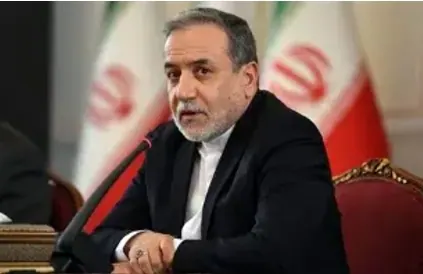
Iran's Foreign Minister Abbas Araghchi has stated that there is no military solution to the ongoing conflict in the Middle East. His comments come more than seven months into the hostilities, with no clear diplomatic resolution in sight. Araghchi emphasized that a military approach will not resolve the situation, and that any new sanctions will also be ineffective.
Araghchi's remarks highlight the ongoing tensions in the region, despite efforts to establish a ceasefire. In April, Iran and the US agreed to a ceasefire, and a protocol of understanding was signed in June. However, indirect talks between the two nations have stalled, with both sides issuing threats of further strikes. The situation remains volatile, with the potential for renewed conflict.
In an effort to ease tensions, Iran proposed a plan in late September to reopen the strategic Strait of Hormuz within seven days. The plan was contingent on the lifting of US sanctions that have severely impacted Iran's economy. However, US President Donald Trump rejected the proposal, leaving the door open for further indirect negotiations, but not ruling out a resumption of hostilities.
The US has maintained its economic pressure on Iran, imposing new sanctions on the country's aviation sector. Despite this, a relative calm has been observed in recent weeks, with no US strikes against Iran since September 1. However, vessels have continued to be targeted in the Strait of Hormuz, contributing to the ongoing uncertainty.
The conflict has significant implications for the region, with various international actors involved. The Turkish government has announced its participation in a defense meeting in Riyadh, highlighting the complex web of alliances and interests at play.
Egypt has weighed in on the issue, rejecting any external interference in the affairs of African states. The conflict in the Middle East has sparked a range of reactions from across the continent, reflecting the diverse interests and perspectives of different nations.
The situation in the Middle East remains fluid, with the potential for further escalation. Araghchi's comments serve as a reminder that a military solution is not viable, and that a diplomatic resolution will require compromise and cooperation from all parties involved. The international community will be watching closely for any developments that may help to ease tensions and pave the way for a lasting peace.
Key points
- Iran's Foreign Minister Abbas Araghchi has ruled out a military solution to the conflict in the Middle East.
- The US has imposed new sanctions on Iran's aviation sector, despite a relative calm in recent weeks.
- Iran proposed a plan to reopen the Strait of Hormuz within seven days, but it was rejected by US President Donald Trump.