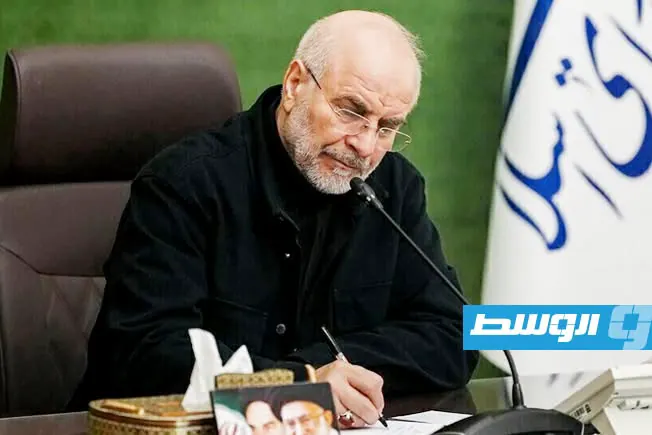
Iranian Parliament Speaker Mohammad Bagher Qalibaf stated on Sunday that Iran will not reopen the Strait of Hormuz until the United States meets its conditions and fulfills its commitments. According to Qalibaf, Iran must be prepared to fight and negotiate simultaneously. He emphasized that Tehran will use military force to deter its enemies and diplomacy to consolidate its gains on the battlefield when the time is right.
Qalibaf's remarks come as Iran has been engaged in tense negotiations with the US. On Saturday, the Secretary of Iran's Supreme National Security Council, Ali Akbar Ahmadian, stated that Iran has informed mediators of its conditions for resuming negotiations to end the conflict with the US. These conditions include an end to the war on all fronts, the lifting of frozen Iranian funds, and the termination of the naval blockade.
Ahmadian revealed that consultations are ongoing with Qatari and Pakistani mediators, and Tehran is awaiting a response from US President Donald Trump. The development comes as Iran has recently tested a new anti-ship missile near a US aircraft carrier. According to Ahmadian, Iran has reached a conclusion that it needs to change its strategy towards Washington following the US withdrawal from a memorandum of understanding.
The Iranian military has reportedly become more prepared to counter US airstrikes, citing knowledge of US military vulnerabilities. Meanwhile, the US has allowed several high-ranking Iranian officials, including Mohammad Bagher Qalibaf, to attend UN meetings in New York, but has prohibited them from shopping or engaging in other leisure activities.
The tensions between Iran and the US have been escalating in recent months, with Iran accusing the US of economic warfare and the US imposing sanctions on Iranian leaders and entities. The Strait of Hormuz, a critical waterway for global oil exports, has been a focal point of the conflict, with Iran threatening to block the strait in response to US pressure.
Qalibaf's comments suggest that Iran is unlikely to compromise on its demands, at least in the short term. The Iranian parliament speaker has been a key figure in the country's negotiations with the US and has previously stated that Iran will not agree to any deal that does not meet its conditions.
The situation remains fluid, with both sides appearing to be dug in. The international community is watching closely, as an escalation of the conflict could have significant implications for global energy markets and regional stability. Key points: Iran will not reopen the Strait of Hormuz until the US meets its conditions; Iran has informed mediators of its conditions for resuming negotiations with the US; The US has allowed Iranian officials to attend UN meetings, but with restrictions.