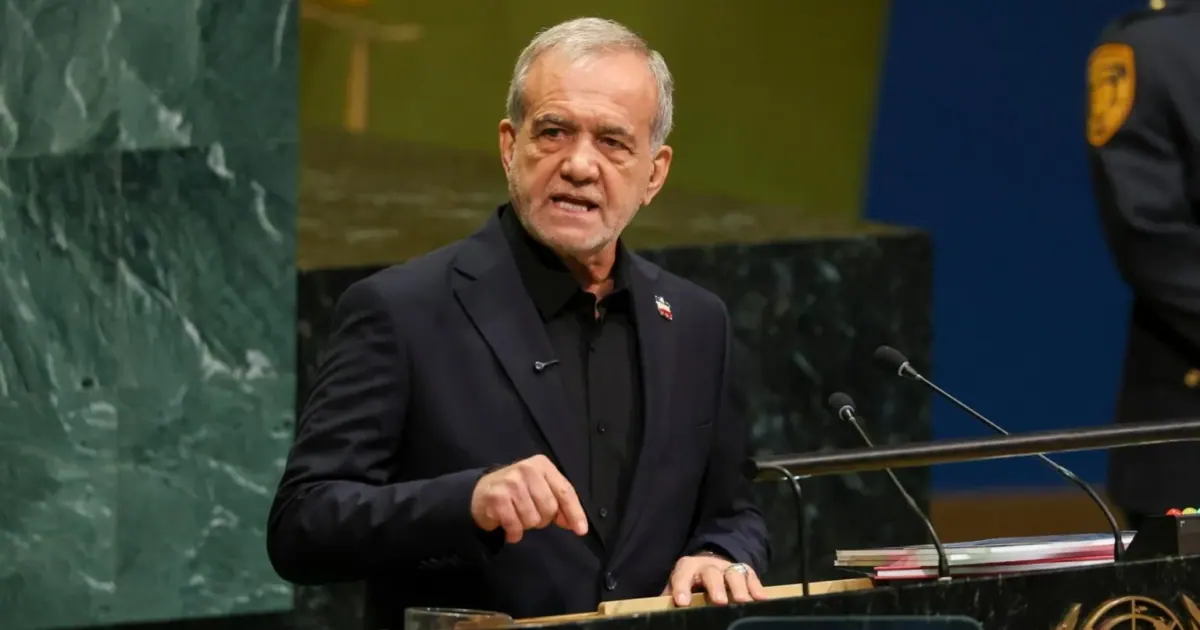
Iranian President Masoud Pezeshkian delivered a resolute message to the US and Israel during his address at the UN General Assembly on September 23, 2026. He emphasized that Iran will not "bend the knee" despite nearly seven months of conflict. Pezeshkian's remarks come in response to US President Donald Trump's threat to "annihilate" Iran if a deal is not reached soon. The Iranian leader's address highlighted the nation's determination to resist external pressures.
Pezeshkian outlined Iran's conditions for a potential diplomatic solution, stressing that any agreement must include the lifting of the US blockade on Iranian ships and ports. He argued that it is unjust for other nations to benefit from the Strait of Hormuz, a critical waterway for global oil and gas shipments, while Iran faces economic hardship. The Strait of Hormuz has been effectively closed since the conflict began in late February due to Iranian missile and drone attacks on commercial vessels and the US-imposed blockade.
The conflict between Iran, the US, and Israel has had significant repercussions on global trade and security. The preliminary agreement reached in June to end the war and reopen the Strait of Hormuz collapsed within weeks due to resumed Iranian attacks on shipping and the reinstated US blockade. Iranian Foreign Minister Abbas Araghchi and US envoy Steve Witkoff engaged in indirect talks on the sidelines of the UN General Assembly, facilitated by Qatari mediators. These discussions mark the first talks between the two sides since June.
The indirect talks between Iran and the US aimed to revive stalled negotiations and find a peaceful resolution to the conflict. US envoy Steve Witkoff expressed hope that the discussions would be "constructive and promising," with mediators continuing their efforts to bridge the gap between the two nations. However, Iran's foreign ministry spokesman, Esmail Baqai, stated that the talks did not yield anything new, with Araghchi reiterating Iran's conditions, including the end of the US blockade and the release of frozen Iranian assets.
The ongoing conflict has led to significant challenges for both Iran and the international community. The war has resulted in a substantial increase in resistance among the Iranian people, according to Pezeshkian. The Iranian leader emphasized that sanctions and increased pressure will only strengthen the nation's resolve. The international community remains concerned about the humanitarian impact of the conflict and the potential for further escalation.
The G7 nations have urged Iran to cease arming Houthi rebels in Yemen, adding to the complex dynamics of the conflict. The situation has also affected the global economy, with the Pentagon confirming that the war has led to US munitions shortfalls. As diplomatic efforts continue, the international community remains engaged in finding a peaceful resolution to the conflict.
The conflict between Iran, the US, and Israel remains a pressing concern for global leaders. President Pezeshkian's address to the UN General Assembly underscored Iran's commitment to finding a diplomatic solution while maintaining its sovereignty. The international community continues to monitor developments, with efforts to revive negotiations and prevent further escalation.
Key points
- Iran's President Masoud Pezeshkian reaffirmed that Iran will not "bend the knee" in the face of external pressures.
- The conflict has led to significant challenges, including a substantial increase in resistance among the Iranian people.
- Diplomatic efforts continue, with indirect talks between Iran and the US aiming to revive stalled negotiations.