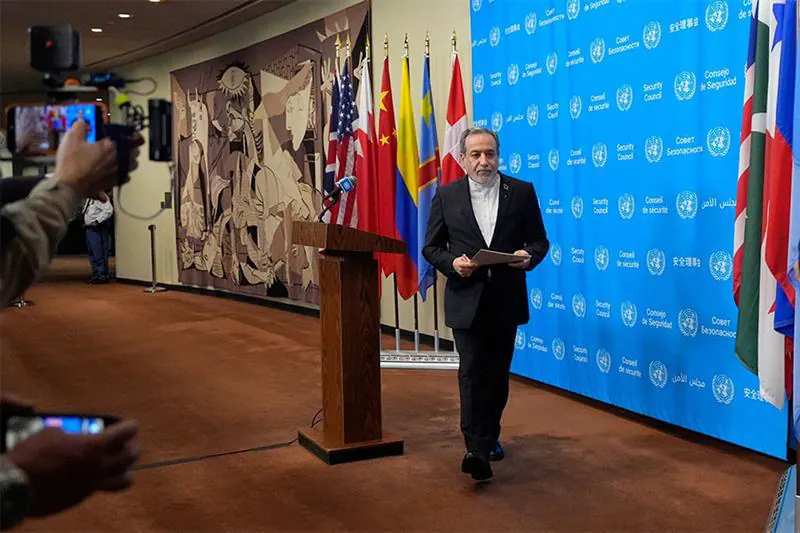
Iranian Foreign Minister Abbas Araghchi proposed a deal to the US that would open the Strait of Hormuz in seven days, in exchange for the US ending its military blockade of Iranian ports, releasing frozen Iranian assets, and waiving sanctions on Iranian oil sales. This proposal was made during the 81st session of the United Nations General Assembly. The proposal aims to ease global market pressure and relieve some strain on the US military.
The US response to Iran's proposal has been skeptical. President Donald Trump posted a map of the Strait of Hormuz on social media, labeling it the "Trump Strait." The White House stated that US officials were having positive and constructive conversations with mediators, but no concrete decision was made. Trump's speech to the UN gathering threatened to "annihilate" the Islamic Republic, while Iran's President Masoud Pezeshkian stated that Iran would fight "until our last breath."
Iran's President Pezeshkian and Foreign Minister Araghchi visited New York for the UN gathering, where they proposed the deal to the US. Pezeshkian stated that Tehran remained open to diplomacy, despite the tensions. The two sides held their first indirect talks in months, with the US saying the talks were positive and open to further discussions. Secretary of State Marco Rubio stated that the US was open to more talks.
The Strait of Hormuz is a crucial waterway, and opening it would ease global market pressure and relieve some strain on the US military. The US has been guiding commercial ships through the waterway at risk of Iranian attack. Lifting the US naval blockade of Iranian ports and waiving sanctions on oil sales would allow Tehran to ship out more of its crude and help its battered economy.
Iran's new proposal echoes the conditions agreed to in the June deal that fell apart. The US and Iran have been in discussions with Oman on managing shipping traffic in the strait. Analysts believe that Iran's rush for a deal with Washington reflects its eye on the US midterm elections in November. Trump might decide an agreement has political benefits, but his rejection risks a return to fighting that would drive oil prices higher.
The White House had yet to expand on Trump's "Trump Strait" social media post. Iran's security forces have warned they still have targets left to strike. The US has been straining Iran's economy with sanctions, and Trump has said he's in no rush for a deal. Tehran may reach the conclusion that time is not on its side and that it needs to act quickly.
The situation remains uncertain, with both sides trying to outlast growing economic pain following seven months of war. Iran's president stated that the supreme leader backs the new plan to reopen Hormuz. The US and Iran will continue to engage in indirect talks, but a concrete decision on the proposal remains to be seen.
Key points
- Iran proposes a deal to open the Strait of Hormuz in seven days in exchange for US concessions.
- The US response to Iran's proposal has been skeptical, with Trump labeling the strait the "Trump Strait."
- The situation remains uncertain, with both sides trying to outlast growing economic pain following seven months of war.