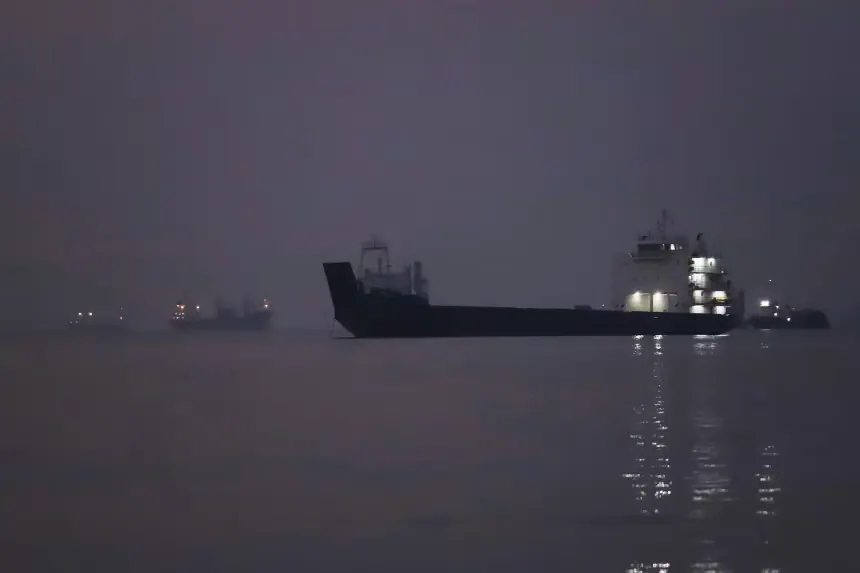
Despite ongoing tensions, oil flows through the Strait of Hormuz have recovered significantly, with 13.1 million barrels per day passing through the critical chokepoint last week, according to Kpler, a marine data tracking service. This represents nearly 80 percent of the 17.1 million barrels that traveled through the strait daily before the war broke out. The resumption of oil flows is a result of a complex operation involving military-escorted shuttles and "dark" transits of the strait.
The increase in oil flows through the Strait of Hormuz has been driven in part by the return of Saudi Arabian oil that had been diverted to the Red Sea. Earlier this month, Iran-allied Houthis attacked a major Saudi oil pipeline, prompting the diversion. However, with the pipeline now operational again, oil flows have shifted back to the Strait of Hormuz. According to satellite imagery, all seven berths at two key ports in Yanbu and Al Muajjiz on Saudi Arabia's West Coast are now open, signaling a significant increase in oil exports.
The ongoing situation in the Strait of Hormuz has significant implications for the global oil market. Despite the recovery in oil flows, global inventories continue to shrink, and the price of fuel remains high. The US military is expending considerable resources to maintain the current situation, but it is unclear how long this can be sustained. According to JPMorgan, global oil inventories have declined by around 2 billion barrels since the start of the Iran conflict.
The market has shown resilience in the face of the supply shock, with oil prices remaining below their record highs. However, the current situation is unsustainable, and market forces will eventually take over. As inventories continue to dwindle, oil prices will need to rise to reduce demand and balance the market. The timing of this is uncertain, and JPMorgan's head of global commodities strategy, Natasha Kaneva, has expressed concerns about the difficulty of modeling the endgame.
The impact of the Iran conflict on the oil market is being felt far beyond the Middle East. In the United States, gas prices are near their highest level since the start of the war, and diesel prices have blown past their previous record. Refined product flows out of the Middle East remain constrained, with flows at just 58 percent of prewar levels. This has significant implications for consumers and businesses, who are facing high fuel surcharges and reduced supplies.
The market has been influenced by speculation about a potential peace deal between the US and Iran, with President Donald Trump's comments on a looming agreement having a significant impact on oil prices. However, with the recent attack on the Saudi East-West pipeline, the situation remains uncertain. Iran, which has lost its key source of economic leverage in the Strait of Hormuz, has ramped up its attacks on oil tankers transiting the Gulf.
The ongoing conflict in the Strait of Hormuz poses significant challenges for the global oil market. While the market has shown resilience, the current situation is unsustainable, and a resolution to the conflict is needed to stabilize the market. The US military effort to maintain oil flows through the strait is taxing, and it remains to be seen how long this can be sustained.
Key points
- Iran's influence in the Strait of Hormuz has waned as oil flows resume.
- The ongoing conflict has significant implications for the global oil market, with high prices and constrained supplies.
- A resolution to the conflict is needed to stabilize the market and reduce uncertainty.