The Iranian government has rejected a situation of "neither peace nor war" with the United States, threatening to resolve the impasse through military means if negotiations fail. According to Mohammed Ghalibaf, president of the Iranian Parliament, any negotiations with the US must meet seven preconditions set by Tehran. These conditions include the lifting of economic sanctions, the return of frozen funds, and an end to conflicts in Palestine, Lebanon, and Yemen.
The Iranian stance is a result of a new determination by the country's Leader, Supreme Ayatollah Mojtaba Khamenei, who does not accept prolonging the impasse with the US. Tehran has given Washington 30 days to reach a negotiated agreement, after which it may resort to military action. The Iranian military has already responded to US attacks on its missile and drone launch sites by downing expensive US drones, including the MQ-9 Reaper.
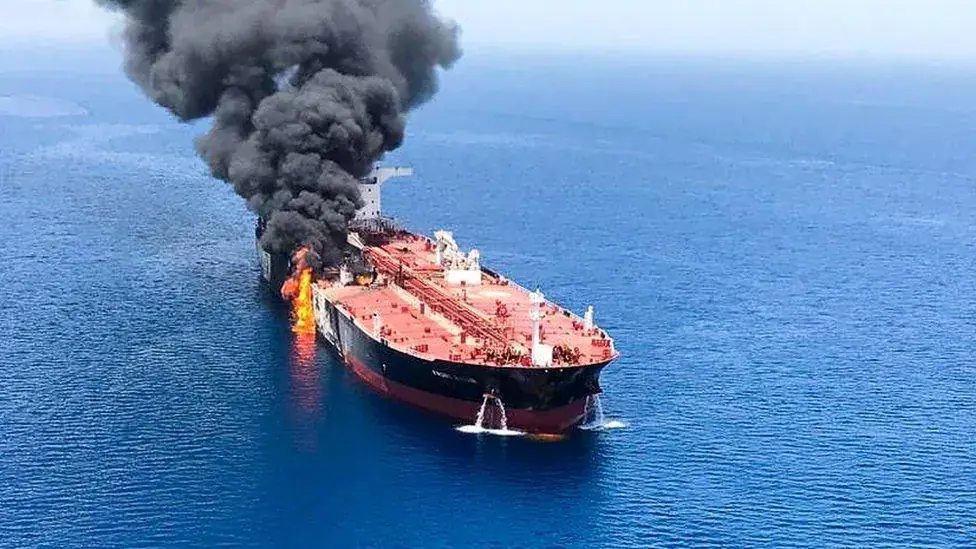
The situation in the Persian Gulf has become increasingly dramatic, with attacks on oil tankers attempting to exit through the Strait of Hormuz. In the past two months, between 50 and 80 vessels, mostly oil tankers and methane carriers, have been set on fire or sunk. The US insists that a maritime route in the Strait of Hormuz, protected by its Navy, is open, but Iran does not accept this.
If an agreement is not reached with the US, Iran has threatened to attack US warships enforcing the naval blockade and destroy the energy infrastructure of Arab countries allied with Washington in the Persian Gulf. Analysts believe that Iran will not allow the US and Israel to withdraw without clarifying its demands.
The conflict began with an Israeli-American attack that killed Iran's Supreme Leader, Ayatollah Ali Khamenei, and severely injured his son, Ayatollah Mojtaba Khamenei. Despite Israeli Prime Minister Benjamin Netanyahu's efforts to convince US President Donald Trump to attack Iran, the White House has resisted, aware of the potential catastrophic consequences for the global economy.
The Arab countries of the Gulf, particularly Qatar, are seeking to avoid a new escalation of the conflict. Qatar's Prime Minister and Foreign Minister, Sheikh Mohammed Al Thani, has met with US Secretary of State and National Security Adviser Marco Rubio to appeal for peace and warn of a catastrophic scenario for the global economy if war resumes.
Analysts expect any US attack on Iran to occur before January 3, when the new congressional majority takes office. The Democratic Party has announced its intention to block funding for a war with Iran. Meanwhile, Iran's economy is under pressure from US sanctions and a naval blockade, and Tehran may not be able to sustain the current situation for much longer.
Key points
- Iran has set seven preconditions for negotiations with the US, including the lifting of economic sanctions and an end to conflicts in Palestine, Lebanon, and Yemen.
- The US has given Iran 30 days to reach a negotiated agreement, after which it may launch a new wave of attacks.
- The conflict in the Persian Gulf has resulted in significant damage to oil tankers and other vessels, with between 50 and 80 vessels attacked in the past two months.
Reporting sources
- Médio Oriente: Irão recusa situação de "nem paz, nem... · novojornal.co.ao