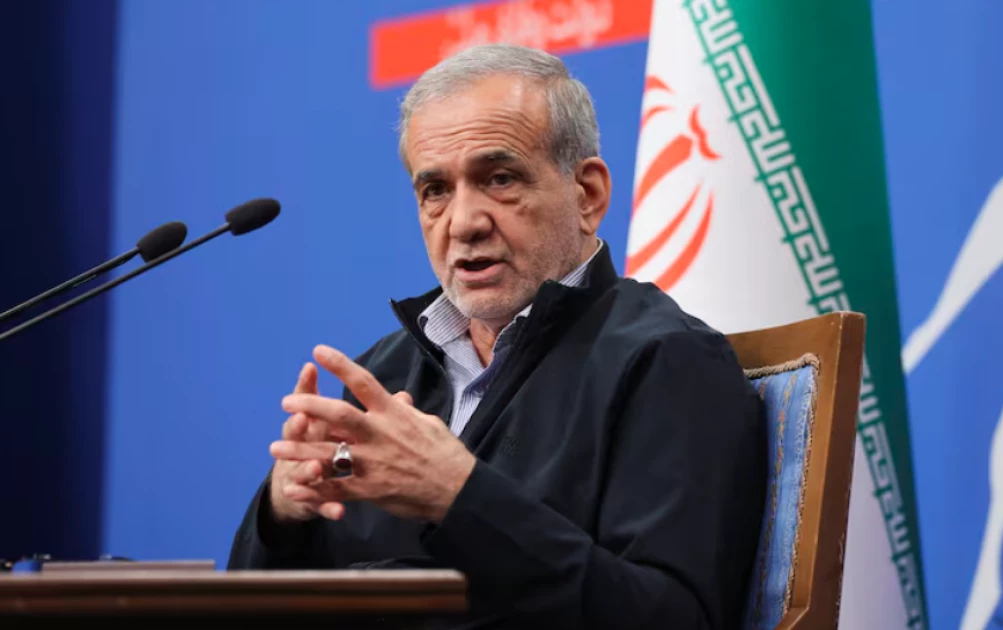
Iranian President Masoud Pezeshkian delivered a resolute message at the United Nations, asserting that his country would not succumb to US pressure and sanctions. Speaking at the UN General Assembly, Pezeshkian emphasized that Tehran would not "bend at the knee" despite increased sanctions and bullying from the US. He accused Washington of "terrorism" for assassinating former supreme leader Ayatollah Ali Khamenei, a move that has significantly escalated tensions between the two nations.
The Iranian president's address came in response to comments made by US President Donald Trump, who stated that he was considering whether to "annihilate" Iran. Trump also expressed optimism about renewed talks between Tehran and Washington's negotiators. However, Pezeshkian made no reference to these talks in his speech, instead focusing on Iran's unwavering stance. He reiterated that the resistance of the Iranian people would only grow stronger in the face of sanctions and pressure.
A significant aspect of the conflict between Iran and the US is the Strait of Hormuz, a critical waterway that has been choked off by Iran since the start of the war. This has led to a spike in global energy prices. Pezeshkian stressed that Tehran would not permit the Strait of Hormuz to be used as leverage against his country. He emphasized that Iran cannot allow some nations to have free access to the waterway while using it to impose aggression on his country.
The attendance of President Pezeshkian at the UN General Assembly was initially uncertain due to visa issues. The US ultimately granted him a visa but denied visas to several members of his entourage. This development highlights the complexities and tensions surrounding the conflict. Meanwhile, the issue of artificial intelligence is expected to dominate discussions at the UN, with industry leaders briefing an emergency meeting of the UN Security Council.
The UN gathering also addresses the ongoing conflict in Ukraine, with President Volodymyr Zelensky set to address the General Assembly. Zelensky, after meeting with Trump, expressed optimism that the war with Russia could end within months. He proposed a mutual agreement to halt strikes on Russian energy sites if Moscow agreed to do the same. This development adds another layer of complexity to the global diplomatic landscape.
The impact of the US-Iran conflict is being felt domestically, with soaring fuel prices posing a threat to Trump's Republicans in the upcoming midterm elections. Despite this, Trump has sought to downplay the domestic implications of the war. His stance on international regulation of AI has also been met with skepticism, with Trump characterizing such proposals as a "globalist scheme."
The interplay between global conflicts and emerging issues like AI regulation continues to shape international diplomacy. As world leaders convene at the UN, they face the challenge of addressing pressing global issues while navigating complex geopolitical tensions. The situation remains fluid, with multiple conflicts and diplomatic efforts unfolding simultaneously.
Key points
- Iran's President Masoud Pezeshkian vows that his country will not "bend at the knee" amid US sanctions and pressure.
- The conflict between Iran and the US has led to a spike in global energy prices due to the choking off of the Strait of Hormuz.
- The UN General Assembly also addresses the ongoing conflict in Ukraine, with President Volodymyr Zelensky proposing a potential end to the war within months.