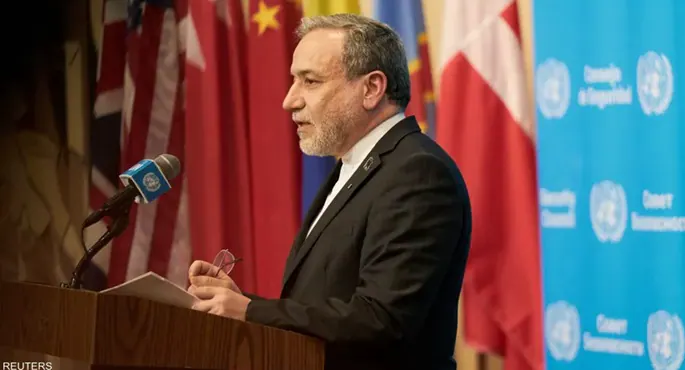
Iranian Foreign Minister Abbas Araghchi announced on Saturday that Tehran has submitted a concrete 7-day plan to the United States via Qatar. The plan aims to take steps to reopen the Strait of Hormuz and restore normal navigation. Araghchi stated that if necessary conditions are met, the strait could be reopened and traffic could return to normal within 7 days. He emphasized that the decision now lies with the United States.
Araghchi specified that the measures the US needs to take are not new and are already included in a memorandum of understanding reached by both sides in June. However, the talks collapsed after renewed military confrontations between the two countries over the past few weeks. The Iranian Foreign Minister stressed that his country will not accept coercion, threats, or intimidation and will not give up its sovereign rights under pressure.
Araghchi revealed that Iran has kept the door of diplomacy open over the past two years and has continuously engaged in good-faith negotiations. However, he noted that in every instance, the US responded with malicious intentions and returned to military action instead of diplomacy. These experiences, he argued, have created a lack of trust regarding the resumption of talks without reliable guarantees to prevent a repeat of military actions.
The statements by Araghchi come after reports of an Iranian proposal aimed at stopping hostilities and reopening the Strait of Hormuz, coinciding with the resumption of talks between Tehran and Washington. Earlier, Iran expressed willingness to reopen the strait within a week if the US eased military pressure and lifted the blockade on Iranian ports.
A high-ranking source disclosed that returning to the memorandum of understanding between the US and Iran in June is possible. The source noted that mediators have exchanged messages regarding the opening of the Strait of Hormuz in exchange for easing the blockade and sanctions imposed on Tehran. The source emphasized that communications are ongoing to provide necessary guarantees and arrange steps between the two parties.
These statements came after a meeting between Araghchi and US envoy Steve Wittkowsky and Jared Kushner, US President Donald Trump's son-in-law, on the sidelines of the United Nations General Assembly in New York. The talks were described by Trump as productive. Conversely, a US official stated that Washington is engaged in positive and constructive talks with Iran through mediators but emphasized that the US is not in a hurry to reach an agreement.
The Strait of Hormuz has become a primary bargaining chip in efforts to end the nearly seven-month war between Washington and Tehran. Iran seeks to lift the US blockade that is suffocating its economy, while the US aims to ensure the free passage of ships in the global oil supply route, which Tehran currently blocks. The situation remains complex, with diplomatic efforts ongoing to find a resolution.
Key points
- Iran's Foreign Minister Abbas Araghchi presents a 7-day plan to the US to reopen the Strait of Hormuz
- The plan requires the US to ease military pressure and lift the blockade on Iranian ports
- The situation remains complex, with ongoing diplomatic efforts to find a resolution to the conflict between Washington and Tehran