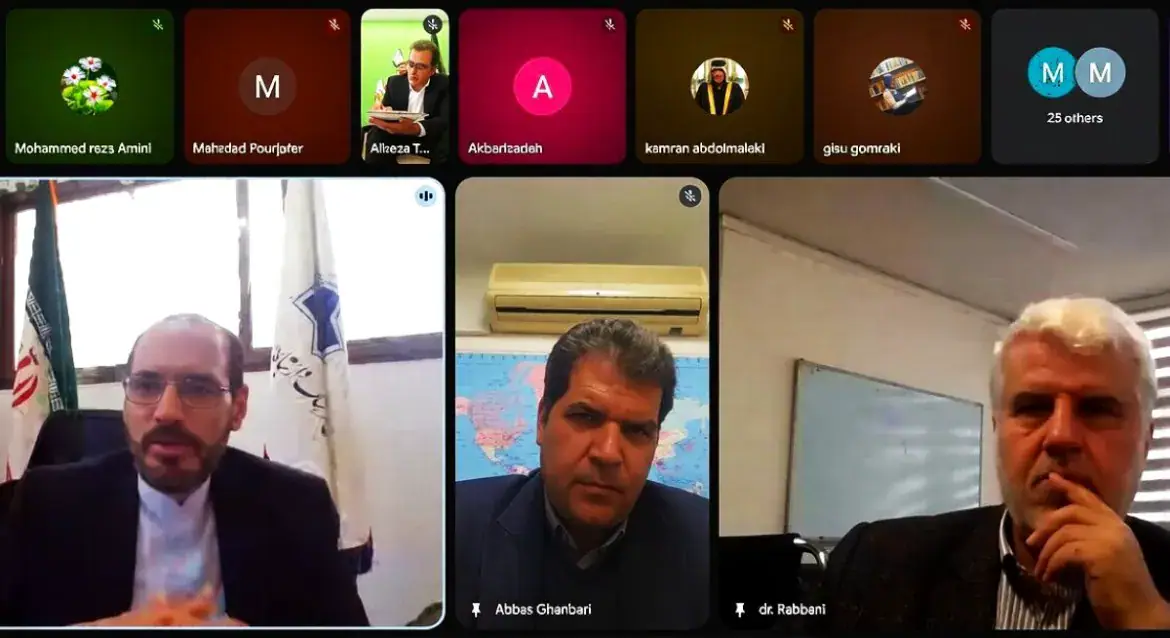
Iran and Tanzania have agreed to expand their academic ties through virtual education, according to a report by the Islamic Republic News Agency (IRNA). The discussions took place during the fifth specialized online meeting on attracting international students, which focused on East African countries. Iranian officials, including Abbas Qanbari-Baghestan, Mohammad-Ali Rabbani, and Mohsen Ma’arefi, participated in the meeting to explore opportunities for cooperation with Tanzanian institutions.
To facilitate the launch of joint academic programs and expand cross-border education, existing requirements have been eased, allowing reputable Iranian universities to cooperate more readily with higher education institutions in Tanzania. The two countries have also agreed to lay the ground for the development of online programs and the admission of postgraduate African students. Once the council of higher education announces the permitted field of study in each university, applicants will be able to register for the upcoming academic year, which will commence in February.
The meeting also discussed developing short-term virtual courses in fields like Iranology, Persian language, and Islamic studies, as well as maintaining ongoing interactions between the universities of the two countries. This development is part of Iran's efforts to enhance cooperation in the fields of science, education, research, and health with African countries. In December 2025, Iranian officials and the ambassadors of 19 African countries met in Tehran to discuss ways to enhance cooperation.
During the meeting in Tehran, Nader Tavakoli, the Chancellor of Iran University of Medical Sciences, highlighted Iran's achievements in the health sector, despite coercive sanctions. He said that the country is ready to share these achievements with Africans through establishing a strategic health alliance between Iran and African countries. The alliance will focus on addressing real-time illnesses, such as tropical and endemic diseases, drug shortages, and health service delivery in rural areas.
Iran aims to increase the number of international students to 320,000 by 2028, according to the Seventh National Development Plan (2023-2028). To achieve this goal, the higher education system needs to adopt institutional and developmental approaches in organizations associated with foreign students. A report by the parliament research center evaluated Iran's situation in attracting international students and identified measures that need to be taken.
The report showed that the number of foreign students in Iran has grown from 13,767 in 2015-2016 to 68,563 in 2024-2025. The number of educational institutions allowed to accept foreign students has increased from 45 to 206 over the past decade. However, the report also identified problems, including a lack of strategic, comprehensive marketing skills, and bureaucratic and time-consuming correspondence.
The parliament research center proposed solutions to attract more international students, including adopting an approach that focuses on generating income, soft cultural power, and expanding science. The center also suggested boosting South-South international relations, evaluating other countries' policies in attracting students, and increasing the number of scholarships. These developments demonstrate the efforts of Iran and Tanzania to enhance their academic cooperation and attract more international students.
Key points
- Iran and Tanzania have agreed to expand their academic ties through virtual education, focusing on cross-border and virtual education.
- Iran aims to increase the number of international students to 320,000 by 2028.
- The two countries have agreed to develop online programs and admit postgraduate African students.
Reporting sources
- Iran and Tanzania now to expand academic ties through virtual education · The Tanzania Times – News from Tanzania, Africa, World, Breaking News, Weather, Environment and Climate Change