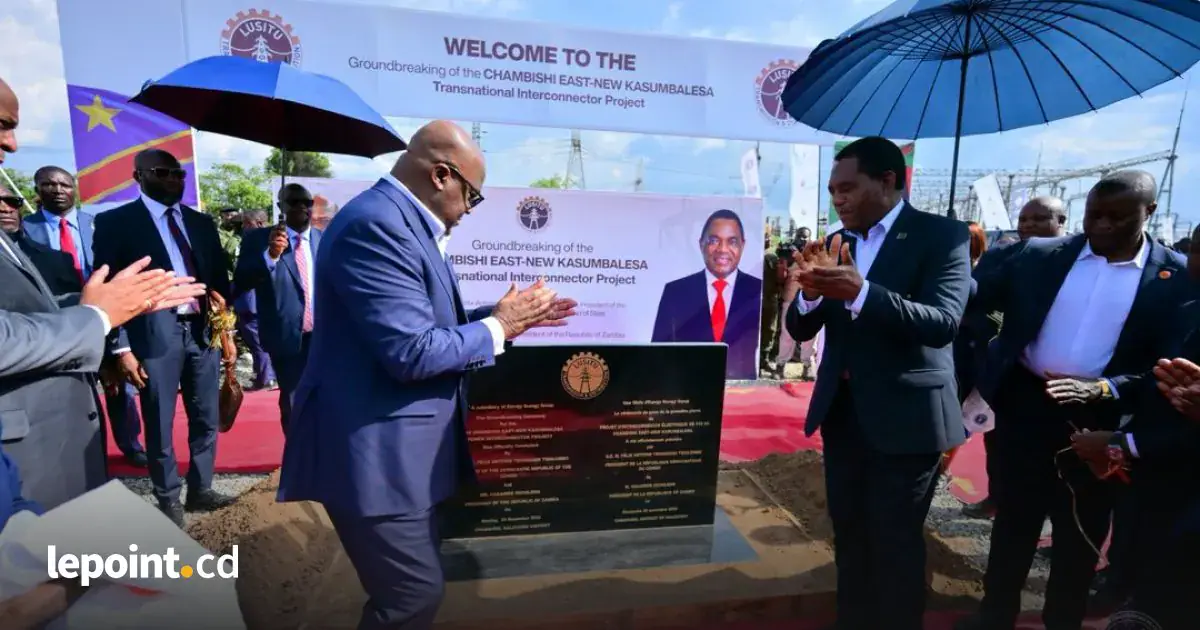
The Democratic Republic of Congo and Zambia have taken a significant step in their energy cooperation with the launch of a high-voltage power interconnection project. On November 29, Presidents Félix-Antoine Tshisekedi and Hakainde Hichilema inaugurated the project in Ndola, Zambia. The initiative aims to strengthen the energy supply in the southeastern region of the DR Congo by connecting the Zambian border to the Karavia, Panda, and Fungurume power stations.
The project is expected to address the energy deficit in the Copperbelt region, improve access to electricity for local populations, and support the industrial development of the Grand Katanga. President Tshisekedi highlighted the paradox of a country that contributes to the global energy transition through its strategic minerals but still struggles with regular electricity access for its population. He emphasized the need to end this paradox and ensure that the benefits of the infrastructure extend beyond mining companies to households, schools, hospitals, and local workshops.
During the ceremony, President Tshisekedi urged the government and the Société nationale d'électricité (SNEL) to ensure the rapid execution of the project, with the goal of providing electricity access to all localities along the route. He stressed that no locality should be left without access to electricity. The project is part of the national energy compact, which aims to achieve an electrification rate of 62% by 2030. President Tshisekedi reiterated this objective and emphasized the importance of the partnership between the two countries.
The high-voltage power interconnection project is a significant milestone in the energy cooperation between the DR Congo and Zambia. The project will enable the sharing of energy resources and infrastructure between the two countries. President Tshisekedi summarized the spirit of the partnership, stating that just as copper resources are shared, electricity will also be shared. The project is expected to have a positive impact on the region's economic development and improve the quality of life for local populations.
The DR Congo's energy sector has long been a challenge, with many areas lacking access to regular electricity. The government has been working to address this issue, and the partnership with Zambia is a key step in this direction. The project will not only improve energy supply but also support the growth of industries and economic development in the region. The two countries are committed to working together to achieve their energy goals.
The launch of the high-voltage power interconnection project is a significant achievement for the two countries. It demonstrates their commitment to regional cooperation and energy development. The project is expected to have a lasting impact on the region, improving access to electricity and supporting economic growth. The DR Congo and Zambia are working together to ensure that the benefits of the project are shared equitably among local populations.
The project's success will depend on the effective implementation and management of the infrastructure. The DR Congo and Zambia will need to work together to ensure that the project is completed on time and within budget. The partnership between the two countries is a positive step towards achieving their energy goals and improving the lives of their citizens.
Key points
- The project aims to achieve an electrification rate of 62% by 2030 in the DR Congo.