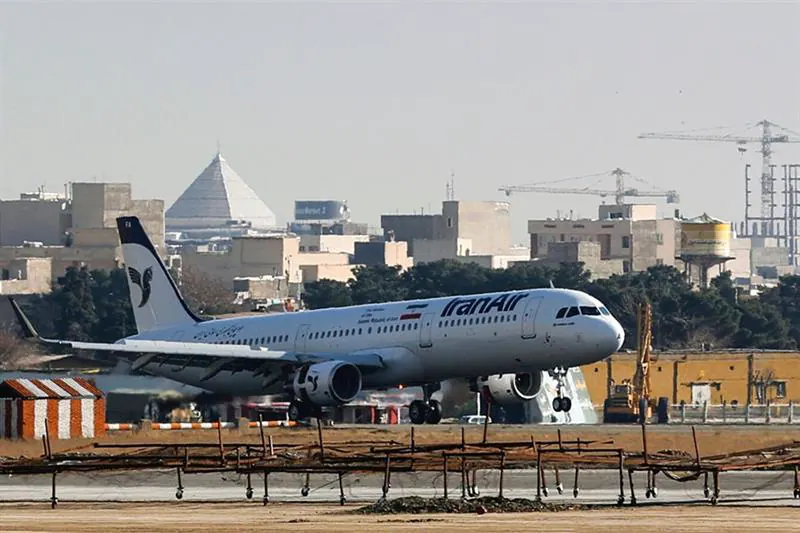
Iran Air, the national airline of Iran, stated on Tuesday that it had not received any official instruction from the civil aviation authorities of Turkey, Azerbaijan, or Iraq regarding a halt or suspension of its flights to Istanbul, Baku, and Najaf. The airline's statement, carried by state news agency IRNA, comes a day before US sanctions are due to be tightened against the Iranian aviation sector. The US had blacklisted the Iranian aviation sector earlier this month and threatened sanctions against any organisation working with Iran's airlines.
The US Treasury Secretary, Scott Bessent, said on Monday that Iranian airlines would face difficulties operating as of Wednesday under the weight of American sanctions. He stated that all Iranian airlines would be shut down around the world. However, it is not immediately clear what will change in practice as of Wednesday, given that the Iranian aviation sector has already been targeted for years by various sanctions. The Iranian aviation sector has been subject to multiple sanctions, and the impact of the new sanctions remains to be seen.
Iran has a total of 27 airlines, most of which operate domestic routes. Iran Air, the national carrier, and Mahan Air, a private company, are the two main providers operating international routes, mainly to neighbouring countries but also to Russia and China. The restrictions on Iranian airlines further complicate the ability of Iranians to travel abroad or return to their country. The Iranian airlines' ability to operate international flights has been severely impacted by the existing sanctions.
On Monday, Georgia barred Iranian carriers from its land, while Iranian airline Mahan said it suspended service to Turkey at the request of the Turkish government. Two Iraqi sources told AFP that Baghdad would suspend flights by Iranian airlines following the US Treasury's announcement. These developments indicate that Iranian airlines are facing increasing pressure and restrictions on their operations.
The restrictions on Iranian airlines have significant implications for the country's aviation sector. The Iranian aviation sector has already been severely impacted by the existing sanctions, and the new sanctions are likely to exacerbate the situation. The impact on the sector could have far-reaching consequences for the Iranian economy and the country's ability to connect with the rest of the world.
The Iranian government has been working to maintain its aviation sector despite the sanctions. However, the sector's future remains uncertain, and the impact of the sanctions is likely to be significant. The international community will be watching closely to see how the situation develops and how it affects the Iranian people.
The US sanctions on Iranian airlines are part of a broader effort to pressure the Iranian government. The sanctions have significant implications for the country's economy and its ability to engage with the international community. The situation remains fluid, and it is unclear how the Iranian government will respond to the increasing pressure.
Key points
- Iran Air says it has not received any notification of a flight ban to neighbouring countries despite US sanctions.
- The US Treasury Secretary stated that Iranian airlines would face difficulties operating as of Wednesday under the weight of American sanctions.
- The restrictions on Iranian airlines further complicate the ability of Iranians to travel abroad or return to their country.