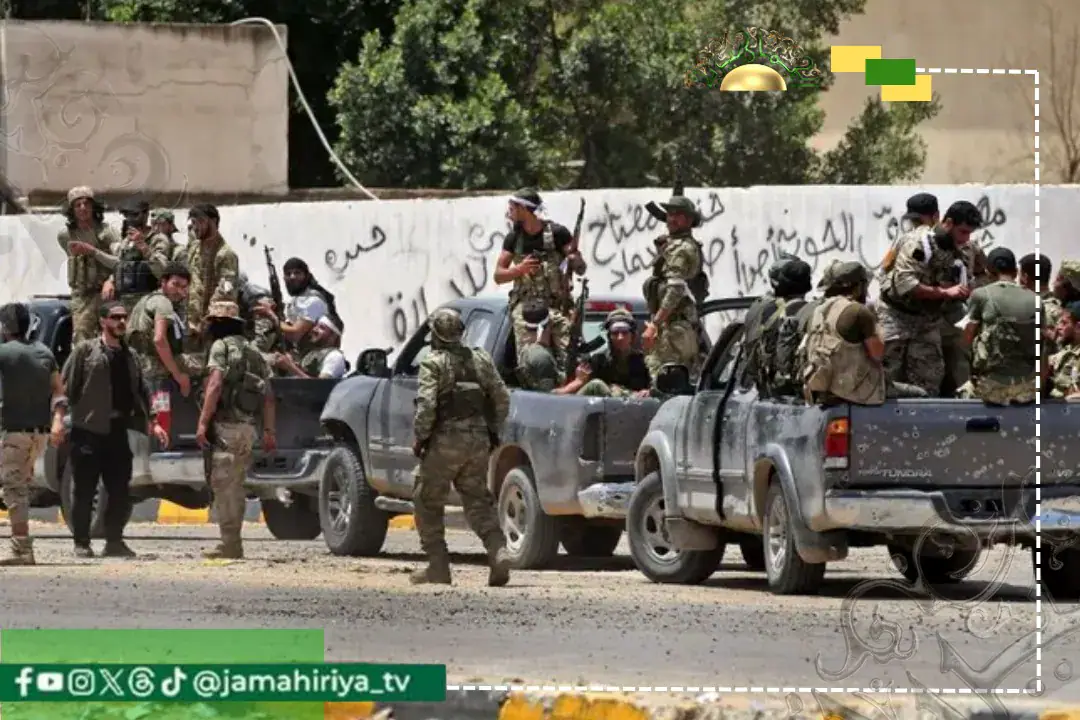
Libya's efforts to disband armed militias in the west face significant challenges due to their complex relationships with state institutions and external networks. Despite attempts by successive governments to integrate militia members into security and military institutions, their independence and influence persist. The militias have maintained their power through a network of local and external connections, making it difficult for governments to assert control.
Recent clashes between militias in the city of Zawiya have highlighted the difficulties in controlling these groups. In response, Prime Minister Abdul Hamid al-Dbeiba held meetings with militia leaders last month, urging them to cease fighting and adhere to military discipline. The relationship between al-Dbeiba's government and some militias appears to be based on mutual interests, with the government benefiting from their military strength and the militias receiving official recognition and opportunities to integrate into state institutions.
According to Shreef Bofarda, director of the Libyan Center for Security and Military Studies, militias are no longer separate entities from the state, as they have established a presence within economic, political, security, and military institutions. This has increased the complexity of dealing with them. Ibrahim Al-Asyfer, a researcher, believes that the crisis extends beyond the proliferation of weapons to include networks of interests and local connections formed during years of division and government changes.
Bofarda notes that international parties interact with some militias based on their own interests, citing the presence of groups in Zawiya and western Tripoli involved in human trafficking and smuggling. Al-Asyfer suggests that dismantling these groups requires a comprehensive approach that goes beyond security confrontations, involving the reorganization and integration of armed elements into a unified institution subject to a single leadership and law.
Al-Asyfer warns that a solely military confrontation may lead to the reproduction of the crisis. In contrast, Bofarda emphasizes the need to remove official recognition from militias, dry up their government funding sources, and activate oversight and investigation into crimes. He also advocates for international action, including sanctions and prosecution of parties obstructing the process.
Bofarda cites examples of former armed groups that have seen their influence decline or disappear, suggesting that the Libyan scene has not yet reached a point of no return. He believes that ending militia influence is still possible through comprehensive political, security, and institutional measures. The intertwined interests of militias with state institutions and external networks make their disbandment a challenging task.
The issue of militias in Libya remains a pressing concern, with any solution requiring a multifaceted approach that addresses their complex relationships with the state and external actors. The international community's role in supporting a peaceful resolution will be crucial in determining the success of efforts to dismantle these groups and restore stability to the region.
Key points
- Libya's government faces challenges in disbanding armed militias due to their complex relationships with state institutions and external networks.
- International parties interact with some militias based on their own interests, further complicating the situation.
- A comprehensive approach, including reorganization, integration, and international support, is necessary to address the issue of militias in Libya.