An international operation led by Interpol, dubbed "Communis Maris" or "Common Sea" in Latin, has resulted in the arrest of 262 individuals and the opening of 434 new investigations into human trafficking and migrant smuggling. The operation, which took place from October 5 to 8, involved law enforcement agencies from 15 countries, including Portugal, and was supported by Europol, Frontex, and other international organizations. The goal of the operation was to dismantle organized crime networks, identify traffickers, and rescue people in danger.
The operation targeted human trafficking and migrant smuggling routes in the Mediterranean and Atlantic, which are considered some of the deadliest migration routes in the world. According to Interpol, traffickers exploit vulnerable populations, subjecting them to abuse, extortion, and trafficking, while also putting migrants' lives at risk by overcrowding boats and providing inadequate navigation conditions. During the operation, authorities identified 41 organized crime groups and 109 potential victims of human trafficking.
A total of 1,715 migrants in irregular situations were detected during the operation, and 221 suspects were arrested on charges of migrant trafficking, 16 on charges of human trafficking, and 25 on charges of other crimes, including producing and distributing false documents. The operation involved intercepting several boats, mainly south of Morocco, where authorities detained one boat carrying 70 potential migrants, including 30 minors, who had been at sea for six days.
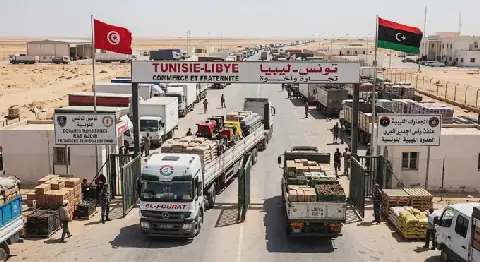
Authorities in Senegal and Mauritania also detected similar cases, while in Tunisia and Lebanon, authorities used intelligence and surveillance to intercept boats before they departed, rescuing 34 potential victims and arresting three individuals. In Algeria, six individuals were arrested, and in Syria, seven suspects were detained and 22 irregular migrants were intercepted. The operation also involved reinforcing airport controls to prevent the smuggling of fraudulent documents and illicit funds.
The operation resulted in several arrests at airports in Cyprus, Greece, and Morocco, while in France, police arrested six individuals on suspicion of money laundering, facilitating irregular migration, and housing vulnerable individuals in inhumane conditions. The arrests and investigations are expected to lead to further action in the coming months, with authorities hoping that the discoveries made during the operation will serve as a basis for new arrests.
The operation also uncovered numerous links to social media publications, groups, and accounts that promote irregular migration and human trafficking services. According to David Caunter, Interpol's director of organized crime and emerging crime trends, the Mediterranean migration route is one of the deadliest in the world, and the operation aimed to address this issue by targeting traffickers and rescuing those in danger.
The success of the operation highlights the importance of international cooperation in combating human trafficking and migrant smuggling. With the support of international organizations and law enforcement agencies from 15 countries, Interpol was able to disrupt organized crime networks and bring perpetrators to justice. The operation serves as a reminder of the ongoing efforts to address the complex issues surrounding migration and human trafficking.
Key points
- 262 individuals arrested in Interpol's operation against human trafficking and migrant smuggling
- 434 new investigations opened into human trafficking and migrant smuggling
- Operation involved law enforcement agencies from 15 countries and international organizations such as Europol and Frontex
Reporting sources
- Migrações: Interpol detém 262 pessoas em operação contra tráfico humano · RecordTV Cabo Verde