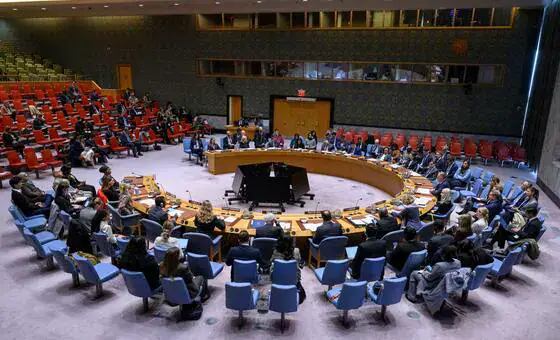
Russia's use of its veto power to block a US resolution on Western Sahara at the UN Security Council has triggered widespread diplomatic reactions from countries supporting the American approach. The resolution, which received 11 votes in favor, was ultimately not adopted due to Russia's veto, with one opposing vote and three abstentions. This development highlights divisions over the prospects of a political process for Western Sahara.
The US had sought to make Morocco's autonomy initiative the sole basis for negotiations, while also proposing changes to the MINURSO mission and its naming. However, Russia opposed the proposed text, deeming it not consensual. The US expressed disappointment at the project's failure, describing it as a step towards a realistic settlement, and emphasized that the situation in the camps is inhumane and unacceptable.
France reiterated its stance that the issue falls within Moroccan sovereignty, while the UK expressed regret over Russia's use of its veto power, considering the Moroccan proposal as the most realistic and viable solution. On the Arab level, Bahrain's position stood out in its strong support for the resolution, with the Bahraini ambassador emphasizing the importance of the text's core steps for a solution and stressing that the autonomy proposal is the only applicable solution.
The ambassador also reaffirmed Bahrain's unwavering stance in supporting Morocco's territorial integrity. Morocco's autonomy initiative has been considered a key element in resolving the Western Sahara conflict. The international community has been engaged in efforts to find a lasting solution to the issue, with some countries advocating for a negotiated settlement.
The veto has sparked concerns about the potential impact on the peace process in Western Sahara. The situation has been closely monitored by the international community, with many countries calling for a peaceful and lasting resolution. The UN has been involved in efforts to resolve the conflict, with the MINURSO mission playing a crucial role in maintaining stability in the region.
Russia's veto has raised questions about the prospects of a renewed effort to address the Western Sahara issue. The development has also sparked debate about the role of the UN Security Council in resolving conflicts. The international community remains committed to finding a peaceful solution to the Western Sahara conflict.
The reactions to Russia's veto highlight the complexities of the Western Sahara issue and the challenges of finding a lasting solution. The situation remains a priority for the international community, with many countries emphasizing the need for a peaceful and negotiated settlement.
Key points
- Russia's veto on a US resolution for Western Sahara sparks strong international reactions
- The US and Morocco's autonomy initiative is considered a key element in resolving the Western Sahara conflict
- The international community remains committed to finding a peaceful solution to the Western Sahara conflict