The International Contact Group for the Great Lakes region, currently presided over by France, has expressed concern over recent political and security developments in the Democratic Republic of Congo. In a joint statement released on October 30, 2026, the group condemned the use of violence as a means of achieving or exercising political power in the DRC. The group comprises representatives from 11 countries and the European Union.
The International Contact Group, also known as the Groupe de contact international (GCI), specifically criticized the newly formed Front for the Refoundation of the Nation (FRN), led by former DRC President Joseph Kabila. The FRN has been accused of promoting the use of violence to achieve its political objectives. The GCI emphasized that the use of violence will not be tolerated and that all parties must respect the country's constitution and the rule of law.
The GCI welcomed a statement by the African Union Commission's president on October 19, 2026, calling for restraint among all parties in the DRC. The group stressed the importance of an inclusive and peaceful inter-Congolese dialogue to achieve lasting peace in the country. They also reaffirmed their commitment to the DRC's sovereignty, independence, unity, and territorial integrity.
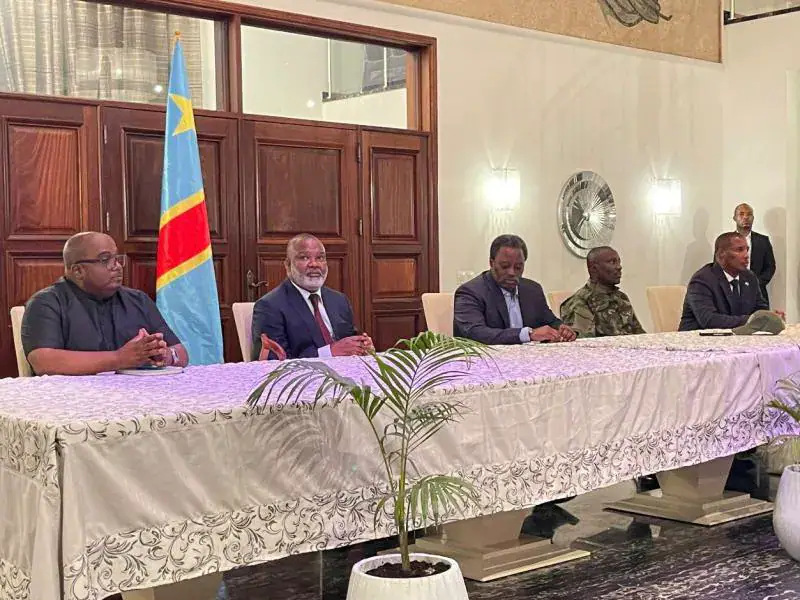
The FRN was launched on October 12, 2026, in Goma, the capital of North Kivu province. The movement is led by Joseph Kabila, with Corneille Nangaa and Bertrand Bisimwa serving as vice-presidents. Emmanuel Sultani Makenga, a key figure in the M23 rebellion, has been appointed as the chief of staff of the FRN's armed wing.
The emergence of the FRN has raised concerns about the ongoing crisis in the DRC, where fighting persists despite diplomatic efforts to resolve the conflict. The GCI's statement highlights the need for all parties to respect their commitments and engage in peaceful dialogue. The situation in the DRC remains volatile, with frequent clashes and humanitarian concerns.
The International Contact Group emphasized that differences and grievances cannot be resolved through military means. They called on all parties to guarantee the rule of law and protect fundamental rights, allowing all political parties and civil society organizations to operate freely.
The DRC government and international community face a significant challenge in bridging the gap between diplomatic progress and the security reality on the ground. Efforts to achieve a lasting solution to the crisis continue, with the GCI's statement serving as a reminder of the need for peaceful and inclusive dialogue.
Key points
- The International Contact Group for the Great Lakes region has rejected the use of violence for political gain in the Democratic Republic of Congo.
- The group specifically criticized the newly formed Front for the Refoundation of the Nation (FRN), led by former DRC President Joseph Kabila.
- The GCI emphasized the importance of an inclusive and peaceful inter-Congolese dialogue to achieve lasting peace in the country.