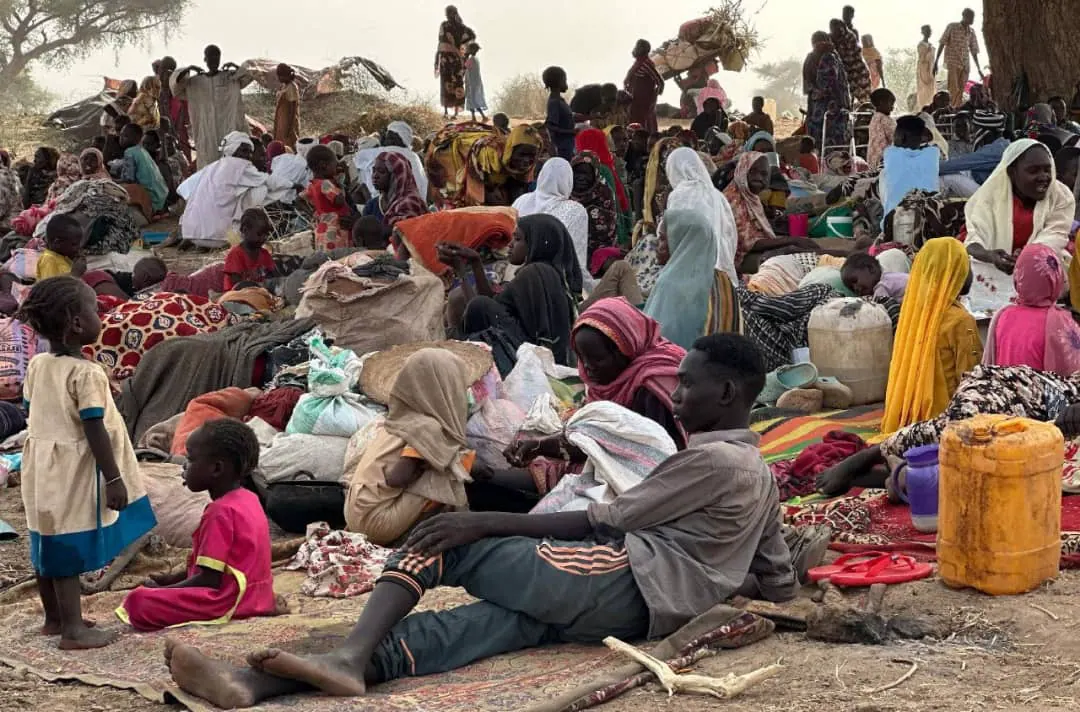
The ongoing conflict in Sudan has resulted in one of the world's largest humanitarian crises, with escalating violence, increasing displacement, and worsening food insecurity. The war, which began in mid-April 2023 between the Sudanese army and the Rapid Support Forces, has claimed nearly 200,000 lives, according to UN estimates. The situation has sparked warnings from the UN of even worse conditions to come. The international community is urging the warring parties to accept a humanitarian truce and engage in a political process leading to peace in a united Sudan.
The US State Department has stated that the Sudanese Armed Forces and the Rapid Support Forces, as well as their leaders, do not constitute a legitimate and constitutional government for Sudan, as they rule solely by force of arms. The Department has repeatedly asked both sides to accept an unconditional humanitarian truce and commit to an inclusive political dialogue leading to a transition to civilian government. Massad Boulos, the US president's senior adviser for Arab and African affairs, has called on the warring parties to accept a humanitarian truce as the first step toward lasting peace.
The US has imposed sanctions on Sudanese army leader Abdel Fattah al-Burhan, accusing him and the Sudanese Armed Forces of violating international humanitarian law, targeting civilians and infrastructure, and obstructing the delivery of humanitarian aid. The US also refused to grant Burhan a visa before his planned appearance before the United Nations, citing a US-backed ceasefire proposal opposed by Port Sudan. This move represents a low point in US-Sudanese relations since the outbreak of the war in April 2023.
Sudan has been a state party to the Chemical Weapons Convention since 1999, but allegations have emerged that the Sudanese army has used chemical weapons against the Rapid Support Forces. The US has imposed sanctions on Sudan in May 2025 and renewed its accusations before the Organisation for the Prohibition of Chemical Weapons, calling on Sudan to comply with its obligations and allow independent verification. The Sudanese government has conducted a national investigation that concluded no evidence of chemical weapons use was found, but the US has rejected this as an alternative to independent international verification.
Journalistic investigations have revealed that the Sudanese army has established a stockpile of chemical weapons, including the production and development of munitions and bombs containing chlorine gas, which have been used against the Rapid Support Forces. The Organisation for the Prohibition of Chemical Weapons is the specialized international body capable of conducting technical verification operations, but the independent international investigation remains limited compared to the seriousness of the allegations.
The international community's focus remains on the Rapid Support Forces, which are being pursued and investigated over violations, while the army under Burhan's leadership continues to be regarded as a negotiating party despite serious allegations against it. This has revealed a major gap in the pursuit of justice. The UN International Independent Fact-Finding Mission for Sudan considers that the recruitment of foreign individuals and external support networks contributes to fueling the war in Sudan and enabling increasingly sophisticated military operations.
The situation in Sudan demands immediate attention and action from the international community. The use of chemical weapons, if confirmed, would be a grave violation of international law and would have severe consequences for the country and the region. The international community must work together to pressure the warring parties to accept a humanitarian truce, engage in a political process, and comply with their obligations under the Chemical Weapons Convention.
Key points
- The Sudanese army has been accused of using chemical weapons against the Rapid Support Forces, prompting international condemnation and concern.
- The US has imposed sanctions on Sudanese army leader Abdel Fattah al-Burhan and accused the Sudanese Armed Forces of violating international humanitarian law.
- The international community is urging the warring parties to accept a humanitarian truce and engage in a political process leading to peace in a united Sudan.