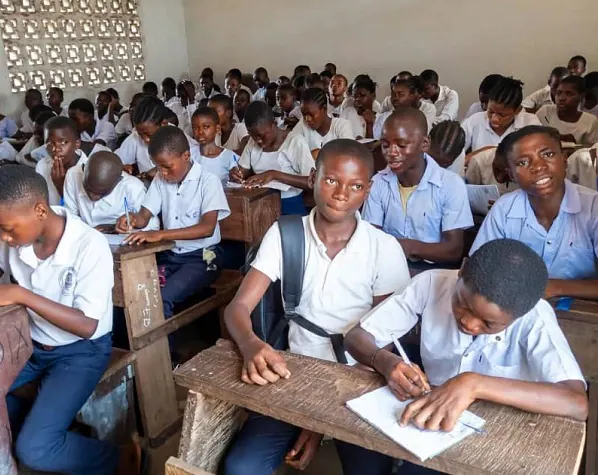
A significant shift in the education sector has been observed in Inongo, the capital of Maï-Ndombe province, located in the southwestern part of the Democratic Republic of Congo. Since the beginning of last week, numerous students from public schools have been enrolling in private institutions. According to educational sources, this sudden surge has put a strain on private schools, which are struggling to accommodate the increasing number of students.
The Congolese press agency learned that private schools in Inongo have been receiving over 30 registration requests per day from students who were previously enrolled in public schools. Parents are seeking better educational opportunities for their children, leading to a substantial influx of students in private institutions. Felly Etunda, promoter of the Mpadi Bokobi school complex, stated that they are being forced to turn away potential students due to a lack of available space.
Jimmy Ntanga, prefect of studies at the Ecole d'Application de l'Institut Supérieur Pédagogique d'Inongo (EDAP/Inongo), also confirmed the trend, citing a significant increase in enrollment from public schools. He expressed concerns that the sudden surge in numbers may compromise the quality of education provided by private institutions, as their structures were not prepared to handle such a large influx of students.
The shift of students from public to private schools in Maï-Ndombe province raises questions about the state of the education sector in the region. While some parents may be seeking better educational opportunities for their children, others may be dissatisfied with the quality of education provided by public schools. Educational authorities and stakeholders will need to address these concerns and work towards finding solutions to ensure that all students have access to quality education.
The influx of students has also highlighted the need for increased investment in the education sector, particularly in infrastructure and human resources. Private schools, which are often seen as a more attractive option, may not have the capacity to absorb the large number of students seeking enrollment. This could lead to a shortage of spaces, leaving some students without access to quality education.
Educational stakeholders and policymakers will need to engage in discussions to find a solution to this issue. This may involve increasing funding for public schools, improving infrastructure, and providing better training for teachers. Additionally, private schools may need to explore innovative ways to accommodate the increasing number of students, such as introducing new teaching methods or expanding their facilities.
The situation in Maï-Ndombe province highlights the complexities of the education sector in the Democratic Republic of Congo. As the country continues to grapple with challenges in the education sector, stakeholders must work together to find solutions that prioritize the needs of students and ensure that they have access to quality education.
Key points
- Over 30 registration requests per day have been received by private schools in Inongo from students previously enrolled in public schools.
- The sudden influx of students may compromise the quality of education provided by private institutions.
- Educational stakeholders and policymakers must work together to find a solution to the issue, prioritizing the needs of students and ensuring access to quality education.