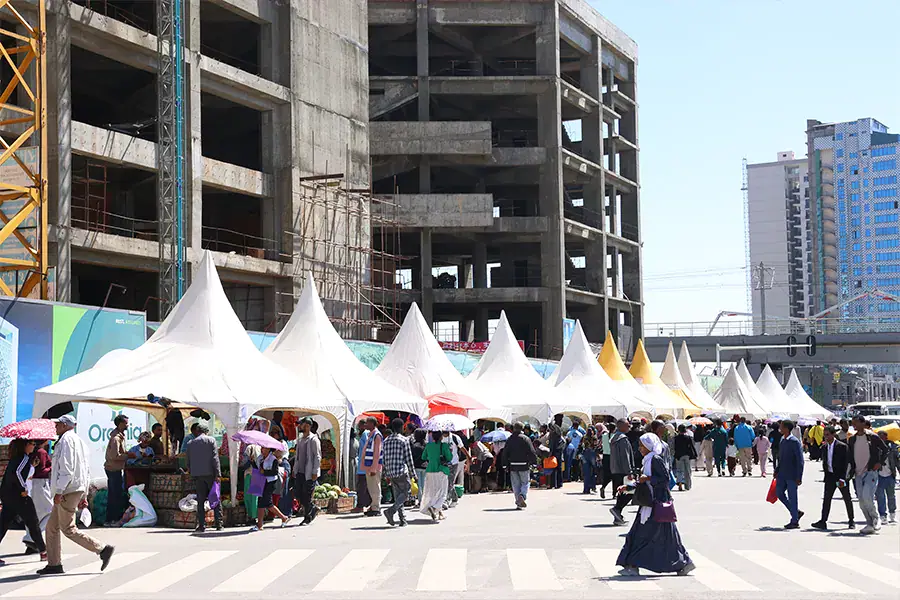
Ethiopia's inflation rate has shown signs of easing, but households in Addis Abeba are yet to feel significant relief. Despite the country's economy growing on paper, many residents are struggling to make ends meet due to rising rents and prices. A nurse living in her mother's house, an expectant kindergarten teacher, a family of six, and a decorator who can no longer afford their services are just a few examples of those feeling the strain.
The effects of inflation are being felt across various sectors, including housing and food. Rents have increased significantly, making it difficult for people to afford basic necessities. Even those with stable jobs are finding it hard to cope with the rising costs. The situation is further complicated by the fact that wages have not kept pace with inflation, leaving many households with reduced purchasing power.
The Ethiopian economy has been growing rapidly in recent years, driven by large-scale infrastructure projects and investments in various sectors. However, this growth has not been evenly distributed, and many households are yet to benefit from it. The country's national election is approaching, and the issue of inflation is likely to be a major concern for many voters.
The Central Bank of Ethiopia has been working to address the issue of inflation, but its efforts have been hindered by various factors. The bank has been trying to stabilize the exchange rate and reduce inflationary pressures, but it faces significant challenges. The country's economy is heavily dependent on imports, which makes it vulnerable to fluctuations in global commodity prices.
The impact of inflation on households is not limited to the economic sphere; it also has social and psychological effects. Many people are feeling anxious and uncertain about their future, and there is a growing sense of discontent among the population. This could have significant implications for the country's stability and security.
The government has been trying to address the issue of inflation through various measures, including monetary policy and fiscal reforms. However, more needs to be done to address the root causes of inflation and to support households that are struggling to cope with its effects. The country's leaders will need to work together to develop effective solutions to this complex problem.
As the country prepares for its national election, the issue of inflation is likely to be a major concern for many voters. The government's ability to address this issue will be closely watched, and its success or failure could have significant implications for its popularity and legitimacy. The situation is complex, and there are no easy solutions, but the government will need to take bold action to support households and stabilize the economy.
Key points
- Households in Addis Abeba are struggling with rising rents and prices despite the country's economy growing on paper.
Reporting sources
- The Numbers on Inflation Ease, Households Still Pay More · addisfortune.news/