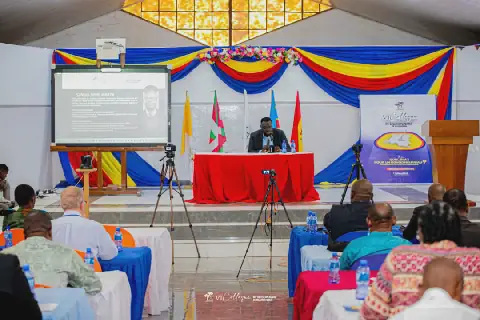
The Independent National Electoral Commission (INEC) has denied allegations that it could favour any political party or presidential candidate in the 2027 general elections. INEC Chairman, Professor Joash Amupitan, made this statement while receiving a pre-election fact-finding mission from the Economic Community of West African States (ECOWAS) at INEC's headquarters in Abuja. The mission aimed to assess Nigeria's preparedness for the upcoming elections and identify areas where ECOWAS could provide assistance.
The ECOWAS delegation, led by former Sierra Leone Vice-President Victor Bockarie Foh, included Serigne Mamadou Ka, Head of the ECOWAS Electoral Assistance Division. Amupitan emphasized that INEC has no political interest in the election outcome and will not favour any individual seeking public office. He stated that INEC's sole allegiance is to the rule of law, the Nigerian electorate's sovereign will, and the country's democratic progress. This declaration aims to reaffirm INEC's neutrality ahead of the 2027 elections.
President Bola Tinubu is expected to seek re-election in 2027, while opposition parties prepare to challenge the ruling All Progressives Congress (APC). INEC has started preparations across Nigeria's six geopolitical zones, conducting readiness assessment tours to evaluate its operational capacity and identify potential challenges. The commission will oversee elections in 774 local government areas and 8,809 registration areas nationwide. Nigeria's National Register of Voters has exceeded 103 million, highlighting the significant responsibility facing INEC.
Amupitan disclosed that INEC has completed nine of the 14 major statutory activities in its revised election timetable. The Continuous Voter Registration exercise has concluded three phases, and the nationwide physical display of the preliminary register of voters has been completed. This exercise allows registered voters to verify their details and report errors or omissions before the final register is certified. These preparations are crucial for the success of the 2027 elections.
INEC will deploy the Bimodal Voter Accreditation System (BVAS) to authenticate voters through fingerprint and facial recognition. The commission will also use electronic result management systems to strengthen the process of recording, verifying, and managing election results. An electronic verification platform, eEC8A, has been introduced to complement existing result management arrangements. These technological measures aim to improve the electoral process and address previous controversies surrounding result transmission and availability.
Security concerns were also addressed, with Amupitan noting that INEC is working with relevant security agencies to ensure adequate arrangements before the elections. The Inter-Agency Consultative Committee on Election Security (ICCES) provides a platform for INEC and security agencies to coordinate activities and address potential threats. Security is expected to be a major concern, particularly in areas affected by insurgency, banditry, and communal violence.
The ECOWAS mission aims to promote democratic governance, political stability, and peaceful elections across West Africa. The delegation will assess the readiness of electoral institutions and identify areas where ECOWAS can offer technical and institutional support. This visit is part of ECOWAS' responsibility to support its member states in conducting free and fair elections.
Key points
- INEC reaffirms its neutrality ahead of the 2027 Nigerian elections.
- The commission has completed several statutory activities in its revised election timetable.
- INEC will deploy BVAS and electronic result management systems to improve the electoral process.